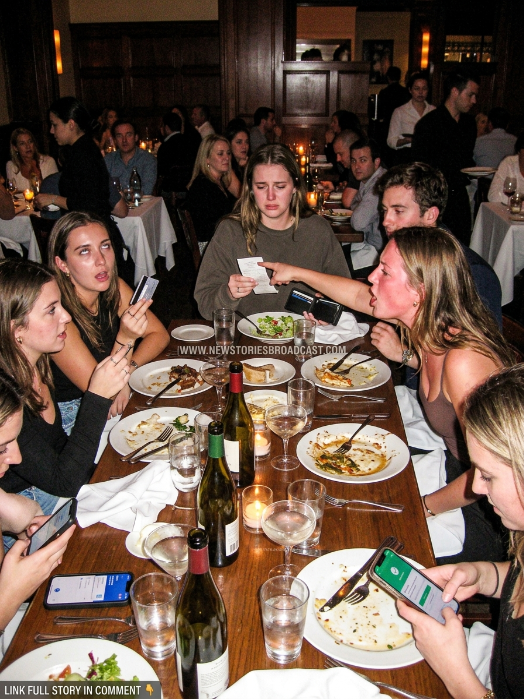
I never thought refusing to split a dinner bill evenly would make me the villain in a friend group I’d known for twelve years. But when I quietly suggested we each pay for what we actually ordered instead of splitting everything down the middle, the table erupted, and I became “the cheap one,” “the selfish friend,” and the person who “ruined the vibe.”
My name is Maya Chen. I’m 31 years old, a freelance graphic designer living in Seattle, Washington. I work hard for my money. After watching my parents struggle financially as immigrants, I’ve always been careful with every dollar. I budget, I save, I rarely eat out, and when I do, I’m mindful of what I order. That mindset has given me stability — a small but comfortable apartment, no credit card debt, and the freedom to take on creative projects I actually love.
My friend group — we call ourselves “The Dinner Club” — has been together since college. There are eight of us. We try to meet once a month for nice dinners to catch up. For years it was perfect. But over the last couple of years, something shifted. The dinners got more expensive, the orders more extravagant, and the unspoken rule became “just split it evenly, it’s easier.”
I went along with it for a long time. I didn’t want to be “that person.” But as my freelance income fluctuated and inflation made everything more expensive, I started feeling the pinch. Still, I stayed quiet — until the night of March 22nd.
It was supposed to be a celebration for Priya’s promotion. We went to a trendy new Italian restaurant downtown known for its expensive pastas and $18 cocktails. I was already anxious about the prices when I looked at the menu. I ordered a simple margherita pizza ($24) and water. Everyone else went all out: multiple appetizers, bottles of wine, $42 risottos, $38 steaks, and fancy desserts.
The bill came to $687 before tip.
When the waiter set it down, my stomach dropped. Someone — I think it was Derek — immediately said the familiar words: “Should we just split it evenly? Eight ways?”
Most people nodded. Then all eyes turned to me because I hadn’t said anything.
I took a deep breath and spoke as calmly as I could.
“Actually… I only ordered the pizza and water. My share is about $32 before tip. I’m happy to pay that plus my portion of the tip, but I can’t afford to split the full bill evenly tonight.”
The table went silent for a second, then erupted.
Priya, whose promotion we were celebrating, looked shocked and a little hurt. “Maya… it’s my night. Can’t you just go with the flow? It’s not that much more.”
Derek laughed awkwardly. “Come on, it’s like $85 each if we split. You can afford that, right? Don’t be weird about it.”
My closest friend in the group, Sarah, gave me a pleading look. “Maya, it’s easier this way. We always do it like this.”
I felt my face burning. I could see the judgment in their eyes — the subtle shift from “Maya” to “that cheap friend.” But I stood my ground.
“I’m not being weird. I ordered less because that’s what I can afford right now. I’m happy to pay exactly for what I consumed. That seems fair.”
The mood at the table turned icy. Priya’s expression changed from hurt to annoyed. Someone muttered “awkward” under their breath. In the end, they split the bill seven ways and I paid my calculated $42 (including tip). The difference wasn’t huge — maybe $40–45 extra for me if I had split evenly — but to me, it mattered.
The real damage happened after we left the restaurant.
The group chat exploded the next morning.
Priya: “Last night was supposed to be a celebration but it got ruined by someone making it weird about the bill. Feeling pretty disappointed.”
Sarah: “I get being budget-conscious but there’s a time and place. It made everyone uncomfortable.”
Derek posted a meme in the chat about “friends who count every penny.” It got 12 laughing emojis.
I tried to explain myself in the chat:
“I’m sorry if it made things awkward. I’m in a tighter spot financially right now with freelance work being slow. I didn’t want to bring the mood down, but splitting evenly when I ordered significantly less didn’t feel fair to me. I still love you all and wanted to celebrate Priya.”
The responses were swift and painful.
One friend said: “We’ve all been there, but we don’t make it everyone else’s problem.”
Another: “If money is that tight, maybe you shouldn’t come to these dinners anymore.”
Priya sent me a private message: “I feel like you made my promotion about you. I’ve supported you through so much. This really hurt.”
I cried in my apartment that morning. These were people I had known for over a decade. We had been through breakups, job losses, family issues, and moves together. I had covered for them when they were short on rent in our twenties. I had driven people home at 3 AM when they were too drunk to drive. And now I was the villain for not wanting to subsidize everyone’s steak and cocktails.
The isolation grew over the following weeks.
Some friends started planning smaller dinners without inviting me. Others were polite but distant. One mutual friend told me privately that Priya had been telling people I was “going through a cheap phase” and that I “didn’t know how to celebrate friends properly.”
The worst part was the self-doubt that crept in. Was I being petty? Should I have just paid the extra $45 to keep the peace? Was my insistence on fairness actually selfishness disguised as principle?
But then I remembered the deeper pattern.
For years I had been the one who quietly paid more than my share — covering Ubers when others “forgot” cash, picking up tabs when someone was between jobs, never making a fuss. I realized I had been training my friends to expect that from me. By always going along with “split it evenly,” I had enabled a system where my frugality subsidized their extravagance.
I started reflecting on money and friendship more deeply. I read articles and Reddit threads about similar situations. I talked to my therapist about it. And I came to a clear conclusion: Fairness in friendship doesn’t mean keeping score, but it also doesn’t mean silently accepting a system that disadvantages you.
Three months later, the group dynamic has permanently changed.
I still see a couple of the friends individually, but the big group dinners have mostly stopped including me. Priya and I are civil but the warmth is gone. Some people have quietly told me they understand and have started suggesting we pay for what we order in smaller settings. Others continue to see me as the problem.
I don’t regret my decision. I feel lighter knowing I stood up for myself. I’ve become more intentional about who I spend money with and how. I’ve learned that true friends respect your boundaries around money instead of guilting you into unfair arrangements.
The most important message I want every person reading this to hear is this:
Money reveals the true nature of relationships.
It’s okay to have different financial situations in a friend group. What’s not okay is expecting others to subsidize your lifestyle without discussion or consent. Fairness matters. Boundaries around money are not selfishness — they are self-respect. You are allowed to say “I’ll pay for what I ordered” without being labeled cheap or difficult. Real friends will understand. The ones who punish you for it were never truly respecting you to begin with.
I refused to split the bill evenly when I ordered less.
It cost me some friendships and social comfort. It made me the “difficult” one in many people’s eyes. But it also gave me back my integrity, my financial peace, and the confidence to protect my own resources without guilt.
And I would do it again in a heartbeat.
Am I the asshole for refusing to split the restaurant bill evenly when I ordered significantly less than everyone else? Or is it reasonable to expect people to pay for what they actually consumed?
I’m reading every comment. Because even now, months later, I still feel the sting of being labeled “cheap” by people I once considered close friends — and I wonder how many others have stayed silent in similar situations just to keep the peace.
THE END