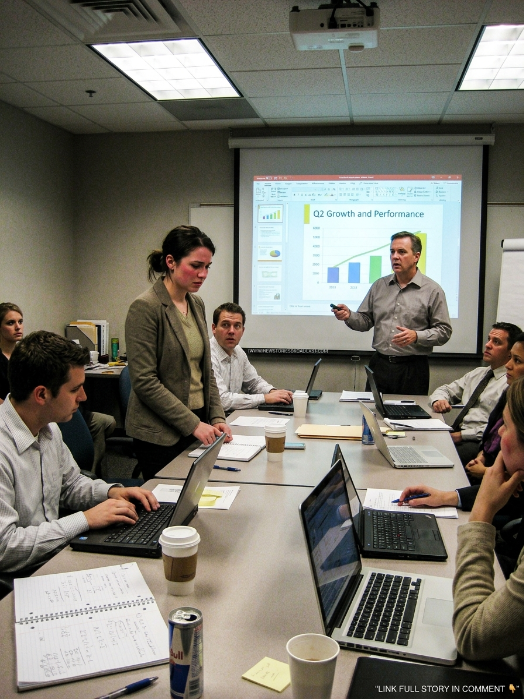
I never planned to ask for a raise in front of the entire company during the quarterly all-hands meeting. But after three years of being underpaid, overlooked, and watching less qualified people get promoted while I carried the department on my back, something inside me finally snapped. What happened next turned me into both a hero and a villain in the eyes of my colleagues, destroyed my relationship with my boss, and forced me to confront how far I was willing to go for respect and fairness.
My name is Marcus Delgado. I’m 36 years old, a senior software engineer at a mid-sized fintech company in Chicago. I’ve been with the company for six years — starting as a junior developer right after my wife gave birth to our first child. I worked my way up through pure grit, late nights, and weekends sacrificed while my wife, Elena, handled most of the parenting. We have two kids now — Mateo (6) and Sofia (4) — and another one on the way. The mortgage, daycare, medical bills, and Elena’s student loans have us living paycheck to paycheck despite my “good” salary.
For the last three years, I’ve been doing the work of two senior engineers. I mentored juniors, led major projects, fixed production fires at 3 AM, and consistently received “exceeds expectations” on my reviews. Yet my salary had only increased by 4% in that time — barely keeping up with inflation. Meanwhile, new hires with less experience were coming in at higher rates, and two colleagues who joined after me had already received significant raises and promotions.
I tried the proper channels first. I scheduled meetings with my manager, David. I prepared detailed documentation of my contributions, market salary data, and the extra responsibilities I had taken on. Each time, David would smile, nod, and say, “You’re doing great, Marcus. We’ll circle back during the next compensation cycle.” Then nothing happened.
The breaking point came during our big Q3 all-hands meeting last month.
The entire company — about 180 people — was on the Zoom call and in the main conference room. David was presenting the quarterly results, bragging about record revenue and how “our team is the backbone of this success.” He highlighted several people, including two newer engineers who had done a fraction of what I had done. My name wasn’t mentioned once.
Something inside me broke.
When David asked if there were any questions, my hand went up before my brain could stop it. The room went quiet as the camera focused on me.
“Yes, Marcus?” David said, sounding slightly annoyed.
I stood up so everyone could see me clearly.
“David, I have a question about compensation. I’ve been here six years, consistently exceeded my goals, taken on leadership responsibilities without the title or pay, and mentored multiple team members who have since been promoted ahead of me. According to market data, I’m underpaid by at least $35,000 compared to similar roles. So my question is — when will I receive a meaningful raise that reflects my actual contributions?”
The silence was deafening.
You could hear people shifting uncomfortably. David’s face turned red. Several executives looked shocked. One of the newer engineers I had trained looked away awkwardly.
David forced a smile. “Marcus, this isn’t really the appropriate forum for that discussion. We can talk offline.”
But I was done being polite.
“With respect, David, I’ve tried talking offline multiple times. Nothing changes. Meanwhile, the company is posting record profits, and people who do less are getting rewarded. I’m not asking for special treatment — I’m asking for fairness. If the answer is never, then I need to know so I can make decisions for my family.”
The chat exploded with private messages. Some colleagues sent thumbs-up emojis. Others sent shocked faces. One senior VP typed, “This is highly unprofessional.”
David ended the meeting abruptly. “We’ll discuss this later, Marcus.”
The aftermath was immediate and brutal.
Within an hour, HR called me into a meeting. They said my “public display” had created a “hostile work environment” and put the company in an awkward position. David was furious. He pulled me aside later and said, “You embarrassed me in front of the entire leadership team. Do you have any idea how that makes me look?”
I told him the truth: “I’ve been patient for years. You left me no choice.”
That night when I got home, Elena could tell something was wrong. When I told her what I had done, she sat down slowly, looking terrified.
“Marcus… we have a baby on the way. We can’t afford for you to get fired. What were you thinking?”
I held her hands and tried to explain the years of frustration, the broken promises, the way I felt invisible despite carrying the team. She listened, but I could see the fear in her eyes. “I support you,” she said quietly, “but I’m scared.”
The company’s response came the next day. I wasn’t fired — they were too afraid of it looking like retaliation — but I was put on a “performance improvement plan” for “disruptive behavior.” My projects were reassigned. People started treating me differently in meetings. Some colleagues avoided eye contact. Others secretly congratulated me in the hallway, saying they wished they had the courage to speak up.
The worst part was the isolation.
During a team lunch a week later, one of the newer engineers I had mentored said loudly, “Some people just don’t know how to play the game.” Several people laughed. I ate my food in silence, feeling like an outsider in a place I had given so much to.
My family was divided too. My father, a proud factory worker, told me, “You did the right thing, mijo. Never let them undervalue you.” My mother worried I was being reckless. Elena’s parents subtly suggested I apologize to David to “smooth things over.”
For weeks I barely slept. The anxiety was crushing. I started applying for new jobs quietly, terrified of being blackballed in the industry. Every night I wondered if I had destroyed my family’s stability for a moment of pride.
But something beautiful also happened.
Several colleagues who had been suffering in silence started speaking up in their own one-on-ones. Two women on my team told me privately that my action gave them the courage to ask for raises they had been denied for years. A junior developer sent me a message saying, “Thank you for showing us we don’t have to accept being undervalued.”
Three months later, the company gave me a significant raise — not as much as I deserved, but enough to acknowledge the pressure. It wasn’t because they suddenly valued me more. It was because they were scared of what I might do or say next.
I still don’t know if I’ll stay long-term. But I do know this: I finally stood up for myself, and that changed something fundamental inside me.
The most important message I want every working person reading this to hear is this:
Your worth is not determined by how quietly you suffer.
You are allowed to advocate for yourself. You are allowed to demand fair compensation for your contributions. Doing so publicly may feel terrifying and “unprofessional,” but sometimes the system only listens when you make it uncomfortable. At the same time, there are smarter ways to do it — but when every polite channel fails, desperation can push you to extremes.
Never let anyone convince you that asking for what you’ve earned makes you difficult or entitled. You deserve to be valued. Your family deserves stability. And sometimes, the most professional thing you can do is stop being polite about being undervalued.
I asked for a raise right in front of the whole team.
It nearly cost me my job and my peace of mind. It strained my marriage and changed how people saw me. But it also forced real change, restored some of my dignity, and reminded me that silence has a much higher cost than speaking up.
I would do it again.
Am I the asshole for asking for a raise publicly in front of the entire company after years of being ignored in private? Or was it justified given how long I had been undervalued?
I’m reading every comment. Because even now, months later, I still replay that moment in the meeting room — heart pounding, voice shaking — and wonder if there was a better way, or if sometimes you have to burn it all down to be heard.
THE END