PART 3 — FULL STORY / COMPLETE ENDING
FULL STORY — PAGE 1
The Empty Plates
The family thread was already open when my sister handed her phone to Dad.
For the first time that night, the problem wasn’t my tone.
It wasn’t whether I was being dramatic.
It was the version of events Dad had told everyone else.
Behind me, my children were finishing grilled cheese at my kitchen table.
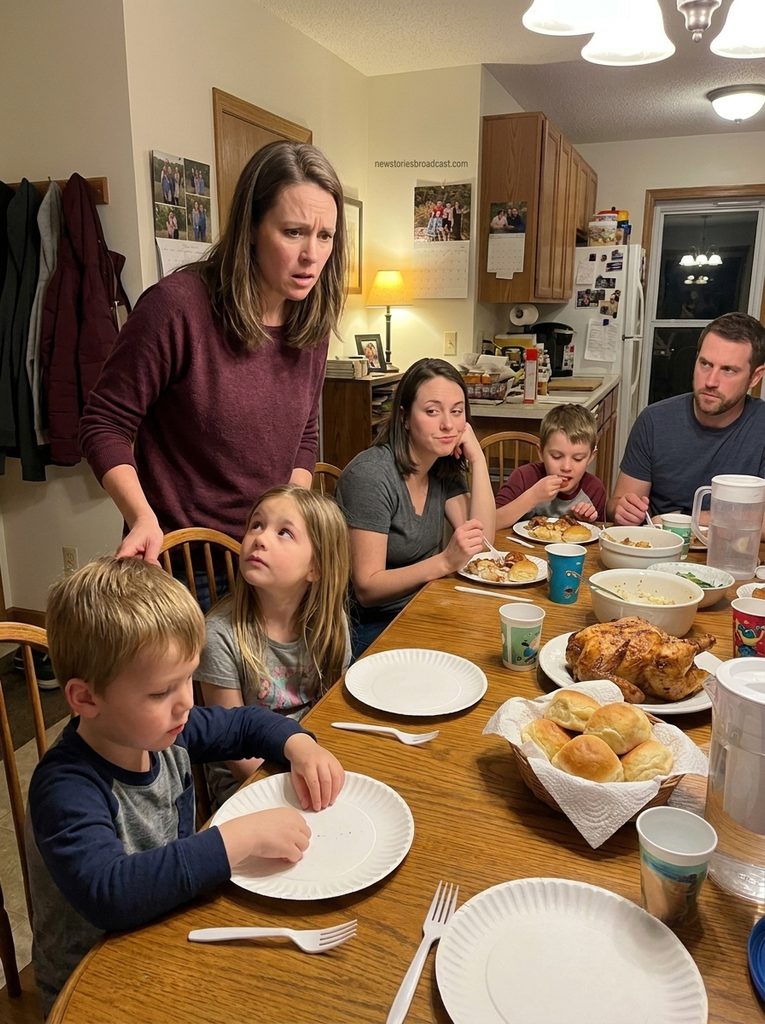
A little over half an hour earlier, they had been sitting at Dad’s table with empty plates while my sister’s children ate roasted chicken and warm rolls.
My youngest kept rubbing a thumb along the paper plate.
My oldest looked at me instead of complaining.
Neither child asked why there was no food in front of them.
They were waiting for me to decide what they were supposed to tolerate.
My sister had already made her view clear.
She said my children were born to live on leftovers.
I might have expected cruelty from her after years of tension.
What I didn’t expect was Dad agreeing.
He told my children they needed to learn their place.
Some arguments give you something to debate.
Others give you an answer.
That was an answer.
I told my children to get their jackets.
Dad called me dramatic.
My sister shrugged.
I didn’t stay to defend myself.
I took my kids home.
At a red light, my youngest finally asked:
“Does Grandpa like them more because they belong there?”
I could have softened it.
I could have told them Grandpa didn’t mean it.
That Auntie was just upset.
That adults say things they regret.
But children notice when adults use comforting words to cover obvious facts.
So I told the truth I could live with.
“You belong wherever I belong.”
Then:
“And nobody gets to make you earn dinner.”
I Canceled the Transfer
When we got home, the kids changed into pajamas.
I put grilled cheese in a skillet.
Butter hissed against the pan.
It was such an ordinary sound that, for a moment, the previous hour almost felt unreal.
Then my phone started vibrating.
Dad.
My sister.
Relatives who hadn’t been at dinner.
Before leaving Dad’s driveway, I had canceled the automatic transfer I sent him every month.
Then I wrote:
“I’m done financing a household where my children are treated like they should be grateful for scraps.”
The money had never been a casual gift.
Dad told me he was struggling.
For seventeen months, I helped with utility bills.
Every other Friday, I helped with groceries.
I didn’t announce it.
I didn’t bring it up during disagreements.
I didn’t expect public gratitude.
He was my father.
He needed help.
I could provide it.
That had been enough.
Until dinner.
There is a difference between helping someone who is struggling and financing a system that teaches your children they deserve less.
I had never agreed to the second.
The fourth time Dad called, I answered.
“Turn it back on.”
No hello.
No apology.
No question about whether the kids had eaten.
Just the money.
“No.”
He accused me of punishing everyone because of one dinner.
“My children didn’t get dinner.”
Then Dad lowered his voice.
“You don’t understand what you’ve just done.”
I thought he meant his household budget.
Instead:
“Your sister is counting on that money too.”
I set the spatula down.
“Why?”
The Money Was Going Somewhere Else
Dad hesitated.
That hesitation told me almost everything.
When he finally explained, he framed it as generosity.
My sister had expenses.
Children were expensive.
I was doing better financially than she was.
He had assumed I wouldn’t mind.
Assumed.
I opened my transfer history.
Month after month, the payments were there.
Exactly as I remembered.
Dad had told me I was helping his household.
He had never mentioned part of the money was being redirected to my sister.
The same sister whose children had just been eating while mine stared at empty plates.
I asked:
“Did she know where it came from?”
Dad didn’t answer quickly enough.
I didn’t need him to.
Then the other calls made sense.
Dad had apparently told relatives that I stormed away from dinner because my feelings were hurt and retaliated by cutting off my struggling father.
That version was convenient.
Dad was the victim.
I was the angry daughter.
My sister barely appeared in the story.
One relative told me to be the bigger person.
Another reminded me that Dad was still my father.
I gave them the same answer.
The money had been intended for Dad’s household.
Nobody asked permission to redirect it.
And I would not continue financing an arrangement that I had deliberately been kept from understanding.
Then I stopped answering.
My children needed dinner more than my extended family needed access to me.