The day I came home from prison, my stepmother told me my father had been dead for a year.
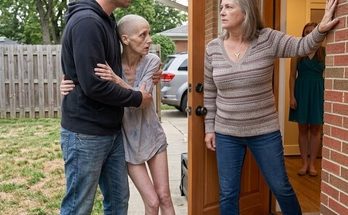
Then she threatened to send me back behind bars if I stepped across the threshold of the house where I had been raised.
“Your father died a year ago, Finnley,” Reagan said, one hand resting against the new black door. “This house belongs to me now. Don’t make a scene.”
For three years, I had survived Oakwood Prison by imagining that doorway.
I pictured my father, Camden Dennis, opening it with tears in his eyes. I imagined him pulling me into his arms and whispering that he had never believed I stole $480,000 from Dennis Industrial Systems.
Instead, Reagan stood before me in an emerald dress and pearl earrings, looking at my borrowed clothes as though poverty were contagious.
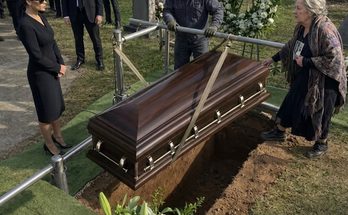
“Where is he buried?” I asked.
Her expression barely changed.
“Pinecrest Cemetery. Beside your mother.”
My chest tightened.
My mother had died when I was twelve. My father visited her grave every Sunday, even after marrying Reagan. He used to say that when his time came, he wanted to rest beneath the same maple tree.
“And no one told me?” My voice cracked. “He was sick, and no one contacted the prison?”
“He didn’t want you there.”
The words struck harder than any fist I had taken in Oakwood.
Behind Reagan, the entrance hall had been stripped of my childhood. My mother’s portrait was gone. So was the brass clock my father wound every Friday night. White marble furniture and abstract paintings had replaced everything familiar.
“Let me see his room.”
“I remodeled it.”
Footsteps sounded on the staircase.
Carter, Reagan’s son from her first marriage, appeared wearing a tailored shirt and the satisfied grin I remembered from my trial.
“Well,” he said, “the thief finally came back for his inheritance.”
Carter had worked beneath me at my father’s company before my arrest. He was charming in meetings, careless with money, and permanently hunted by gambling debts. Six months before the company funds disappeared, I had discovered that he owed nearly $200,000 to men who did not send polite reminders.
I had told my father.
Two weeks later, the stolen money was traced to an account opened using my identification.
“I didn’t steal anything,” I said.
Carter laughed. “Still practicing that speech?”
I stepped toward him, but Reagan blocked the doorway.
“If you enter this property, I’ll call the police,” she said. “A convicted felon threatening a grieving widow won’t receive much sympathy.”
The door closed in my face, and with it disappeared the last place in the world where I had believed I belonged.
I stood on the porch until the cold reached my bones.
Then I walked to Pinecrest Cemetery.
Rain began before I reached the gates. By the time I found the maple tree where my mother rested, mud covered my shoes and water ran down my neck.
There was no grave beside hers.
No headstone.
No fresh earth.
Nothing bearing my father’s name.
An elderly groundskeeper watched me from beneath a stone shelter. His silver hair curled beneath a faded cap, and when I approached, he stared as though he had seen a ghost.
“I’m looking for Camden Dennis.”
His face tightened.
“You’re Finnley.”
I stopped breathing.
“How do you know me?”
He glanced toward the cemetery gates before pulling a yellowed envelope from inside his coat.
“Your father gave me this eighteen months ago. He said I was to hand it only to you, and only if you came here asking where he was buried.”
Inside the envelope was a brass key attached to a metal tag.
STORAGE UNIT 108.
There was also a letter written in my father’s familiar handwriting.
Son,
If you are reading this, Reagan has already begun lying to you. Do not confront her yet. Do not trust the police officer who handled your case. And whatever you discover in Unit 108, remember that guilt does not always belong to the person who confesses.
My hands began to shake.
“Where is my father?” I asked the groundskeeper.
The old man looked toward the road again.
“Camden never had cancer.”
The rain seemed to stop making sound.
“What?”
“He came here several times after your conviction. Paid for a grave plot, then canceled it. The last time I saw him, he looked frightened. He told me someone inside his own house had turned his son into a prisoner.”
“Was Reagan with him?”
“No. But a man waited in a dark sedan outside the gates.”
“What man?”
The groundskeeper’s eyes met mine.
“Detective Howard Vale—the officer who arrested you.”
A car engine growled near the entrance.
The groundskeeper shoved the envelope beneath my jacket.
“Go,” he whispered. “Now.”
A black sedan rolled slowly through the cemetery gates.
It was the same model Detective Vale had driven three years earlier when he placed me in handcuffs.
I ran between the headstones, climbed over a low stone wall, and did not stop until Pinecrest disappeared behind me.
Unit 108 was located at a storage facility twenty miles outside the city. The night manager barely looked at me when I gave him the unit number.
The brass key turned smoothly.
Inside, I found my father’s leather chair, my mother’s portrait, boxes of company records, and the old brass clock from our hallway.
It had stopped at 4:17.
A laptop sat on a wooden desk beside a small video camera.
When I opened the computer, one file appeared on the screen.
FINNLEY—WATCH FIRST.
My father’s face filled the display.
He looked thinner than I remembered. His hair had turned almost completely white, and a bruise darkened his left temple.
“Son,” he said, “I need you to understand that I believed you from the beginning.”
My knees weakened.
“I knew Carter had stolen the money. I also knew Reagan helped him hide it. But when I tried to expose them, Detective Vale showed me photographs of you entering the company archive the night the transfer occurred.”
I remembered that night.
My father had called and asked me to retrieve a contract from his office. The security cameras later showed me entering the building, but the footage containing my departure had mysteriously vanished.
My father lowered his eyes.
“They told me that if I fought the charges, they would plant evidence tying you to a second theft—one large enough to keep you imprisoned for twenty years.”
I gripped the desk.
“So I made a choice no father should ever make,” he continued. “I let them convict you while I searched for proof that could free you.”
A sound came from outside the unit.
Metal scraping against concrete.
My father leaned closer to the camera.
“But the missing money was never the real crime. Reagan and Carter were moving far more through my company, and Detective Vale was protecting them. I found the records. If they discover what I know, they will kill me.”
The unit door rattled.
Someone was testing the handle.
On the screen, my father swallowed.
“Everything you need is hidden inside the brass clock. But before you open it, you must hear the truth about the night you were arrested.”
The handle began turning.
My father looked directly into the camera.
“Finnley, Carter did not frame you.”
The storage door lifted six inches.
A pair of black shoes appeared beneath it.
Then my father spoke the words that shattered everything I believed.
“I did.”
SAY “YES” IF YOU’RE READY FOR THE FULL STORY💖
PART 2Preview
The door rose higher.
I grabbed the laptop and swung it toward the intruder, but a familiar voice called my name.
“Finnley, stop!”
The groundskeeper ducked beneath the door and pulled it shut behind him.
Up close, he no longer seemed frail. His shoulders were broad beneath his coat, and his frightened expression had disappeared.
“You followed me,” I said.
“I protected you.”
He removed his cap.
A long scar ran from his temple into his gray hair.
My father had the same scar from a factory accident when I was a child.
I stared at him.
“No.”
His eyes filled with tears.
“Son.”
The room tilted beneath me.
I touched the shelf behind me to remain standing.
The groundskeeper was Camden Dennis. My father had been alive the entire time.
I crossed the space between us and struck him.
The sound echoed through the unit.
He did not defend himself.
“You let me believe you were dead,” I said. “You let me spend three years in prison.”
“I know.”
“You framed me?”
“Yes.”
I hit him again, weaker this time.
My father caught my wrists but did not release them.
“I transferred the money into the account opened in your name.”
“Why?”
“Because Carter was going to kill you.”
The answer made no sense.
My father opened the brass clock and removed a flash drive taped behind its gears.
“Carter’s gambling was only a cover. He was laundering money for Vale through our company. When you discovered his debts, Carter became convinced you would uncover the rest.”
“So you sacrificed me?”
“I bought you time.”
He connected the drive to the laptop. Documents appeared—bank records, surveillance footage, messages between Carter and Detective Vale.
One message froze my blood.
Finnley knows too much. Handle him before Camden talks.
My father pointed to the date.
It had been sent two days before my arrest.
“Vale offered me a choice,” he said. “Let them frame you for theft, or watch them stage your death as a robbery. I chose the only prison where I knew Carter could not reach you.”
“You could have told me.”
“Vale monitored every visit, letter, and call. If you knew the truth, you might have reacted. One wrong word would have exposed everything.”
I wanted to hate him.
Part of me did.
But another part remembered the threats I received in prison from inmates who somehow knew private details about my family. Men had tested me, cornered me, then suddenly backed away without explanation.
“You were protecting me inside Oakwood,” I said.
My father nodded. “The warden owed me his life. He kept you watched.”
The sacrifice did not erase the betrayal.
My father had saved my life by destroying it.
“Why pretend to die?”
“Because I found enough evidence to expose Vale, but Reagan discovered I was copying the records. She poisoned me.”
He showed me a scar beneath his collarbone.
“I survived. The hospital listed me under another name. Vale believed I died before I could testify, and Reagan filed a false death certificate to seize the house and company.”
My anger turned toward the woman who had stood in my doorway wearing my mother’s pearls.
“We go to the police.”
“No,” my father said. “Vale controls the local department.”
“Then federal authorities.”
“I tried. The evidence proves fraud and laundering, but not who controls the network. We need the ledger Carter keeps inside the house.”
I laughed bitterly. “The house Reagan threatened to arrest me for entering?”
“There is another way in.”
The old key in my pocket was not only for the storage unit.
Its grooves matched the antique service entrance behind my father’s former study.
That night, we returned to Silver Lake.
My father remained in the alley while I crossed the garden. The rose bushes were gone, but the stone angel my mother loved still stood near the wall. Beneath its wing was a rusted keyhole.
The door opened without a sound.
Inside, voices drifted from the study.
Reagan was arguing with Carter.
“You promised Finnley would never leave Oakwood alive,” she hissed.
“I couldn’t control the warden.”
“And now he has Camden’s key.”
My hand tightened around the doorframe.
They knew I had visited the cemetery.
Carter slammed something onto the desk.
“Vale will handle him tonight.”
“What about Camden?”
“He’s dead.”
Reagan’s silence lasted too long.
“You’re sure?”
Carter lowered his voice.
“I watched you put the poison in his tea.”
My father had told me Reagan poisoned him, but Carter’s words changed something in her expression.
Fear.
“I did what you told me,” she whispered. “You said it would only make him sick.”
Carter smiled.
For the first time, I saw the truth.
Reagan had helped frame me and steal my home—but Carter had manipulated her, too.
A floorboard creaked beneath my shoe.
Carter spun toward the hidden door.
I ran.
He chased me through the corridor, knocking over a lamp. Reagan screamed behind him. I reached the service exit, but Detective Vale stepped into the garden holding a gun.
“End of the road,” he said.
My father emerged from the shadows.
Vale’s face drained of color.
“You’re dead.”
“Not yet.”
The gun shifted toward my father.
I lunged at Vale. The shot exploded beside my ear, shattering the stone angel. We fell into the wet grass, wrestling for the weapon.
Carter rushed through the doorway.
“Shoot Finnley!” he shouted.
Vale froze.
Then he turned the gun toward Carter.
“You were supposed to leave town.”
Carter’s confidence vanished.
“I paid you.”
“You stopped being useful.”
The next shot struck Carter in the shoulder.
Reagan threw herself between them, and my father dragged her behind the wall as sirens rose in the distance.
Vale looked at me with disbelief.
“You called the police?”
“No,” I said.
My father held up the video camera from Unit 108.
“It has been broadcasting to federal investigators since Finnley opened the storage door.”
Agents flooded the garden.
Vale dropped his weapon.
For one breathless moment, I believed it was over.
Then Carter began laughing.
Blood soaked his shirt, but he laughed until tears filled his eyes.
“You still don’t understand,” he said. “Vale wasn’t protecting me.”
Federal agents restrained him.
“Then who was he protecting?” I asked.
Carter looked toward my father.
“Ask Camden why he built the laundering system.”
My father went still.
The agents searched the study and found Carter’s ledger inside a false drawer. It contained payments, account numbers, and coded initials stretching back twenty-six years.
One set appeared on nearly every page.
C.D.
Camden Dennis.
My father sat in the interrogation room beside me three hours later.
“I can explain,” he said.
“You told me Carter built the network.”
“He inherited it.”
“From whom?”
My father stared at his hands.
“From me.”
The money-laundering operation had begun decades before Carter joined the company. My father had created it.
He claimed he had been young, desperate, and trapped by men who financed his first factory. Over time, he tried to make the company legitimate, but Detective Vale kept records that could destroy us.
“Carter discovered the system,” my father said. “Instead of helping me dismantle it, he expanded it.”
“And I was arrested because I came too close.”
“Yes.”
I stood, unable to bear looking at him.
Every sacrifice, every secret, every lie had another lie beneath it.
“Was anything you told me true?”
His voice broke.
“I loved you.”
“That isn’t enough.”
I left him there.
Over the following weeks, Vale accepted a plea agreement. Carter survived his wound and was charged with conspiracy, fraud, attempted murder, and money laundering. Reagan agreed to testify after learning Carter had secretly transferred the house into his own name.
My conviction was vacated.
The court apologized.
Reporters called me an innocent man.
But innocence did not return the years I had lost.
My father faced federal charges, though prosecutors considered his cooperation and the evidence he preserved. Before his hearing, he asked to meet me at Pinecrest Cemetery.
He stood beside my mother’s grave without his groundskeeper disguise.
“I don’t expect forgiveness,” he said. “I only wanted to give you this.”
He handed me a sealed envelope.
Inside was a birth certificate.
The name beneath “Mother” was not the woman buried before us.
It was Reagan Dennis.
I looked up sharply.
“That’s impossible.”
My father’s face crumpled.
“Reagan is your biological mother.”
My legs nearly gave way.
He explained that Reagan had been eighteen when she gave birth to me. Her wealthy parents forced her to surrender me, threatening to destroy my father’s new company if she refused. Years later, she returned using a different surname. My father married her after my adoptive mother died, but neither told me the truth.
“She came back for me?” I asked.
“At first.”
The letter in my hand shook.
“Then why did she help Carter frame me?”
My father looked toward the cemetery road.
“Because Carter showed her another document.”
A car stopped behind us.
Reagan stepped out, pale and exhausted, without pearls or expensive clothing. She approached slowly and handed me a second envelope.
Inside was a DNA report.
Carter Dennis was not Reagan’s son.
He was my father’s biological son.
Born six months before me.
My father closed his eyes.
Years before meeting Reagan, he had fathered Carter with another woman. That woman later married Reagan’s first husband, allowing Carter to grow up believing he was Reagan’s child.
The family I knew had been built from exchanged children, hidden affairs, and carefully rewritten histories.
But one question remained.
“Why would Carter hate me enough to kill me?”
Reagan looked at my father.
“Tell him.”
My father could not.
So Reagan did.
“Carter didn’t frame you because he wanted the company,” she whispered. “He framed you because he believed Camden chose you over him.”
“That doesn’t explain why you helped.”
Tears rolled down her face.
“He showed me a letter claiming you knew I was your biological mother—and that you planned to expose me publicly.”
“I never knew.”
“I know that now.”
Her betrayal had come from fear, but fear did not make it smaller.
I turned away.
Then I noticed the date on the DNA report.
It had been issued eleven years earlier.
Someone had known the truth long before my arrest.
At the bottom was the name of the person who requested the test.
My mother.
The woman buried beneath the maple tree.
I stared at the headstone.
“She knew?”
My father’s voice became almost inaudible.
“She knew everything.”
Reagan removed a final letter from her coat. It had been found inside my mother’s old portrait after federal agents recovered it from Unit 108.
The envelope bore my name.
Finnley—open only when Camden’s lies finally collapse.
I unfolded it.
My mother explained that she had discovered my father’s criminal accounts, Carter’s true parentage, and Reagan’s identity years before her death. She had planned to take me away and report everything.
Then came the final paragraph.
My hands went numb.
My mother had not died from the sudden heart condition my father described. She had been poisoned after threatening to expose the laundering network.
I looked at Reagan.
She shook her head violently. “It wasn’t me.”
I looked at my father.
His face collapsed.
“I didn’t kill her,” he whispered.
The letter identified the person my mother suspected.
Detective Vale.
But beneath her signature was a handwritten note added later in different ink.
Vale did not poison me. Camden did. He discovered I was still alive long enough to write this, and he is standing outside the bedroom now.
I raised my eyes.
My father stepped backward.
Reagan gasped.
The federal agents watching from the cemetery road moved toward us.
My father began crying.
“I was trying to protect the company,” he said. “I thought the dose would only make her sleep. I never meant—”
The man who framed me to keep me alive had murdered the woman who raised me to keep his secrets dead.
Everything suddenly made sense.
The missing portrait.
The hidden letter.
The poisoned tea Reagan had given him years later.
She had not been trying to seize the company.
She had discovered what he did to my mother and attempted to avenge her.
My father had built the storage unit not merely to expose Carter and Vale.
He had built it to control what I discovered, directing me toward everyone’s guilt except his own.
As the agents handcuffed him beside my mother’s grave, he called my name.
I did not turn around.
For three years, I had dreamed of coming home to my father.
Only then did I understand that prison had never been the place that stole my life.
Preview
My father had built the first prison around me long before Oakwood—using love as the lock, sacrifice as the walls, and lies as the key.
“Who gave you this letter?”
“Insurance emailed it yesterday,” I said. “I printed it before we left home.”My son was already in a hospital gown, his wristband fastened, his belongings folded into the plastic bag under the chair. A nurse had been explaining what would happen when they took him back. Now she stood beside the bed with both hands wrapped around the chart.Something was wrong.The doctor checked the approval number. He checked the date. He checked the patient information against my son’s wristband.Everything matched.Except the code.He turned the monitor slightly away from the bed and called the billing desk. His voice stayed calm, but the muscles along his jaw tightened.
“Don’t cancel the case yet,” he said. “Freeze the record.”I felt my son watching me.I watched the doctor type. I watched the nurse stop preparing the transport paperwork. I watched the clock keep moving while the surgery we had spent months preparing for sat one computer entry away from disappearing.The billing supervisor arrived carrying a paper coffee cup and a thin folder. She looked annoyed until the doctor pointed at the timestamp.2:14 a.m.Her expression changed.
“That employee isn’t working this week,” she said.The doctor asked whether someone could have corrected the chart under that employee’s login.She didn’t answer immediately.Instead, she pulled up another screen.There it was: my son’s financial-clearance status had been changed overnight. The insurance approval was still attached to his account, but the patient code now routed him into a payment hold. That single change was what triggered the cancellation that morning.Not the letter. Not a missing signature. Not some mistake I had made at home.A code.My son whispered, “Dad, am I still having surgery?”I wanted to tell him yes.I couldn’t.The doctor stepped closer to the bed. “We’re not making that decision until I understand what happened here.”That mattered more than he probably knew. Until that moment, every conversation had been about forms, payment, scheduling, and whether we could come back another day as though another day were something sitting safely on a shelf.The billing supervisor began scrolling through the access history.Then she stopped.She leaned closer.The employee’s account had been used at 2:14 a.m., exactly as the doctor had seen—but the system showed the change had been entered from a workstation inside the hospital’s scheduling area.The supervisor set down her coffee.
“They’re on leave,” she repeated, quieter this time.The nurse asked the question I was thinking.
“Then who was sitting at that computer?”No one answered.The doctor asked for the original financial-clearance history. The supervisor hesitated, then opened it.My son’s account had been cleared before the overnight change.That was the first fact nobody could explain away.His surgery had not been stopped because insurance suddenly rejected him that morning. Someone had altered the status after the approval was already in the system.I gripped the printed letter hard enough to crease the corner.The doctor noticed.
“Keep that,” he said.Then the supervisor’s phone buzzed against the counter.She looked at the screen, looked at my son’s chart, and stepped into the hallway to answer it. Through the open door, I could hear only pieces of her side of the conversation.
“Yes.”A pause.
“No, the surgeon saw it.”Another pause.Then: “We haven’t released the slot.”The doctor turned sharply toward her.She ended the call and came back inside with her face tight.
“I need the approval letter,” she said.I didn’t move.She held out her hand.The doctor gave me one small nod, and I finally released the creased pages as the billing supervisor took them from my fingers.Part 2:The billing supervisor carried my approval letter straight to the workstation while the doctor stayed beside my son’s bed.She compared the authorization number on the page with the account history, then asked someone on the phone to preserve every change made overnight. The nurse closed the room door, but my son could still hear enough to know this was no longer a normal insurance problem.
“Dad?”
“I’m right here.”The supervisor returned with a printed audit sheet. She placed my approval letter beside it and traced the entries with one finger.Then we saw the new detail.Just nine minutes after my son’s code was changed, another patient’s case had been moved into the surgical schedule connected to his time block.The doctor read the line twice.
“Was his slot reassigned?” I asked.The supervisor didn’t answer. She gathered both pages, walked to the staff door, and handed the audit sheet to someone waiting on the other side before I could see the final entry.