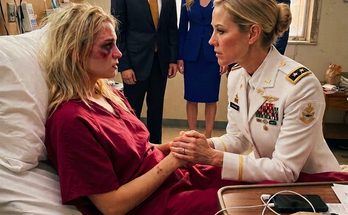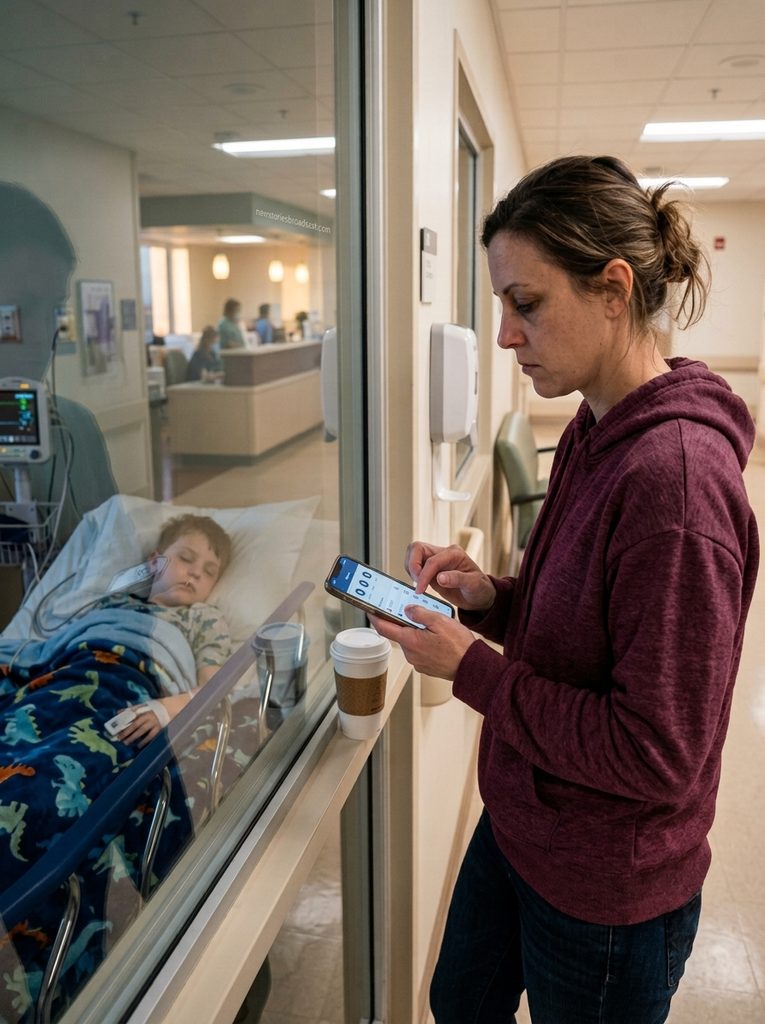
The bank manager had barely finished explaining that Patricia and Vanessa had gone to the branch and tried to reach an account that was not only the mother’s. The words landed differently because behind the hospital glass, Caleb was still recovering, while the people who ignored his surgery had suddenly found time to chase money.
The phone felt heavier in her hand as she stood outside her son’s ICU room. For three days, she had measured life in tiny things: the rise of Caleb’s chest, the changing numbers on the monitors, the moments when his eyes opened and he recognized her. Her family had not measured anything about him at all.
They had measured a wedding dress.
Image
They had measured a withdrawal.
They had measured what they believed they could still take.
Before that morning call, she had already reached a breaking point she never expected to reach. She had spent years explaining away behavior that hurt her because the people doing it carried the title of family. She had convinced herself that patience was love, that forgiveness was loyalty, and that helping someone financially meant she was keeping the family together.
But the ICU had changed the way she saw everything.
When Caleb was rolled toward surgery before sunrise, she remembered every detail. The dinosaur blanket tucked around his shoulders. The small green heart drawn beside his name on the hospital board. The way his fingers held hers even though he was trying to be brave.
She remembered looking at the automatic doors when he asked if Grandma was lost.
She remembered the lie she told because she wanted to protect him from a truth no seven-year-old should have to understand.
Grandma was not lost.
Grandma simply did not come.
Neither did Aunt Vanessa.
She had given them every piece of information they needed. The hospital location. The surgery time. The floor. The doctor’s name. The parking details. She had even sent a picture of Caleb holding his favorite dinosaur because some part of her still believed a personal reminder would wake up the compassion she had been waiting for.
Vanessa sent a heart.
Her mother sent a short answer that offered no promise.
Then the morning arrived, and the hallway stayed empty.
For six hours, she waited through surgery alone. She sat in a hospital chair, watched medical staff move through the doors, and tried to keep herself calm for the child who needed her steady.
When the doctor finally said the operation went well, relief came with a warning. Caleb was safe, but he was fragile. Recovery would take time. The danger was not completely gone.
So she stayed.
She slept beside his ICU bed in a chair that hurt her back. She learned the sounds of machines and the routines of nurses. She learned how to wipe away tears quietly because waking Caleb mattered more than showing anyone how broken she felt.
Then her phone lit up.
The message was not about Caleb.
It was not an apology.
It was not a question about whether he was awake, whether he was scared, or whether the surgery had worked.
Her mother wanted money.
Five thousand dollars for Vanessa’s wedding dress.
The timing was almost impossible to understand. Her son had just survived a serious medical procedure, and the first priority from her family was a purchase for a celebration she was not even part of.
That message forced her to look backward.
She thought about how many times she had been asked to help. After her father died, her mother said grief had made her panic and asked for emergency access to one of her accounts. Vanessa needed her card for temporary expenses.
Temporary became a pattern.
Phone bills.
Rent problems.
Insurance payments.
Wedding deposits.
Meals and plans she was never invited to enjoy.
Each time, there was another reason. Another emergency. Another promise that it would not happen again.
Each time, she accepted the explanation because she wanted to believe family meant people would eventually show up for each other.
But when she needed them for something that could not be repaid with money, they disappeared.
No one asked how Caleb was.
No one asked how she was surviving those long hours beside him.
No one offered to sit with her, bring coffee, or simply say they were sorry they could not be there.
The request for the wedding dress became the moment when every old memory connected.
She opened her banking app.
She sent fifty cents.
The note attached to the transfer was simple: buy a veil.
It was not about the amount.
It was about finally showing that access to her kindness was no longer automatic.
Then she called the bank.
She froze the cards.
She removed the authorized users.
She changed passwords.
She asked questions she had avoided for years because admitting the truth meant admitting how long she had allowed the situation to continue.
The bank employee reviewed the accounts carefully. What had felt like normal family help suddenly looked different when viewed as a series of transactions, permissions, and repeated withdrawals.
Standing in the hospital hallway, she realized something important.
Love did not require unlimited access.
Being a daughter did not mean being responsible for everyone else’s choices.
Being a sister did not mean sacrificing her child’s security to keep someone comfortable.
The next morning, the call came from the bank manager.
Patricia and Vanessa had gone to the branch.
They were angry.
They wanted access restored.
They wanted to know why the accounts were locked.
But the part that unsettled the manager was what they had attempted to reach.
It was not just the money she had already protected.
They had tried to access another account connected to her finances.
An account she had never mentioned to them.
An account they should not have known existed.
That detail changed everything.
For years, she had wondered whether she was simply being too sensitive. Whether setting boundaries would make her the selfish one. Whether saying no would make her a bad daughter.
Now she had a different question.
How had they become so comfortable believing everything she owned was available to them?
The answer was painful because it was built from years of small decisions. Every time she ignored a warning sign. Every time she accepted an excuse. Every time she helped without asking whether anyone would help her in return.
The hospital room beside her held the clearest answer.
Her son needed a mother who was present, focused, and protected.
He did not need her distracted by another family emergency created for someone else’s benefit.
The bank manager continued explaining what happened at the branch. He described the confusion, the urgency, and the fact that Patricia and Vanessa seemed certain they still had control.
They had expected the same person who always gave in.
They had not expected the person sitting beside her son’s ICU bed.
Because something had changed.
The surgery had not only been about Caleb’s body healing.
It had also revealed the condition of the relationships around them.
The family members who claimed blood was everything had been absent when blood actually mattered.
The people who asked for support had forgotten that support was supposed to go both ways.
And the person they underestimated had finally stopped confusing sacrifice with love.
When she looked through the ICU window again, she saw Caleb sleeping peacefully. The dinosaur blanket was still there. The monitors were still there. The recovery was still hard.
But for the first time in a long time, she felt certain about one thing.
She was protecting the right person.
Not the loudest person.
Not the person demanding the most.
Not the person using family as a reason to ignore every boundary.
Her son.
The bank manager waited for her response because the next step was hers to decide. The accounts could be reviewed. The access could remain blocked. Questions could be answered.
But the decision was no longer about money.
It was about whether she would return to the old version of herself or finally accept that some relationships only survive when one person keeps giving and the other person keeps taking.
And this time, she had already made her choice.