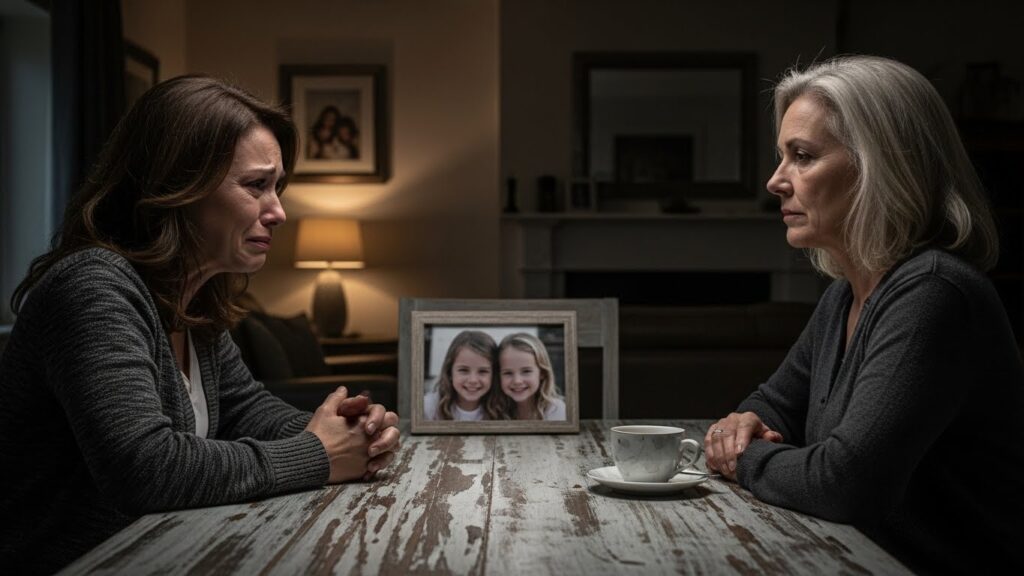
I never thought I’d have to choose between my child and my closest friend.
I’m Nicole, 40 now. This happened in the 2023–2024 school year when my son Mason and my best friend Lisa’s daughter Ava were both in 4th grade at Willow Creek Elementary — a small public school in our Denver suburb.
Lisa and I had been inseparable since our kids were in diapers. We met at a mommy-and-me class in 2016, bonded over sleepless nights and bad coffee. Our husbands got along. We vacationed together. Our kids grew up calling each other “best cousin.” We told each other everything — marriage troubles, work stress, fears about parenting. She was the godmother to my younger daughter. I was Aunt Nicole to Ava.
We were family.
Then came the incident.
It started in October 2023.
Ava came home crying one day, told Lisa that Mason and two other boys had been teasing her at recess — calling her “Crybaby Ava” because she’d tripped and scraped her knee. Said it happened multiple days.
Lisa texted me that night: “Hey, just a heads-up — Ava said Mason was involved in some name-calling. Probably just kid stuff, but wanted you to know.”
I thanked her, talked to Mason.
He admitted they’d teased her once — “It was a joke, Mom. She cries over everything.” — but swore it wasn’t ongoing.
I made him apologize to Ava the next day at pickup. They hugged. Seemed resolved.
But it wasn’t.
Over the next weeks, Ava’s stories escalated: Mason excluding her from games, mocking her glasses, telling others not to play with her.
Lisa kept updating me — gently at first, then more upset.
By November, Ava was having stomach aches before school, begging not to go.
The teacher got involved. Called both of us in for a conference.
She said there’d been “some social friction” in the friend group. Mason was often the leader when things got rough. Suggested we talk to the kids, maybe separate playdates for a while.
I asked Mason again. He insisted Ava was “making it up” because she was sensitive. Said the other boys teased her more than he did.
I believed him.
He’s my son. He’d never lied to me about anything big. He was kind at home — gentle with his little sister, helpful with chores. Teachers had always called him “a leader.”
Lisa believed Ava.
She’s her daughter. Ava was shy, anxious, had been targeted by a bully in 2nd grade. This felt like history repeating.
We promised to handle it at home.
But the rift began.
Lisa pulled Ava from our weekly playdates. Stopped inviting Mason to birthday parties.
I felt hurt — like she was punishing my son without proof.
She felt hurt — like I wasn’t taking her daughter’s pain seriously.
By January 2024, the moms’ group chat (eight of us, all close) started buzzing.
Lisa posted: “Need advice — how to help a child dealing with repeated bullying?”
Didn’t name names, but everyone knew.
Other moms chimed in with stories. A few asked privately if it was Mason.
I defended him publicly: “Kids have conflicts. Important to hear both sides.”
Tension rose.
In February, the school called us in again — this time with the principal.
Ava had written a note to the counselor: “Mason and his friends make me feel like I don’t belong. I’m scared to go to recess.”
Mason was questioned. Denied ongoing bullying. Said Ava “overreacts” and sometimes started drama herself.
The principal implemented a “reciprocal mediation” plan: separate recess groups, check-ins with the counselor.
Lisa was furious. “He’s getting away with it because he’s charming.”
I was furious. “You’re letting Ava paint my son as a monster without evidence.”
Our friendship cracked.
We stopped talking outside school necessities.
The moms’ group split — half supported Lisa (“Believe the victim”), half supported me (“Boys get falsely accused too”).
Playdates canceled. Group brunches stopped.
In March, the breaking point.
Mason came home upset one day: “Ava told everyone I’m a bully. No one will play with me now.”
I talked to the teacher. Learned Ava had shared her feelings in a class “sharing circle” — named Mason directly.
I lost it.
Called Lisa: “How could you let her publicly humiliate my son?”
She fired back: “How could you raise a child who makes mine dread school?”
We screamed. Hung up.
No contact for weeks.
Then the truth came out — from an unexpected source.
In April, one of the other boys in the group — Ethan — confessed to his mom (a neutral friend) that he and the third boy had been the main instigators. Mason joined in sometimes but often told them to stop. That Ava and Mason had actually been fighting because they both liked the same girl in class, and it got petty on both sides.
The mom told the teacher. Investigation reopened.
Counselor met with all kids separately.
Conclusion: mutual conflict, not one-sided bullying. Both Mason and Ava had exaggerated to their parents to garner sympathy. The other two boys were the primary escalators.
The school mediated a group apology. Kids reconciled — slowly became friends again.
But Lisa and I… didn’t.
Too much damage.
Accusations of bad parenting. Months of believing the worst of each other’s child — and by extension, each other.
We tried one coffee in May. Awkward. Forced.
She said, “I should’ve trusted you more.”
I said, “I should’ve listened better.”
But the trust was gone.
We’re polite at school events now. Wave. Small talk about weather.
The kids play together again — happily.
But the moms’ group dissolved. Families took sides. Some friendships survived, most didn’t.
Willow Creek Elementary still talks about “the 4th grade bullying drama that split the parents.”
Two mothers who loved each other like sisters — torn apart because we each chose blind loyalty to our own child over loyalty to each other.
We were both right.
And both wrong.
Parenthood makes you fierce.
It also makes you blind.
When your child’s pain is on the line, you’ll believe them over anyone — even the person you’d once have trusted with your life.
Lisa and I lost our friendship proving that.
And 18 months later, it still hurts more than I can say.
Because the real casualty wasn’t the playground conflict.
It was the village we thought would raise our kids together.
Once parental loyalty is tested against another parent’s — sometimes no one wins.
Not even the kids.
TL;DR: My best friend’s daughter accused my son of bullying. I defended him; she defended her child. Months of escalating conflict split our tight friend group and ended our 15-year friendship, even after the school revealed it was mutual kid drama exaggerated by both children. Blind parental loyalty destroyed what adult communication might have saved.