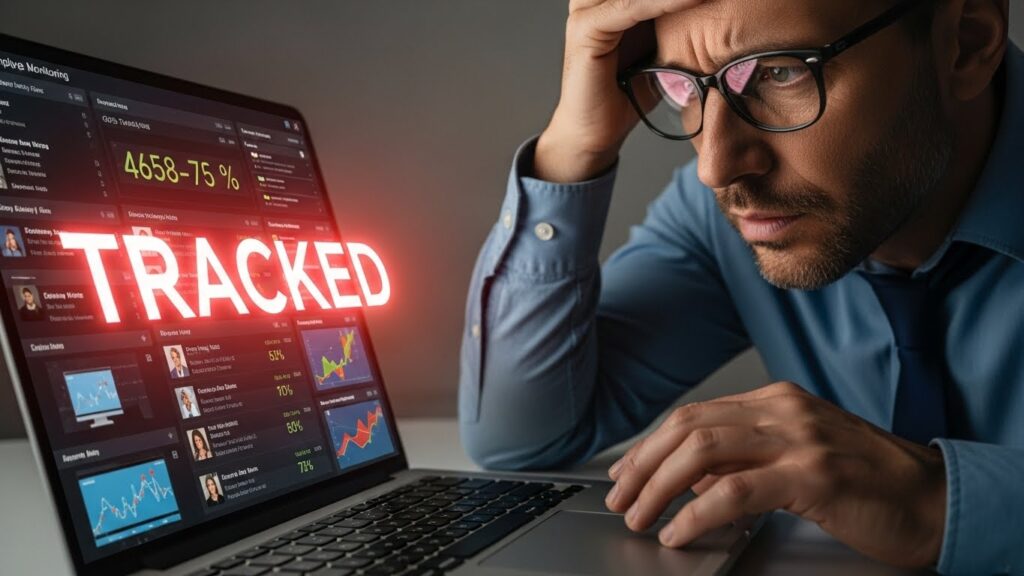
I thought remote work was the future.
Turns out for some managers, it’s just an excuse to treat employees like suspects.
I’m Chris, 35 now. This played out from early 2024 through mid-2025 at Nexus Solutions, a mid-sized SaaS company headquartered in San Francisco with fully distributed teams.
I’d been remote with them since 2021 — hired during the pandemic as a senior product manager. My track record was spotless: consistently exceeded OKRs, led three successful feature launches, mentored juniors, 360 reviews always glowing. I worked from my home office in Colorado — quiet neighborhood, dedicated setup with dual monitors, ergonomic chair, the works. No kids, no distractions. My days: 8 AM standup, deep-focus blocks, client calls, async updates in Slack.
Life was good.
Then, in January 2024, we got a new VP of Product, Vanessa.
She came from an old-school tech giant where “butt-in-seat” culture still ruled. Her first all-hands: “Remote work is a privilege, not a right. Visibility breeds accountability.”
Red flag, but I shrugged. My metrics spoke for themselves.
The changes started small.
Mandatory “core hours” camera-on for all meetings — even 1:1s.
Daily “end-of-day wins” reports in a public channel.
Then the big one: in March 2024, she announced “active hours tracking.”
We’d install software that logged keyboard/mouse activity, took random screenshots, scored us on “focus time.”
The justification: “Some people aren’t pulling their weight remotely. We need data to manage fairly.”
Half the team pushed back — privacy concerns, mental health impact.
Vanessa: “If you’re working, you have nothing to hide.”
I refused.
Politely at first — emailed HR: “This feels like surveillance. I’m happy to share output, but not screenshots of my screen.”
HR sided with her: “It’s company policy now. Non-compliance is insubordination.”
I installed it — grudgingly.
But I had boundaries.
I live in Colorado — mountain time, two hours ahead of SF HQ.
I start early (6–7 AM my time) to overlap with East Coast clients, take a mid-day break for a hike or gym (my mental health ritual since pandemic anxiety), then log back on evenings if needed.
The software flagged me constantly: “Low activity 1–3 PM.”
Vanessa started 1:1s with “Your focus score is below team average.”
I showed deliverables — on time, high quality.
She: “Output is great, but presence matters.”
By summer 2024, the micromanagement escalated.
She required “camera always on” during core hours — even when not in meetings. “So we know you’re at your desk.”
I pushed back again: “I’m heads-down working. Camera kills my flow.”
She put me on a PIP — performance improvement plan.
Reason: “Insufficient visibility and collaboration.”
My metrics? Still top quartile.
Team Slack went private — people venting about quitting.
Three engineers left in August.
I started interviewing.
But I loved the product, the users, my direct reports.
I fought the PIP — documented everything, looped HR, requested mediation.
Vanessa doubled down: required daily “proof of work” screenshots.
I complied — minimally.
Then the final straw.
In November 2024, I had a routine surgery scheduled — outpatient, one day off, work light the next.
I requested PTO.
Approved.
Day of surgery, I’m home recovering — pain meds, resting.
Vanessa Slack messages me at 2 PM: “Quick question on the Q1 roadmap — can you hop on a 15-min call?”
I replied from phone: “Still recovering from surgery — can it wait till tomorrow?”
She: “It’s urgent. Camera on?”
I said no — groggy, in pajamas, ice pack on.
She marked me “unresponsive during core hours.”
Added to my PIP file.
That night — doped up on painkillers — I updated my LinkedIn: “Open to new opportunities.”
A recruiter from a competitor reached out within days.
Offer came in January 2025: same title, 25% raise, fully async culture, no tracking software.
I accepted.
Gave notice in February.
Vanessa’s exit interview: “We’re disappointed. You had so much potential if you’d just embraced visibility.”
I said, “I had potential. You just didn’t trust me to use it.”
Left in March 2025.
Heard later: four more PMs quit within months. Product velocity tanked. Clients complained about delays.
Vanessa got “restructured out” in September 2025.
New VP rolled back all tracking tools.
Too late for me.
I’m thriving at the new company now.
No cameras. No screenshots.
Just results.
And trust.
Remote work didn’t test my trust in the company.
The conflict tested the company’s trust in me.
And they failed.
I used to feel guilty for “not adapting.”
Now I know: the problem wasn’t my work ethic.
It was a manager who couldn’t lead without watching.
Some bosses manage outputs.
Others need to manage optics.
I chose a place that manages the first.
The conflict cost me two years of stress and a PIP on my record.
But it taught me my worth isn’t measured in mouse clicks.
It’s measured in what I deliver.
And I deliver — on my terms.
From a home office no one needs to spy on.
Because trust shouldn’t be earned by surveillance.
It should be given — until proven otherwise.
They proved otherwise.
I left.
And I’ve never been more productive.
TL;DR: New manager introduced invasive remote tracking (screenshots, always-on camera) due to distrust of remote workers. Despite excellent performance, I was put on a PIP for refusing full compliance and protecting boundaries. The conflict pushed me to leave for a better company with an async, trust-based culture — proving micromanagement kills talent faster than any “visibility” tool.