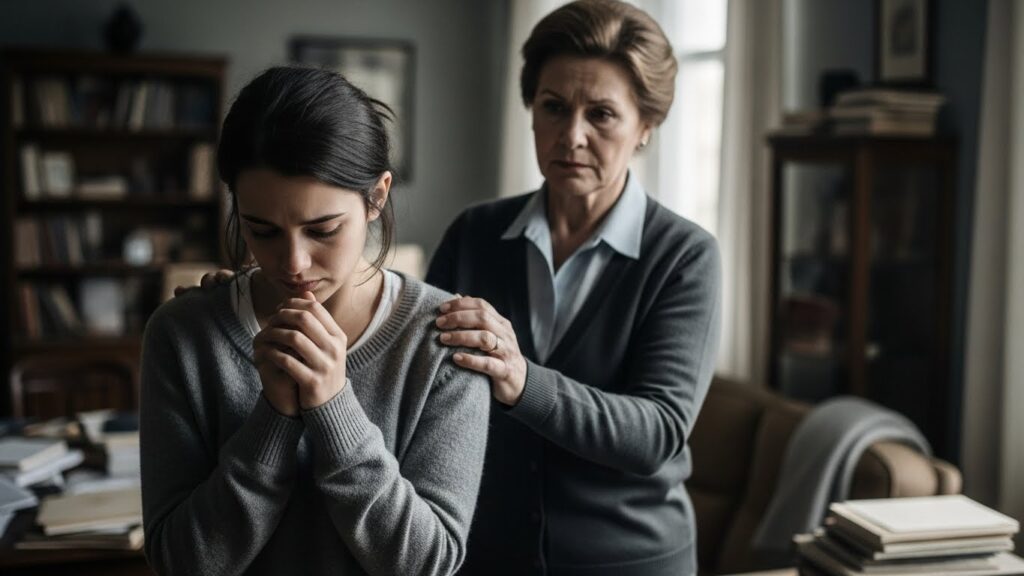
Hello Readers, throwaway for obvious reasons. I’ve been in therapy for six months working through this, and I think I’m finally ready to tell the full story. For 28 years, I thought my mom was just overprotective because she loved me so much. It took moving out at 29 and going low-contact to realize she had been controlling nearly every aspect of my life—and the guilt trips, tears, and “I’m only doing this because I care” made it impossible to see until I was out. This all came to a head in late 2025, and I’m still healing.
I’m 30F now, only child. My dad passed when I was 4 (car accident), so it was always just Mom and me. She was 24 when I was born, young, grieving, and determined to be the perfect mother. From the outside, she was: homemade lunches, PTA president, always at my games and recitals, cried at every milestone. Everyone called us “best friends.” I felt lucky.
But looking back, the control started early.
Elementary school: she picked my friends. If I wanted a playdate with someone she didn’t like (too loud, parents smoked, whatever), she’d say, “I just don’t feel good about that family.” Tears if I pushed. So I stopped asking.
Middle school: she chose my clothes, hairstyle, extracurriculars. I wanted to try soccer—she signed me up for piano because “ladies play instruments.” I hated it but didn’t complain.
High school: she monitored my phone, read my texts, demanded passwords. Curfew was 9 p.m. even at 17. College applications—she filled them out, chose my major (nursing, because it was “stable and caring, like me”). I got into my dream school for graphic design; she cried for days about how far away it was, so I went to the local university instead.
I told myself: she’s protective because she lost Dad. She’s scared. She loves me.
College: I lived at home to “save money” (her idea). She drove me to campus, waited in the parking lot if I had evening classes, packed my lunches. Boyfriends? She’d interrogate them, cry if I stayed out late, say, “I can’t sleep until I know you’re safe.” None lasted.
First job after graduation (in healthcare admin, not design): she helped me interview, negotiated my salary higher (embarrassingly), called my boss once when I was sick to explain why I needed an extra day off.
I was 25 and still asking permission to go out with friends.
The turning point started in 2024.
I met “Jake” (31M) on a dating app. First guy Mom didn’t immediately hate. He was kind, stable, creative (photographer). We clicked. I was cautious telling Mom, but she seemed happy—until we got serious.
Suddenly: “He’s nice, but does he make enough to support you?” “Photographers don’t have real careers.” “You’re spending too much time with him—you’re neglecting me.”
I started staying at his place sometimes. Mom would call at midnight crying: “I can’t sleep. I’m worried something happened.” Or text: “Just checking you’re safe. I love you more than anyone.”
Guilt worked every time. I’d go home.
In early 2025, Jake and I talked about moving in together. I was excited—my own space, adult life. I told Mom over dinner.
She went silent, then started sobbing. “You’re abandoning me. After everything I’ve done for you? I raised you alone, sacrificed everything, and now you’re leaving me for some man?”
I tried to reassure: “It’s only 20 minutes away. We’ll see each other all the time.”
She escalated: health issues flared (migraines, anxiety attacks). “The stress is making me sick. If you move out, I don’t know if I can handle it.”
I stayed.
Jake was patient but frustrated. Friends started saying, “Your mom is controlling, not protective.” I defended her: “She’s just scared. She lost Dad.”
Therapy started in June 2025 after a panic attack of my own. Therapist (kind but direct) asked: “When your mom cries to keep you home, whose needs are being met?” I didn’t have an answer.
Sessions revealed patterns: enmeshment, emotional manipulation, parentification (I’d been her emotional support since childhood). Mom’s “protection” was control dressed as love.
In September, Jake got a job offer in Seattle—great opportunity, big raise. He asked me to move with him. Future talk: marriage, kids, the life I wanted.
I was terrified to tell Mom.
I did it in October, over coffee at her house.
“I’m moving to Seattle with Jake in December.”
She froze, then unleashed: screaming, crying, accusing me of betrayal. “You’re killing me. I’ll die alone. You’re selfish. He’s taking you away.”
She called Jake manipulative, said I was brainwashed. Threatened to cut me out of her will, then reversed to “I’ll stop eating if you go.”
I held my ground—shaking, crying, but firm. “I love you, Mom. But I’m 29. I need to live my own life.”
She gave me the silent treatment for two weeks, then love-bombed: gifts, apologies, “I’ll change, just don’t leave.”
I moved anyway in December 2025.
The first month was hell.
Daily texts: “I can’t sleep.” “I’m sick.” “Your aunt thinks you’re cruel.” Photos of her crying. Voicemails: “I guess I wasn’t a good enough mother.”
Jake supported me through blocked numbers, therapy, guilt waves.
We set boundaries: I went low-contact. One call a week, no responding to guilt trips. She escalated—told extended family I’d “abandoned” her. Some cousins unfollowed me. Others reached out privately: “We know how she is. Good for you.”
It’s January 2026 now. We’ve been in Seattle a month. I love my new job (finally in design), our apartment, the space to breathe.
Mom and I talk once a month—short, surface-level. She’s in therapy (her choice or bluff, I don’t know). No real apology yet, but less manipulation.
I grieve the mom I thought I had—the protective one. But I’m angry too, at the years lost to guilt.
I thought my mom was being protective.
She was controlling my life, and love was the leash.
If you’re reading this and everything runs through one parent—if you can’t make a choice without tears or guilt—ask yourself whose life you’re living. It’s okay to choose yourself. It doesn’t make you ungrateful or cruel.
It makes you free.
Thanks for reading. Needed to say this somewhere.