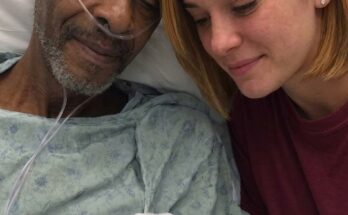
My name is Daniel, I’m 40 years old, and I live in Eugene, Oregon. My father died last winter, quietly, the way he lived most of his life—on the edges. He wasn’t a villain, at least not in the way stories like to frame things. He was just… gone. Present enough to send birthday cards. Absent enough that I learned not to expect more.We cleaned out his apartment in stages. Old clothes. Paperbacks. Receipts folded into impossible shapes. Near the bottom of a file box labeled “Taxes,” I found an envelope with my name written in handwriting I recognized instantly.
It wasn’t sealed. Inside was a letter dated almost twenty-five years ago. He wrote about leaving. Not dramatically. Carefully. He said he’d made a choice after my parents separated—a bad one, he admitted—to step back completely rather than risk becoming a source of instability. He wrote about drinking. About shame. About knowing he couldn’t be the father I deserved and being terrified that trying would hurt me more than staying away. “I told myself distance was protection,” he wrote. “I don’t know if that was true. I just know it was easier to live with than my failures.”
I sat on the floor with the letter in my hands and felt something shift. For years, I’d told myself stories to make sense of his absence: that he didn’t care enough, that I wasn’t worth the effort, that silence meant indifference. The letter didn’t erase the hurt—but it changed its shape. He wasn’t absent because I didn’t matter. He was absent because he didn’t trust himself. The letter didn’t ask for forgiveness. It didn’t try to justify the years lost. It just explained the decision as it was, without drama or excuses. He ended by saying he hoped I’d built a life that wasn’t defined by his absence—and that if I ever found the letter, I’d understand that leaving wasn’t the same as not loving. I folded it carefully and put it back.
Understanding didn’t fix everything. It didn’t give me back childhood moments or conversations that never happened. But it gave me something else: permission to stop taking his absence personally. Grief, I’ve learned, isn’t just missing someone. Sometimes it’s grieving the version of the relationship you never got to have—and deciding what to carry forward anyway. I left his apartment with fewer questions than I arrived with. That felt like a kind of peace.