My name is Kevin, I’m 44 years old, and I live in Temecula, California. I’ve owned my house for almost eight years, long enough to know where my property lines are without looking them up. That’s why I nearly laughed when my neighbor told me I was “no longer allowed” to use my own driveway. His name is Harold. Retired. Immaculate lawn. Strong opinions. It started with a note on my windshield saying I was “encroaching.” I assumed it was a mistake. My driveway has always been where it is—poured decades before either of us moved in. When I knocked on his door to clarify, he told me he’d had a survey done and that part of my driveway was actually his. He said it calmly, like he was explaining the weather. Then he added, “If you keep parking there, I’ll have it towed.” I asked to see the survey. He refused.
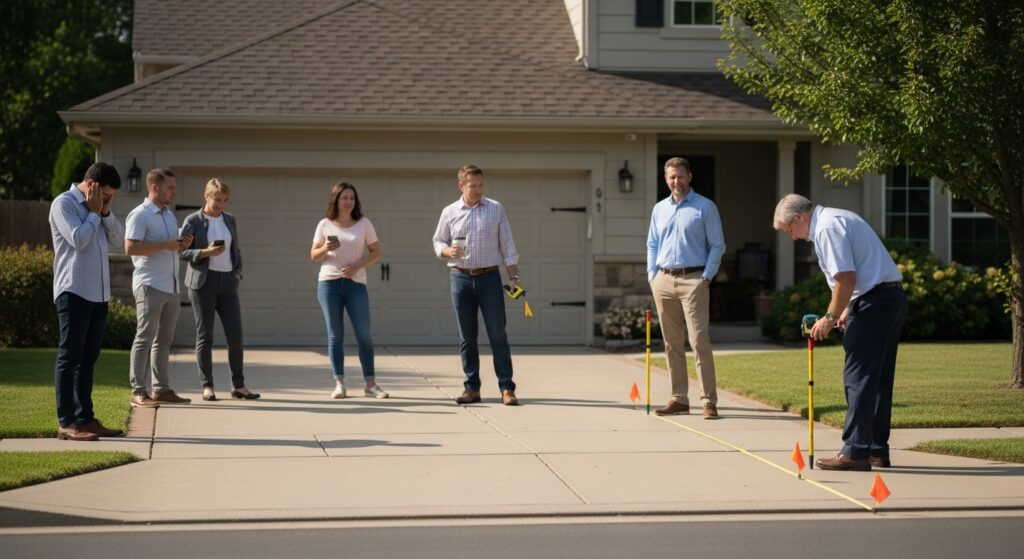
Instead, he sent a certified letter claiming adverse possession and threatening legal action if I didn’t “vacate the space immediately.” He even painted a thin white line across my driveway overnight. That’s when I stopped laughing. I pulled my deed. My original survey. City records. Everything confirmed what I already knew—the driveway was mine, entirely and legally. When I showed him the documents, he waved them off and said, “We’ll see what the city says.” So I let the city speak. I scheduled an official boundary verification and—here’s where it gets petty—I invited the neighbors. Not formally. Just casually. I mentioned there’d be a city inspector marking property lines and that it might be interesting to watch. People showed up. Lawn chairs. Coffee mugs. Phones out. When the inspector arrived, Harold stood confidently on his side, arms crossed. The inspector measured, checked records, and placed bright orange flags exactly where the line had always been.
Not a single inch of my driveway crossed it. The inspector looked at Harold and said, “You’ve marked your neighbor’s property.” The silence was brutal. Someone coughed. Someone else whispered, “Wow.” Then the inspector added that painting a line on someone else’s driveway could be considered property damage. Harold’s face went red. He muttered something about “miscommunication.” No one bought it. After the inspector left, a few neighbors clapped. Not loudly. Just enough. Harold went inside and didn’t come out. The next morning, the white line was gone. He’s never mentioned the driveway again. He avoids eye contact now, and honestly, that’s fine. I didn’t want revenge. I wanted clarity—and witnesses. I learned something from the whole thing: some people rely on intimidation and isolation. They assume you’ll back down quietly. They don’t expect you to bring receipts—or an audience. I still park in my driveway every day. And sometimes, when the whole block is outside, I catch a few smiles.