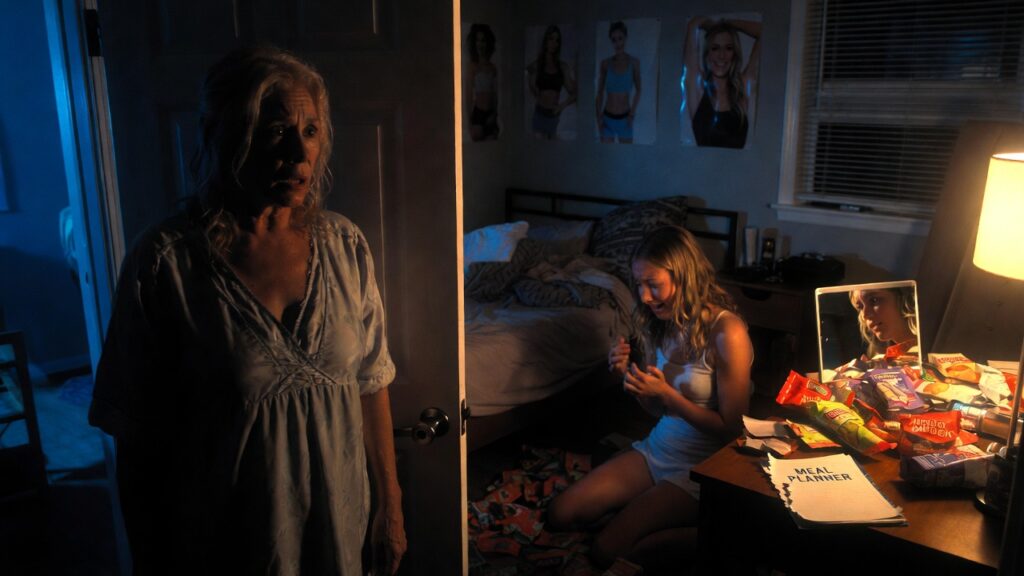
Blended families come with challenges, but I thought we were doing okay. My stepdaughter Ivy (14) moved in with us last year after some family changes. She’s smart, driven, and lately… completely fixated on “clean eating.” No sugar, no processed foods, no fried anything — only kale smoothies, quinoa, grilled chicken breast, and endless meal-prep TikToks.
She created a color-coded meal list and got upset if anything deviated. One evening, exhausted from work, I made fried chicken — comfort food for the whole family. Ivy exploded: “This is poison! How can you feed me this?!”
Frustrated, I said the words I regret: “If you don’t like it, cook your own meals or go live somewhere else!”
She stormed to her room and slammed the door. I felt awful but figured she’d cool off.
Then, around midnight, a loud BANG echoed from upstairs — like something heavy fell or broke. My heart stopped. I ran to her room, flung the door open… and froze.
Ivy was on the floor, sobbing uncontrollably, surrounded by shredded meal plans, empty supplement bottles, and her phone screen glowing with fitness influencer posts. In her hand: a small mirror she’d just smashed against the wall. Shards everywhere. She looked up at me with red, terrified eyes and whispered:
“I’m never going to be good enough… I hate my body… I can’t stop thinking about food… I’m scared.”
My world tilted. This wasn’t teenage attitude or rebellion. This was full-blown orthorexia — an eating disorder disguised as “healthy living.” The obsession had spiraled into self-loathing, anxiety attacks, and secret purging. The “strict list” was her way of controlling something in a life that felt out of control. The bang? She’d thrown the mirror in a panic when she couldn’t stop crying over a “cheat” bite earlier that day.
I dropped to my knees, hugged her (she let me — first time in months), and just held her while she cried it out. We talked for hours. She admitted the pressure from social media, comparing herself to filtered bodies, feeling like she had to be “perfect” to be loved.
The next morning, I apologized for my harsh words and told her: “Your worth has nothing to do with food or how you look. You are enough — exactly as you are.” We booked an appointment with a therapist specializing in teen eating disorders that same week. I deleted the junk food guilt from our home and started cooking balanced meals together — no labels, no rules, just family time.
It’s been a long road. Ivy still has tough days, but she’s learning to eat without fear, talk about feelings instead of calories, and see herself through kinder eyes. That night wasn’t the end — it was the beginning of real healing.
Lesson: Obsession with “clean” anything can hide deep pain, especially in teens bombarded by perfect images online. Listen when they lash out — it’s often a cry for help. And never underestimate how much a simple “You are enough” can mean when someone’s battling their own mind.
If you or someone you know is struggling with disordered eating, reach out — help is out there.