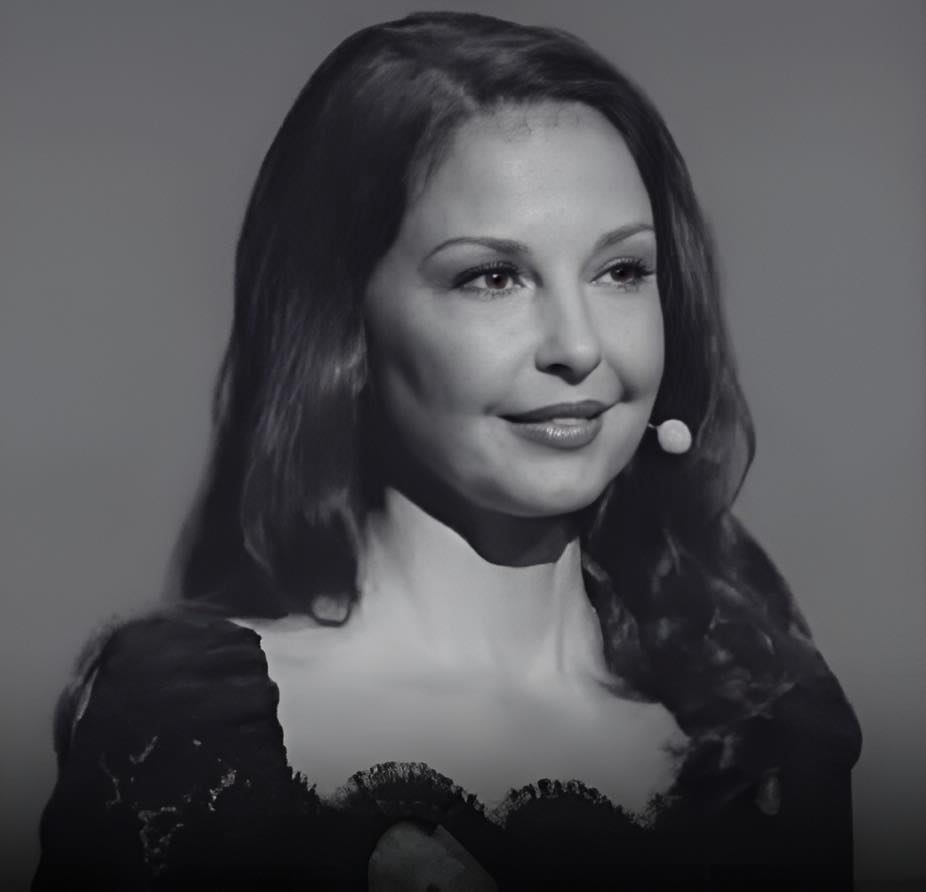
Ashley Judd was twenty-nine when she walked into the Peninsula Hotel in Beverly Hills expecting a business breakfast. Her career was gaining speed. She had talent, momentum, and the kind of visibility that turns promise into permanence.
Harvey Weinstein had asked for the meeting.
When someone that powerful calls, you go. You prepare. You assume the conversation will be about work.
It wasn’t.
Ashley refused what she should never have been asked for. She left the room believing the discomfort was over, unaware that the real punishment would unfold quietly, over decades.
Soon, something strange began happening.
Roles she seemed right for vanished. Directors stopped returning calls. Projects that felt secure dissolved without reason. Nothing dramatic. Nothing obvious. Just a steady disappearance of opportunity.
She questioned herself. Worked harder. Wondered what she was missing. She never imagined the truth because the truth lived in whispers she never heard.
Behind closed doors, someone was working methodically. A poisoned word here. A warning there. She was being labeled “difficult,” “unreliable,” “to be avoided.” No evidence. No confrontation. Just reputation erosion delivered by a man powerful enough that no one questioned him.
Twenty years passed.
Then, in December 2017, filmmaker Peter Jackson spoke publicly. While casting The Lord of the Rings, Ashley Judd and Mira Sorvino had been on his list. Both were removed after he was warned they were “nightmares to work with.”
Years later, Jackson realized the truth.
“We were fed false information,” he said. “As part of a smear campaign.”
In a single statement, the fog lifted.
Ashley finally saw what had been done to her. The roles she never knew she lost. The future quietly stolen because she had said no.
And then she spoke.
On October 5, 2017, The New York Times published its investigation. Ashley Judd used her name. Told the truth. Accepted the risk.
Her voice cracked the silence.
Others followed.
What had lived in isolation exploded into daylight. A phrase—Me Too—spread across the world, carrying stories buried for years. Not just in Hollywood. Everywhere power had been used to threaten, silence, and erase.
Harvey Weinstein fell. Convictions followed. But the deeper shift mattered more.
People learned to recognize retaliation. To name whisper campaigns. To understand how power hides behind plausibility and politeness.
Ashley Judd lost roles she will never get back. Careers don’t rewind.
But by speaking, she helped stop the machinery that had punished her—and countless others—without consequence.
That hotel room was meant to stay silent forever.
It didn’t.
One truth spoken aloud did what fear never could. It gave permission. And permission became momentum.
Sometimes change doesn’t begin with a victory.
It begins with someone refusing to disappear.
The roles are gone.
The silence is not.