Troy and I grew up together — playground promises, high school sweethearts, married at 19. We built a simple, steady life: two kids, a modest house, shared dreams. I worked full-time, raised the children, managed the home. Troy worked too — long hours, quiet man. I thought we were solid. Then, in our 50s, money started vanishing from our joint account. Small amounts at first, then larger. I asked. He deflected: “Business expenses.” “Helping a friend.” “You’re overreacting.” I found hotel receipts hidden in his desk drawer — same hotel, same city, same room number, multiple times over two years. I called the concierge pretending to confirm a reservation. “Oh yes, Mr. Troy is a regular. Always the same suite. Very discreet.”
I confronted him with the receipts. He didn’t deny it. Just stared at the floor and said: “I’m sorry. I can’t explain.”
No apology that mattered. No remorse that felt real. I filed for divorce. We split everything fairly. The kids were grown — they supported me. Troy moved out. We barely spoke again.
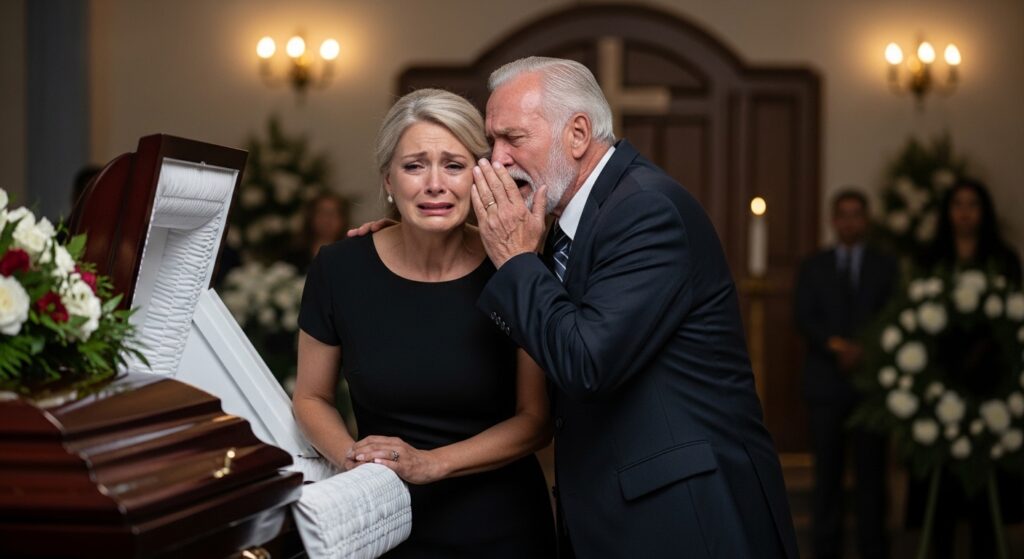
Two years later, he died suddenly — heart attack, alone in that same hotel room. At the funeral, his father — a man I’d always liked, now drunk and broken — pulled me aside by the casket. Tears streaming, voice slurred, he leaned in and whispered: “You don’t even know what he did for you, do you?”
I froze. He pulled out an old envelope from his coat — letters, receipts, bank statements. Troy hadn’t been cheating. He’d been paying for my mother’s cancer treatments. My mom — who’d had no insurance, who’d refused to tell me how bad it was — had been dying quietly in another state. Troy found out years earlier. He paid every bill, every hospital stay, every experimental drug. He used the joint account — hid it in hotel receipts as “business trips” so I wouldn’t question the withdrawals. He flew to see her weekly — same hotel near her hospital. He never told me because my mom begged him not to. She didn’t want me to worry, didn’t want me to feel guilty for not being there. Troy carried the secret alone. For years. Even when I confronted him. Even when I left him. He never said a word.
His father handed me the envelope. Inside: thank-you notes from my mother (she died two years before Troy), hospital bills marked “paid in full by T. Reynolds,” photos of Troy sitting by her bed, holding her hand. One note from my mom to Troy: “Thank you for being my son when I couldn’t tell my daughter. Tell her I love her — when the time is right.”
I collapsed against the casket. Troy hadn’t betrayed me. He’d protected me — in the only way he knew how. He let me hate him to spare me pain. He died never knowing I’d understand.
I stood at his grave later, alone. I whispered: “I’m sorry I didn’t see you. I’m sorry I believed the worst. Thank you… for loving me when I couldn’t see it.”
The kids know now. We visit both graves together — my mother and Troy. We tell stories about the man who gave everything quietly. About love that doesn’t need applause. About secrets kept to protect the people you love most.
Lesson: Sometimes betrayal is just a mask for sacrifice. Sometimes the person you think hurt you the most… was the one protecting you the hardest. Don’t rush to judgment when someone won’t explain. Sometimes silence is love’s heaviest burden. And sometimes, the truth comes too late — but it still matters.
To anyone who’s ever misjudged someone who loved them quietly: forgiveness can heal even after they’re gone. Speak it to the sky. They hear you.