Masoud Pezeshkian voices cautious optimism as Oman confirms a third round of Iran-US negotiations in Geneva on Thursday.
Iranian President Masoud Pezeshkian has said nuclear talks with the United States have produced “encouraging signals”, but warned that Tehran is prepared for any scenario in advance of another round of negotiations set for Thursday.
His comments on Sunday came amid mounting fears of a military conflict, with Washington building up its military presence in the Gulf and US President Donald Trump warning of “really bad things” if no deal is reached on Tehran’s nuclear programme.

“Iran is committed to peace and stability in the region,” Pezeshkian wrote on X.
“Recent negotiations involved the exchange of practical proposals and yielded encouraging signals. However, we continue to closely monitor US actions and have made all necessary preparations for any potential scenario,” he said.
The cautious optimism came after Oman’s Foreign Minister Badr al-Busaidi confirmed a third round of indirect talks between the two sides in Geneva, Switzerland.
“Pleased to confirm US-Iran negotiations are now set for Geneva this Thursday, with a positive push to go the extra mile towards finalising the deal,” said al-Busaidi, who acts as a mediator in indirect talks between Washington and Tehran.
Iran and the US resumed talks on Tehran’s nuclear programme in Oman earlier this month, and held a second round in Geneva last week. Although Washington and Tehran described the talks in overall positive terms, they failed to achieve a breakthrough.
‘Why haven’t they capitulated?’
Trump’s special envoy, Steve Witkoff, who leads nuclear negotiations for Washington, said on Saturday that the US president was curious as to why Iran has not yet “capitulated” and agreed to curb its nuclear programme.
“I don’t want to use the word ‘frustrated’, because he understands he has plenty of alternatives, but he’s curious as to… why they haven’t capitulated,” Witkoff said during an interview with My View with Lara Trump on Fox News, hosted by the US president’s daughter-in-law.
“Why, under this pressure – with the amount of seapower and naval power over there – why haven’t they come to us and said, ‘We profess we don’t want a weapon, so here’s what we’re prepared to do’? And yet, it’s sort of hard to get them to that place.”
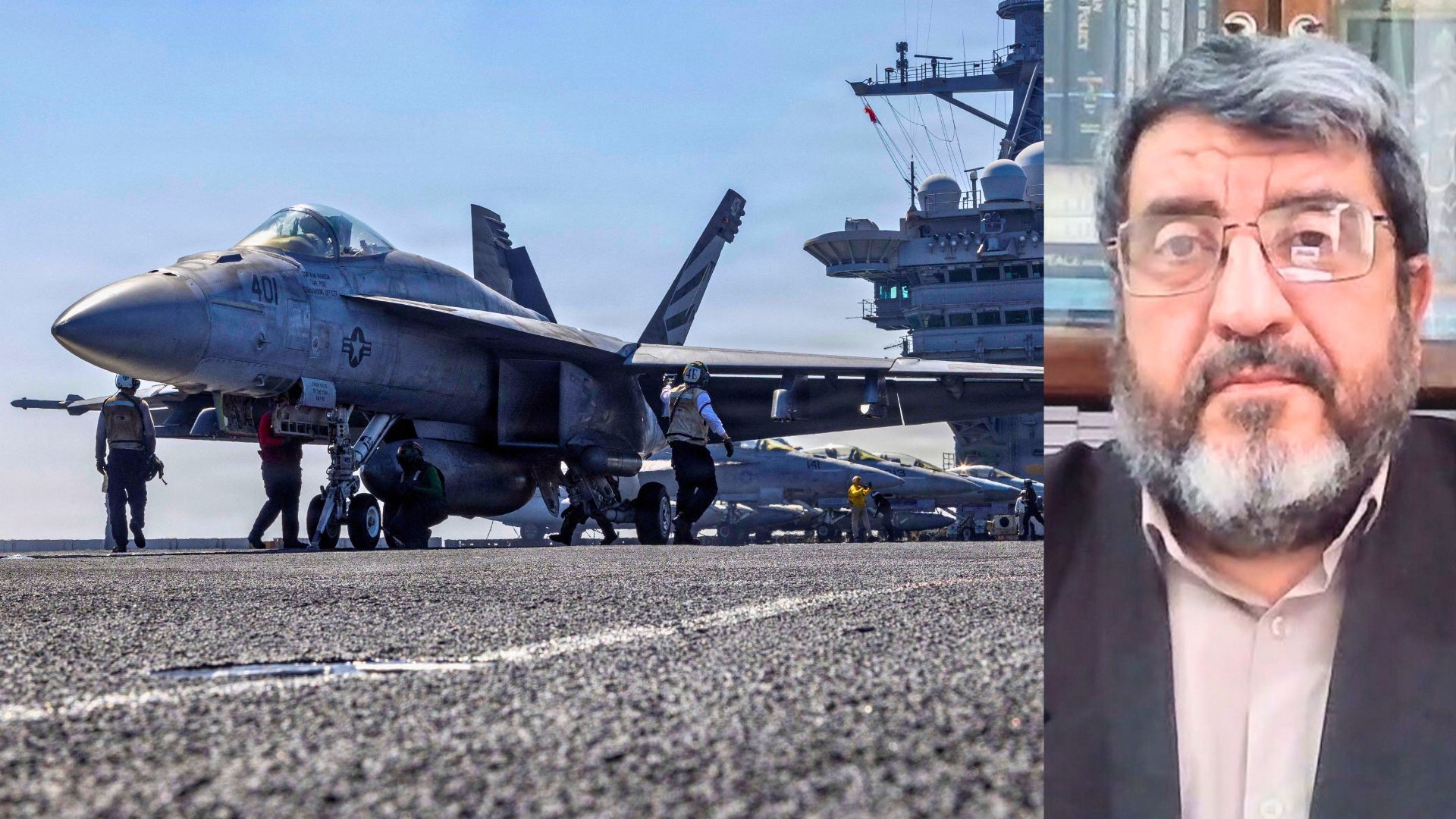
According to the US media, the airpower Washington is amassing in the region is the greatest since its invasion of Iraq in 2003. In the past few days alone, the US has deployed more than 120 aircraft to the Middle East, while the world’s largest aircraft carrier, the USS Gerald R Ford, is on its way to join the USS Abraham Lincoln carrier strike group that is already positioned in the Arabian Sea.
Iranian Minister of Foreign Affairs Abbas Araghchi pushed back swiftly.
“Curious to know why we do not capitulate?” he said in a post on X. “Because we are Iranian.”
In a separate television interview on CBS’s Face the Nation, Araghchi described Iran’s nuclear programme as a matter of national “dignity and pride”, noting that the country’s scientists had developed the technology independently after enduring two decades of US sanctions, the targeted killings of Iranian researchers and joint US-Israeli strikes on nuclear facilities last June.
“We have developed this technology by ourselves, by our scientists, and it is very dear to us because we have created it – we have paid a huge expense for that,” he said.
“We’re not going to give it up. There is no legal reason to do that while everything is peaceful and safeguarded” by the United Nations nuclear watchdog, the International Atomic Energy Agency (IAEA), Araghchi said.
As a “committed member” of the Non-Proliferation Treaty (NPT), which requires states with no nuclear weapons not to seek or acquire them, Iran is “ready to cooperate with the agency in full”, Araghchi added.
But he stressed that under the treaty, Tehran also has “every right to enjoy a peaceful nuclear energy, including enrichment”.
“Enrichment is a sensitive part of our negotiations. The American team knows about our position, and we know their position. We have already exchanged our concerns, and I think a solution is achievable,” the minister noted.
Israel’s role
Araghchi said Iran’s delegation was focused exclusively on nuclear issues during the current negotiations, rebuffing efforts by Washington to expand the talks to cover Iran’s ballistic missile programme and its support for regional armed groups.
He said Iran was preparing a draft proposal that could “accommodate both sides’ concerns” and suggested any eventual agreement could exceed the terms of the 2015 nuclear deal brokered under President Barack Obama.
“There are elements that could be much better than the previous deal,” he said, without elaborating. “Right now, there is no need for too much detail. But we can agree on our nuclear programme to remain peaceful forever, and at the same time, for more sanctions [to be] lifted.”
But analysts warned that deep structural obstacles remained.
Trita Parsi, the executive vice president of the Quincy Institute, told Al Jazeera that Iran is likely to put forward a proposal that goes beyond anything they ever offered, but even that may not be enough.
“Trump has been sold a narrative by the Israelis that portrays Iran far, far weaker than it actually is. As a result, he’s adopting maximalist capitulation positions that are simply unrealistic based on how the power reality actually looks,” Parsi told Al Jazeera.
“Unless this gets corrected, even if the Iranians put forward a very far-leaning proposal that is extremely attractive to the US, Trump may still say ‘no’, because he’s under the false belief that he can get something even better.”
A separate fault line has also emerged between the US and Israel over the scope of any potential agreement.
Mark Fitzpatrick, a former director of the nonproliferation programme at the International Institute for Strategic Studies, said Trump appeared focused narrowly on preventing Iran from acquiring a nuclear weapon, while Prime Minister Benjamin Netanyahu of Israel has pressed for a far broader dismantling of Iran’s military capabilities, including its ballistic missile arsenal.
“The Iranian nuclear programme is what’s important to Trump. And if he can get no enrichment, he would take that deal,” he said.
“Israel has a three-pronged goal. Trump just has the nuclear goal. I don’t think he would feel obliged to keep pressing because Netanyahu wanted the other things,” he added.