Ukraine may have reclaimed 400sq km (154sq miles) of territory this year, and is shooting down record numbers of Russian drones.
Ukraine has sent more than 200 experts to help Gulf countries defend themselves against Iranian drones, and was preparing to send nearly three dozen more, President Volodymyr Zelenskyy said this week.
“What is happening around Iran today is not a faraway war for us – because of the cooperation between Russia and Iran. And we do not believe we have the right to be indifferent,” Zelenskyy told the Parliament of the United Kingdom on Tuesday.

The Shahed-type drones Iran has rained down on Gulf states are the same type it sold to Russia in 2022. Russia has since produced thousands of them under licence.
Ukraine has shot down more than 44,700 of them during the war with Russia. It now has a success rate close to 90 percent, and is aiming for 95 percent. Last month, Ukraine shot down 3,238 Shahed-type drones – a record, said its Defence Minister Mykhailo Fedorov.
They made up only a part of more than 15,000 Russian drones Ukraine shot down in the same month.
Zelenskyy is now selling that know-how to the United Arab Emirates (UAE), Qatar, Saudi Arabia and Kuwait.
He also offered to protect British bases in Cyprus, which were struck by a Shahed on March 2.
“Our experts would place interception teams, and set up radars and acoustic coverage,” he told British MPs. “If Iran launched a large-scale attack – similar to Russian attacks – we would guarantee protection.”
United States allies in the Gulf have been vulnerable to Iranian drones because they have focused on high-altitude systems to stop ballistic missiles, ignoring low-altitude threats, said Oslo University missile expert Fabian Hoffmann.
The problem is not efficacy, but expense. US ballistic interceptors cost up to $10m a shot, compared to roughly $3,000 for a Ukrainian interceptor drone, to shoot down a $50,000 Shahed.
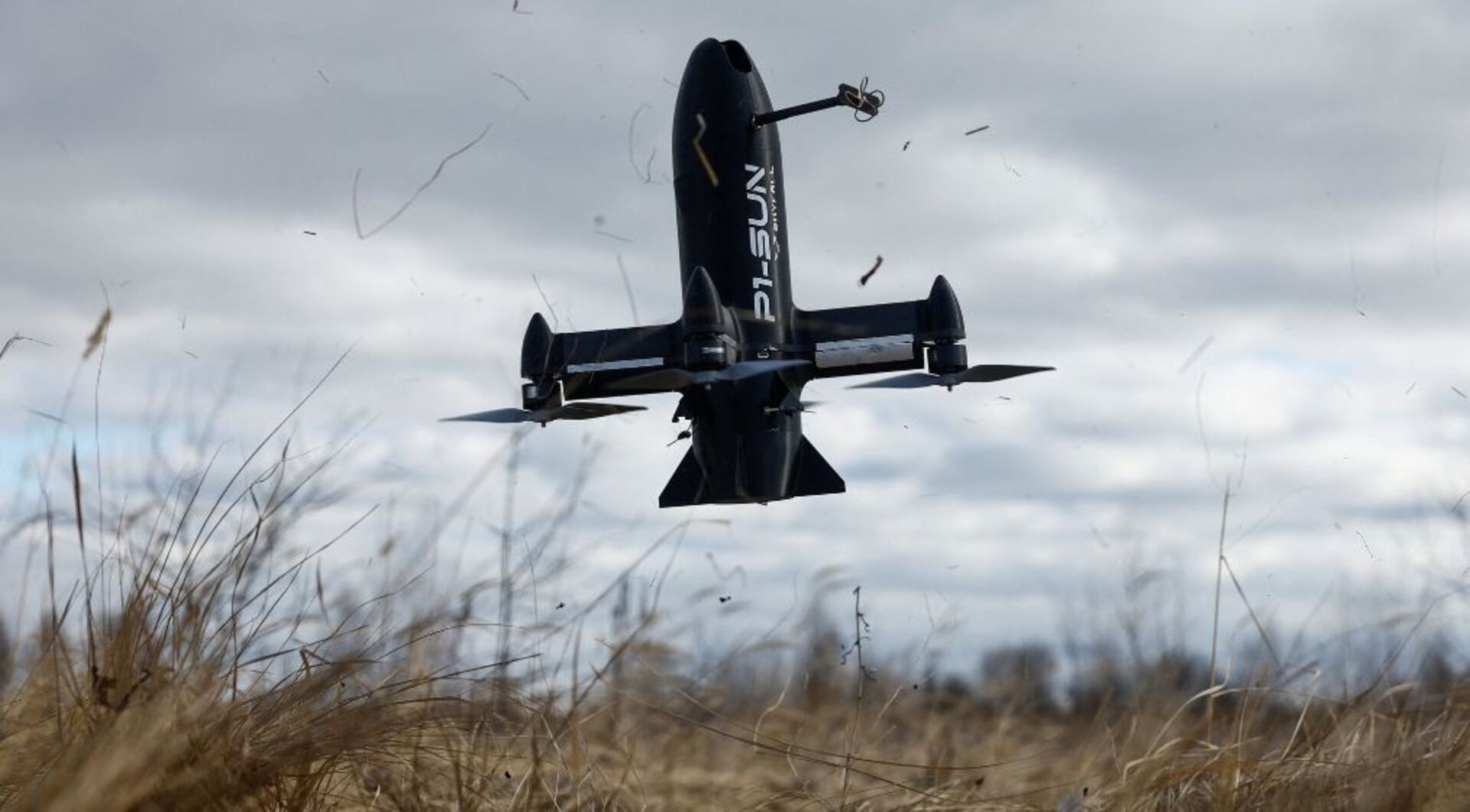
Zelenskyy said Ukraine was “capable of producing at least 2,000 effective and combat-proven interceptors every day”, referring to drones developed by Ukrainian companies to shoot down other drones. “We need about 1,000 interceptors a day, and we can supply at least another 1,000 a day to our allies,” Zelenskyy said.
Ukraine counterattacks
Ukraine’s offensive capability has also increased, said Russian former Defence Minister Sergei Shoigu, who now serves as the secretary of Russia’s Security Council.
Air attacks on Russian infrastructure increased fourfold to 23,000 last year, he said, compared to 6,200 in 2024.
Over the same period, he said, “sabotage and terrorist attacks” had increased by 40 percent to 1,830.
Ukraine has been consciously targeting Russian energy infrastructure and defence manufacturing sites since last year, and has been developing its own long-range drones to make up for a dearth of Western-provided kit.
On Saturday, Ukraine’s General Staff said its forces struck the Afipsky Oil Refinery and the port of Kavkaz, both in Russia’s Black Sea region of Krasnodar Krai. Reports suggested this may have destroyed the refinery’s main refining unit.
Two days later, they struck the Aviastar aircraft manufacturing plant in the city of Ulyanovsk, which produces transport and tanker aircraft. It was unclear how much damage was caused.
On Tuesday, Ukraine set alight the Yugnefteprodukt oil depot in Krasnodar Krai and an aircraft repair site in the Novgorod region.
Ukraine has also intensified its strikes against Russian logistics, equipment and manpower closer to the front line, said the Institute for the Study of War (ISW), a Washington-based think tank.
“These strikes have largely targeted Russian forces and assets in eastern and southern Ukraine, where Russian forces have been prioritising offensive operations in recent weeks,” said the ISW.

But Ukrainian Commander-in-Chief Oleksandr Syrskii said it was Ukraine that had transitioned to offensive operations on the southern front. “The Ukrainian defence forces are holding specified positions, destroying the enemy, gradually advancing, and fighting for the liberation of populated areas,” he said on Saturday.
Ukrainian military observer Konstantyn Mashovets said he believed Ukrainian forces have recaptured 400sq km (154sq miles) of territory in this direction since January.
These counterattacks were forcing Russia to redeploy units and reserves to the southern front, observed the ISW, suggesting Mashovets’s observations were correct.

Oil spike is good news for Russia
Perhaps the only good news Russia has recently had comes from the Gulf, where Iran has closed the Strait of Hormuz to all oil exports except its own and a handful of pre-approved countries’ tankers, trapping an estimated 300 tankers inside.
The administration of US President Donald Trump suspended sanctions on Russian oil for the month to April 11 in an effort to curb soaring oil prices. That has meant a double windfall for Russia.
“We are now giving Russia $140m a day by releasing them from these sanctions,” US Senator Adam Schiff, a Democrat from California, told NBC News. “The Trump administration is rewarding Russia at Ukraine’s expense.”
“Russia’s windfall now exceeds anything we saw in 2022 after the Ukraine invasion,” when oil prices again spiked, wrote Robin Brooks, a senior fellow at the Brookings Institution, a think tank.
The Financial Times estimated that Russia had earned an extra $1.3bn-$1.9bn by mid-March, a figure that could rise to $4.9bn by the end of the month.
Oil was the cause of Russia’s other good news of the week. Hungary reversed its approval of a 90-billion-euro ($104bn) loan to Ukraine on March 16, insisting that Ukraine repair a pipeline providing it with Russian oil. The Druzhba pipeline was shut down after a Russian strike damaged it in late January. Ukraine has said that repairing it is a difficult technical task under constant threat of further Russian attacks.
