US-Iran talks in Islamabad end without a deal, with each side blaming the other for the failure of the 21-hour-long negotiations.
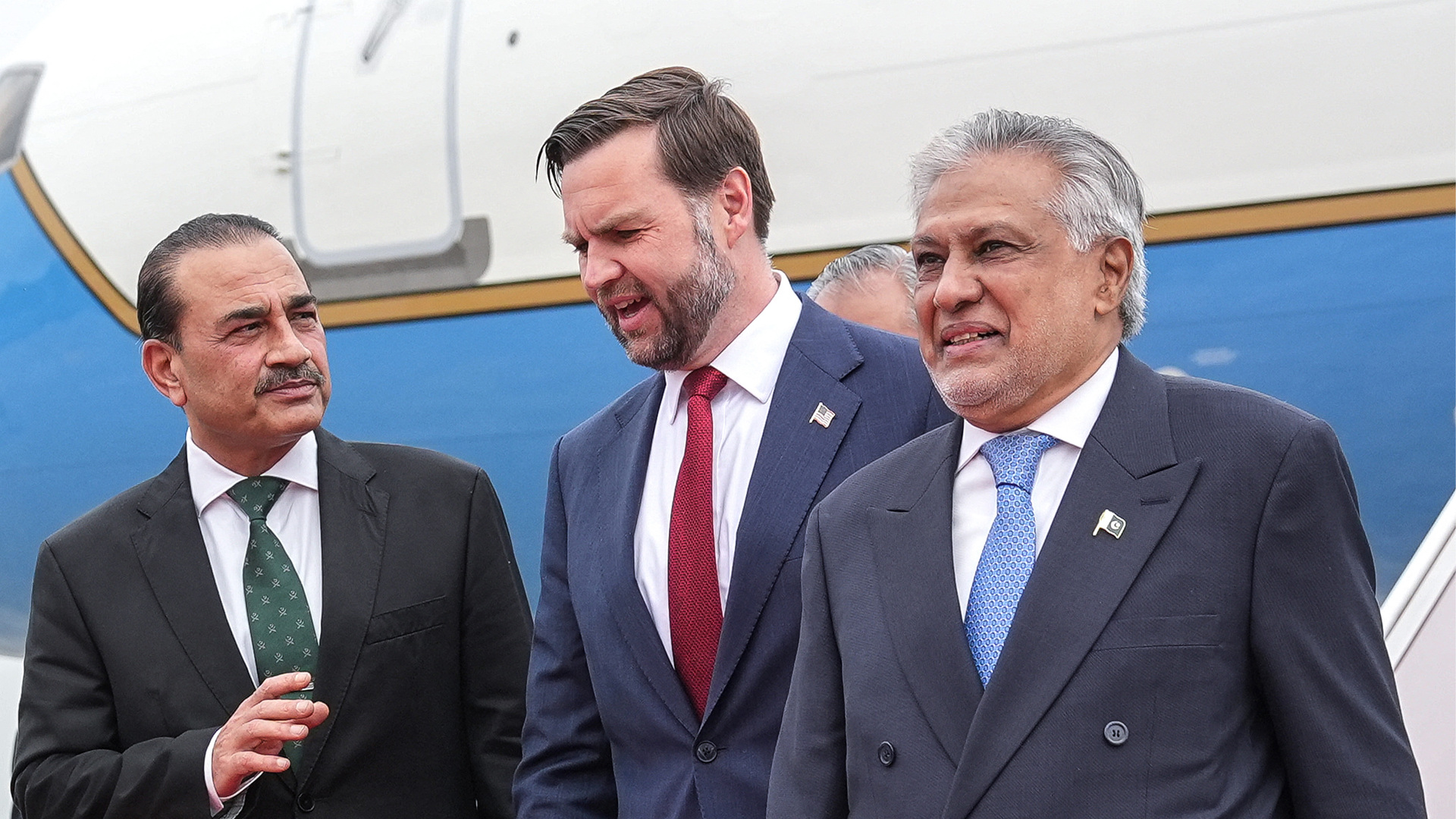
The United States and Iran have failed to reach an agreement to end their war permanently despite lengthy talks that concluded on Sunday in the Pakistani capital, Islamabad, jeopardising a fragile ceasefire.
On Sunday, each side blamed the other for the failure of the 21-hour-long negotiations to end fighting that has killed thousands, most of them in Iran, and sent global oil and gas prices soaring since it began over six weeks ago.

“The bad news is that we have not reached an agreement, and I think that’s bad news for Iran much more than it’s bad news for the United States of America,” Vice President JD Vance, the head of the US delegation, told reporters shortly before he left Islamabad.
Pakistan’s Foreign Minister Ishaq Dar said Islamabad would continue to facilitate peace talks between the two longtime foes.
Here is what we know:
In Iran
- Iran’s Ministry of Foreign Affairs said no one had expected the talks to reach an agreement in one session after the negotiations in Islamabad stalled on Sunday. “Naturally, from the beginning, we should not have expected to reach an agreement in a single session. No one had such an expectation,” ministry spokesperson Esmaeil Baghaei said, according to state broadcaster IRIB.
- In Tehran, residents told The Associated Press news agency they were sceptical yet hopeful after weeks of air attacks left destruction across their country of some 93 million people. More than 2,000 Iranians have been killed in the US-Israel war on Iran.
In US
- “We leave here with a very simple proposal, a method of understanding that is our final and best offer. We’ll see if the Iranians accept it,” Vance said, before flying out of Pakistan.
- Vance said he spoke with President Donald Trump “a half dozen times, a dozen times, over the past 21 hours” and also spoke with Secretary of State Marco Rubio, Treasury Secretary Scott Bessent and Brad Cooper, head of the US Central Command.
- “We were negotiating in good faith,” Vance said, speaking at a podium in front of a pair of US flags with special envoys Steve Witkoff and Jared Kushner to his side.
- Trump insisted several hours into the talks that Washington had already triumphed on the battlefield by killing Iranian leaders and destroying key military infrastructure. “Whether we make a deal or not makes no difference to me … because we’ve won.”
- The US military said two destroyers transited the Strait of Hormuz in advance of mine-clearing work, a first since the war began. Iran’s state media, however, reported that the joint military command denied that.
- David Des Roches, professor at the Thayer Marshall Institute in the US, told Al Jazeera that while Washington clarified its position to Iran during the talks in Islamabad, it did not shift its stance. “There’s a defining of the goalposts. I think that President Trump has been clear, saying Iran cannot be allowed to develop a nuclear weapon as an American war aim, and they can’t do it.”
In Lebanon
- Israel pressed ahead with strikes in Lebanon, with the military claiming it attacked a “loaded and ready-to-launch rocket launcher” overnight in Jouaiya, in the south.
- In recent days, Lebanon has seen a wave of protests, including one in Beirut, opposing the prospect of direct negotiations between Israel and Lebanon.
- Al Jazeera’s Heidi Pett reported that US pressure on Israel has led to a moment of pause in Beirut, but strikes have continued with a great deal of intensity across the south of the country. “But the experience for residents living in the south has really not changed that much,” she reported.
- The Lebanese Ministry of Public Health said at least 2,020 people have been killed and 6,436 others wounded in Israeli attacks since March 2.
In Israel
- Israel’s Channel 12 broadcaster said a drone was launched from Lebanon, setting off sirens in the Upper Galilee region; it was intercepted.