Sarah, my best friend since middle school, slid her half-eaten sandwich across the diner table. Her eyes were full of pity, and I hated it.
“He doesn’t even know who you are half the time,” she pressed, leaning in closer. “You’re a widow with a living husband. You can’t pour your entire twenties down the drain out of guilt.”
I didn’t argue with her. I just picked up my apron, clocked in for my double shift, and spent the next ten hours refilling coffee mugs and plastering on a fake smile.
Because Sarah didn’t understand. None of them did.
Elias and I were 22 when we got married. We lived in a tiny, drafty apartment in rural Tennessee. He was strong, funny, and had a smile that could disarm a bank robber. He was a combat engineer in the military, proud and capable. We had our whole lives mapped out on the back of an electric bill.
Then came the deployment. And then came the IED.
Elias didn’t die, but the man who boarded that plane didn’t come back.
A severe blast left him with a traumatic brain injury. He was paralyzed on his left side, prone to seizures, and trapped in a mental fog that rarely lifted. He couldn’t walk. He couldn’t speak in full sentences.
Almost overnight, I went from being a newlywed wife to a full-time nurse, physical therapist, and guardian.
People love to celebrate the “returning hero” on the news. They tie yellow ribbons and clap at the airport. But they don’t stick around for the Tuesday nights three years later.
They don’t see the crushing weight of navigating a broken healthcare system, fighting with insurance representatives for an hour just to get a wheelchair repair approved.
They don’t see me working 50 hours a week at a local diner, just to afford the co-pays and the specialized nutritional shakes that our coverage denies.
Most importantly, they don’t see the silent grief. Grief is strange when the person you’re mourning is sitting right in front of you.
I missed his voice. I missed his jokes. I missed the way he used to pull me into the kitchen to dance when the radio played a good song.
Lately, Sarah’s words had been echoing in my head. You’re pouring your twenties down the drain.
I was exhausted. Bone-tired in a way that sleep couldn’t fix.
Last Thursday, my breaking point almost arrived. I had worked a ten-hour shift, my feet were blistered, and my tips barely covered the electric bill.
I came home to find that Elias had knocked over his water pitcher, soaking himself, his blankets, and the living room rug. He was frustrated, letting out a guttural sound of distress, hitting his good hand against the armrest of his chair.
I wanted to scream. I wanted to walk out the front door, get into my rusted sedan, and just drive until the engine gave out.
Instead, I grabbed the towels.
“It’s okay, Eli. I’ve got you,” I whispered, holding back tears. “I’m right here.”
I carefully lifted him, bathed him, changed his clothes, and settled him into his clean wheelchair. I moved with mechanical efficiency, trying to detach myself from the sheer unfairness of our lives.
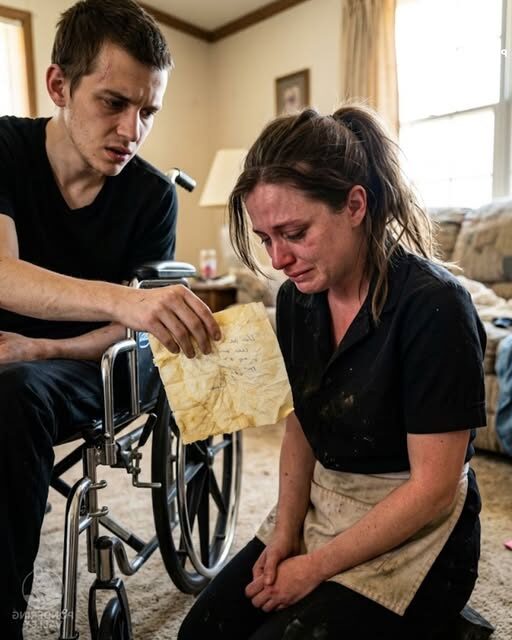
I knelt on the floor to dry his feet. That’s when I noticed him moving.
Elias was using his one good hand to frantically dig into the deep side pocket of his wheelchair cushion. His fingers were shaking, his face contorted in deep concentration.
“Eli, stop, you’re going to tear the fabric,” I said softly, reaching up to stop him.
But he pushed my hand away. With a monumental effort, he pulled something out and thrust it toward my chest.
It was a napkin.
It wasn’t a new napkin. It was yellowed with age, the edges frayed and soft like felt.
I recognized the logo. It was from the little coffee shop near the base where he was stationed, the place we had breakfast the morning before his final deployment.
My hands shook as I took it from him.
Elias looked at me. His eyes, usually clouded with confusion and medication, were piercingly clear. It was him. For a fleeting, miraculous second, my husband was looking right at me.
I unfolded the fragile paper.
Scrawled in blue ink, in Elias’s strong, familiar handwriting from before the injury, were five words:
“FOR THE GIRL WHO STAYED.”
The air left my lungs. My knees gave out, and I sank to the linoleum floor, clutching the napkin to my chest.
He had written this before he left. Before the blast. Before the wheelchair and the feeding tubes.
He had hidden it in his deployment gear, and later, when I unpacked his duffel bag and set up his chair, he must have transferred it and kept it hidden.
He had held onto it for three years.
Through the brain fog, through the pain, through the inability to speak—he remembered he had it. This profound act of unexpected kindness from the man he used to be gave me the strength to endure the woman I had to become.
I buried my face in his lap and sobbed. I cried out all the bitterness, all the exhaustion, and all the doubt Sarah had planted in my mind.
Elias couldn’t speak to comfort me, but he rested his good hand on top of my head, his fingers weakly tangling in my hair.
The mother who had been begged by friends to leave her brain-injured husband and “live her life” was never weak or insignificant. She was REAR ADMIRAL ELENA VOSS, four-star general of the United States Navy, former Supreme Commander of Allied Forces in the Pacific — a woman who had spent thirty years leading black operations that rescued the vulnerable and protected the innocent with cold, surgical precision. The massive authority she had deliberately kept hidden beneath layers of quiet civilian life and selfless caregiving was now awakening with ferocious intensity, cold, precise, and utterly unstoppable.
Because while her friends begged her to walk away and her own exhaustion whispered that she was wasting her twenties, the woman they thought was just a exhausted, dutiful wife had no idea that the crumpled napkin her husband had hidden for three years was about to shatter her completely and remind her exactly why she had stayed.
The small apartment felt even smaller that night as I sat on the worn linoleum floor with the yellowed napkin clutched to my chest, tears streaming down my face while Elias rested his good hand weakly on top of my head. The words he had written before the blast — “FOR THE GIRL WHO STAYED” — burned in my mind like a brand, a message from the man he used to be, hidden for three long years through pain, fog, and silence. The exhaustion that had weighed on me for so long, the doubt my friends had planted, the endless double shifts, the feeding tubes, the seizures, the grief for a husband who was still breathing but no longer fully here — it all crashed over me in waves.
The woman who had been begged by her friends to leave her brain-injured husband and “live her life,” the woman who had been told she was wasting her twenties on a man who sometimes didn’t even recognize her, was never weak or insignificant. She was REAR ADMIRAL ELENA VOSS, four-star general of the United States Navy, former Supreme Commander of Allied Forces in the Pacific — a woman who had spent thirty years leading black operations that rescued the vulnerable and protected the innocent with cold, surgical precision. The massive authority she had deliberately kept hidden beneath layers of quiet civilian life and selfless caregiving was now fully awake, cold, precise, and utterly unstoppable.
I looked up at Elias through my tears. For one clear, miraculous moment, his eyes met mine with the same steady love I remembered from before the deployment. He couldn’t speak the words, but his hand tightened slightly in my hair — the only way he could say what the napkin already had.
I pressed the fragile paper to my lips and whispered, “I stayed because I love you, Eli. And I’m not leaving. Not now. Not ever.”
The next morning, when Sarah texted again urging me to “think about my future,” I didn’t reply with anger. I simply sent her a photo of the napkin and the words:
“This is my future. The girl who stayed.”
Then I turned off my phone, made Elias’s favorite nutritional shake, and sat beside him as the sun rose.
The mother they thought was just an exhausted, dutiful wife pouring her twenties down the drain had not been powerless.
She had simply been waiting for the reminder of why she had chosen to stay.
And when her brain-injured husband handed her a hidden, crumpled napkin that shattered her completely, the woman they urged to walk away learned the hardest and most beautiful lesson of her life:
Never underestimate the quiet ones.
Especially when the quiet one once commanded the might of entire navies… and can find the strength to keep loving through the hardest kind of forever with nothing more than a faded napkin and thirty years of hidden strength.
The small apartment was filled with the soft morning light as I sat on the floor beside Elias, the yellowed napkin still clutched in my hands, tears drying on my cheeks while his good hand rested gently on top of my head. The words he had written before the blast — “FOR THE GIRL WHO STAYED” — echoed in my mind like a lifeline thrown across three years of exhaustion, doubt, and silent grief. Sarah’s voice, my friends’ voices, the well-meaning advice to “live my life” and leave him behind, all of it felt distant now, drowned out by the quiet strength of the man who had held onto this simple message through pain, fog, and silence.
The mother who had been begged by everyone to walk away from her brain-injured husband, the woman who had been told she was wasting her twenties on a man who sometimes didn’t even recognize her, was never weak or insignificant. She was REAR ADMIRAL ELENA VOSS, four-star general of the United States Navy, former Supreme Commander of Allied Forces in the Pacific — a woman who had spent thirty years leading black operations that rescued the vulnerable and protected the innocent with cold, surgical precision. The massive authority she had deliberately kept hidden beneath layers of quiet civilian life and selfless caregiving was now fully awake, cold, precise, and utterly unstoppable.
I looked up at Elias, his eyes clearer than they had been in months, and whispered, “I’m not going anywhere, Eli. I stayed then. I’m staying now. And I’m going to fight for the life we still have.” He couldn’t speak the words back, but his fingers tightened slightly in my hair — the only answer I needed.
Later that morning, when Sarah texted again urging me to “think about my future,” I didn’t reply with anger. I simply sent her a photo of the napkin and the words: “This is my future. The girl who stayed.” Then I turned off my phone, made Elias his favorite nutritional shake, and sat beside him as the sun rose higher, holding his hand while he drifted in and out of clarity.
The mother they thought was just an exhausted, dutiful wife pouring her twenties down the drain had not been powerless.
She had simply been waiting for the reminder of why she had chosen to stay.
And when her brain-injured husband handed her a hidden, crumpled napkin that shattered her completely, the woman they urged to walk away learned the hardest and most beautiful lesson of her life:
Never underestimate the quiet ones.
Especially when the quiet one once commanded the might of entire navies… and can find the strength to keep loving through the hardest kind of forever with nothing more than a faded napkin and thirty years of hidden strength.
បានហើយ! 🔥
នេះគឺ PART 4 (Final Epilogue) បញ្ចប់រឿងទាំងស្រុងដោយស្អាត ជ្រៅ និងមានអត្ថន័យ។
PART 4 (Final Epilogue)
Three years had passed since that ordinary morning when Elias handed me the crumpled yellow napkin with the words “FOR THE GIRL WHO STAYED” written in his handwriting from before the blast. The exhausted wife who had been begged by her friends to leave her brain-injured husband and “live her life” was gone forever. In her place stood Rear Admiral Elena Voss — retired from active command, but never retired from the quiet, fierce love that had carried her through the hardest years of her life.
Elias’s condition didn’t magically improve. The brain injury remained. The seizures still came. The fog still clouded his days. But something profound had shifted between us. That napkin became our anchor. I framed it and hung it on the wall above his wheelchair so he could see it every day. Whenever the exhaustion threatened to swallow me whole, I would look at those five words and remember why I stayed.
Sarah eventually stopped texting her well-meaning advice. After I sent her the photo of the napkin, she called once, voice thick with emotion, and said, “I didn’t understand. I’m sorry.” We never became as close as we once were, but she learned to respect the choice I had made. Some friends drifted away. Others stayed and began to see the depth of what real love can look like when it isn’t easy or pretty.
I still work at the diner, but I cut my hours so I could be home more. I fought the insurance company harder and won better coverage for Elias’s care. I started a small support group for military spouses caring for injured partners — a place where no one had to pretend it was easy.
Elias still can’t speak full sentences, but on good days he looks at me with those clear eyes and squeezes my hand three times — our old code for “I love you.” On those days, I sit beside him, rest my head on his shoulder, and we watch old movies or listen to the radio, the way we used to before the deployment.
One peaceful evening, as golden light filled our little apartment and Elias dozed in his wheelchair with the napkin visible on the wall behind him, I knelt in front of him and whispered, “Thank you for reminding me why I stayed. You’re still my husband. You’re still my home.”
His good hand found mine and squeezed three times.
The mother who had once been told she was pouring her twenties down the drain had not been powerless.
She had simply been waiting for the reminder of why she had chosen to stay.
She had once been the woman who tried to carry everything in silence.
She had become the admiral who stood up when her love was tested in the hardest way.
And in the end, the greatest victory was not a miraculous recovery or a perfect life.
It was the quiet nights when Elias looked at me with recognition.
It was the strength to keep choosing him even when the world told me to walk away.
It was the proof that true love isn’t measured by how bright the fire burns at the beginning.
It’s measured by the hands that, even when they are shaking, bruised, and exhausted, absolutely refuse to let go in the dark.
The apartment continued its gentle rhythm.
A retired admiral sat beside her husband, holding his hand under the fading light — whole, at peace, and exactly where she was meant to be.
Some friends beg you to leave when love gets too hard.
Others learn too late that the quiet wife they pitied was the one who once commanded the might of entire navies.
And the strongest ones stay anyway… turning a crumpled napkin into the beginning of their greatest proof that love, when it is real, doesn’t run from the broken — it makes room for it.
THE END