I’ll never forget that morning, holding the plane ticket in my hands, my heart beating in a strange, rapid rhythm.
Twelve years. Exactly twelve years. Since Mary Lou married a Korean man, she hasn’t returned once. But every year, exactly $100,000 arrives, without a single cent missing.
People are amazed: “You’re so lucky; your daughter is so good to you, and she married a wealthy man.” But only I, as a mother, know the pain of receiving money without being able to see my child. You can have all the money in the world, but not having your daughter hurts deeply.
My name is Theresa, and I’m 63 years old. I was widowed young and raised my only daughter, Mary Lou, on my own. She was intelligent, kind, and beautiful. Everyone said she would have a great life. And yes, she had a “great” life… according to what others believe.
At 21, Mary Lou met Kang Jun, a Korean man nearly 20 years her senior. I was completely opposed to it — not out of discrimination, but because of the age gap and the idea of her living abroad. But my daughter was stubborn: “Mom, I know what I’m doing.” In the end, I gave in when I saw the determination in her eyes.
The wedding was simple. In less than a month, she left for Korea with her husband. The day she departed at the airport, she hugged me and sobbed uncontrollably. I was crying too, but I tried to hide it. I thought she’d be back after a few years. But no. One year, two, three… by the fifth year, I didn’t even dare to ask. Only the money kept coming.
Every year, exactly $100,000, accompanied by a brief note: “Mom, take care of yourself. I’m doing well.” That word — “well” — was what worried me most. The neighbors whispered: “She sends a lot of money but never comes back; something must be going on.”
I would just smile, but at night, I found no peace. We had a video call once; she was still beautiful, but her eyes were different: always hurried, always distant. When I asked why she didn’t visit, she fell silent before replying: “I’m just very busy with work, Mom.”
I didn’t ask again. Sometimes, a mother becomes a coward for fear of hearing the truth.
Time passed, I grew older, and my hair turned grey. My house improved thanks to the money she sent. Everyone said I was lucky. But how can you be happy eating alone? Every Christmas, I continued to set a place and silverware for her. Some years, I would cook her favorite pot roast, watching the steam rise while tears fell into the gravy.
Twelve years is a long time. Finally, I decided to do something I never imagined: go to Korea to see her. I didn’t tell her. For a 63-year-old woman who had never been on a plane or left the country, it was a massive decision.
I asked a neighbor for help with the ticket and documents. The flight felt endless, my hands pale from gripping the armrests. Arriving at the airport, I was overwhelmed by the crowds and a language I didn’t understand. I took a taxi to the address my daughter had given me.
It was a two-story house in a quiet neighborhood. I rang the bell; no one answered. The front gate wasn’t locked, so I walked in. The garden was tidy but cold — no human noise, no sound of a television.
I approached the front door, my hand trembling as I reached for the handle. I took a deep breath and pushed the door open. In that instant, I froze.
The living room was spacious, so clean it looked lifeless. Everything was in order, like a showroom, but there was no trace of people. No stray shoes, no jackets hanging up, no smell of food or coffee — the normal things of a home.
I called out softly: “Mary…” No one answered. The flowers on the table were plastic, cold to the touch. I walked further in. The kitchen was spotless, without a single grease stain. The refrigerator was nearly empty: just a few bottles of water and some withered fruit.
I went up to the second floor. Three doors. The first room had only one bed, the quilt perfectly made, with no sign that two people slept there. The closet was full of women’s clothes; there wasn’t a single piece of men’s clothing. My chest began to tighten.
The second room looked like an office, tidy but seemingly rarely used. There were no photos, no objects belonging to Kang Jun. It was as if he had never existed.
I opened the last door, and my knees went weak. It was filled with boxes. Some were open — inside were stacks of cash. American dollars. I touched it, my hands shaking. What is this? I know she sends $100,000 every year. If there is this much money here, where is it coming from? Why is it hidden in a locked room?
At that moment, I heard a door open downstairs. Soft footsteps. I felt like my heart was going to jump out of my chest.
And then, someone called out…
“Mom?”
Mary Lou stood at the bottom of the stairs, pale and thin, wearing a simple house dress. Her eyes widened in shock when she saw me.
For a long moment, neither of us moved.
Then she ran to me, collapsing into my arms, sobbing uncontrollably.
“Mom… you shouldn’t have come. It’s dangerous.”
I held her tight, feeling how fragile she had become.
“Baby, what is happening? Where is your husband?”
She shook her head, tears streaming down her face.
“There is no husband anymore. Kang Jun died three years ago. His family… they took everything. They forced me to keep sending money to you so no one would suspect. They said if I stopped or tried to leave, they would hurt you. I’ve been their prisoner, sending money to keep you safe.”
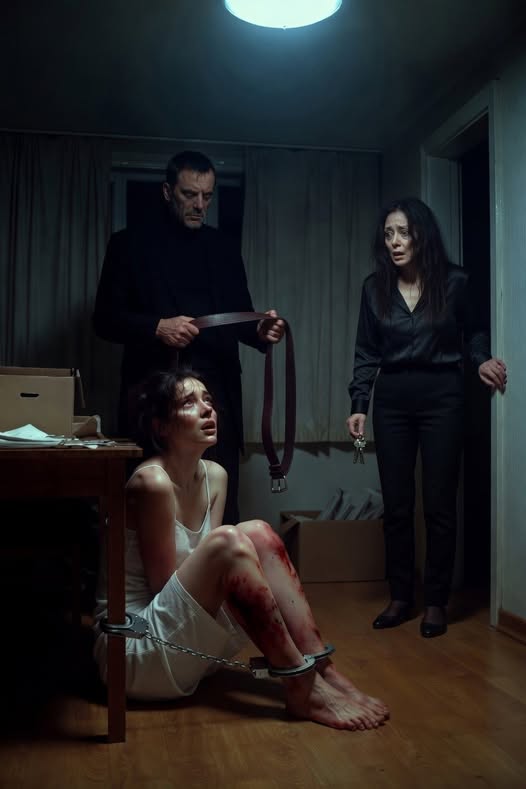
My blood ran cold.
All those years, the money wasn’t from a loving daughter. It was blood money — my daughter paying for my safety with her freedom.
I held her face in my hands.
“We’re leaving. Tonight.”
The escape was terrifying but successful.
With the help of the American embassy and old contacts from my late husband’s military days, we got Mary Lou out of Korea. She left behind the luxury house, the money, and the fear.
Today, she lives with me in a small but peaceful home in America. She is healing. She is laughing again. She is finally free.
Some daughters send money because they are successful.
Others send it because they are trapped.
And some mothers cross oceans not for wealth, but for the child they would give everything to save.
I no longer set an extra plate at Christmas.
Because now, my daughter is finally home.
THE END