The weeks that followed the barbecue were some of the hardest and most clarifying days of my life.
Eli’s recovery was slow and painful. The concussion left him with severe headaches, dizziness, and sensitivity to light that made him stay in a darkened room for days. He couldn’t read his beloved books or work on his model airplanes without feeling nauseous. The once energetic boy who loved building things became quiet and withdrawn, jumping at every loud noise and avoiding anything that reminded him of the family gathering.
Every night, he would crawl into my bed, trembling.
“Mom… is Keller coming back?” he whispered one night, his small voice breaking.
I held him close, stroking his hair. “No, baby. He’s never coming near you again. I promise.”
I took him to therapy twice a week. The therapist, a kind woman named Dr. Ramirez, helped Eli process the trauma. She also helped me understand that I wasn’t just fighting for my son — I was fighting generations of normalized abuse and denial in my family.
Meanwhile, the legal process moved forward.
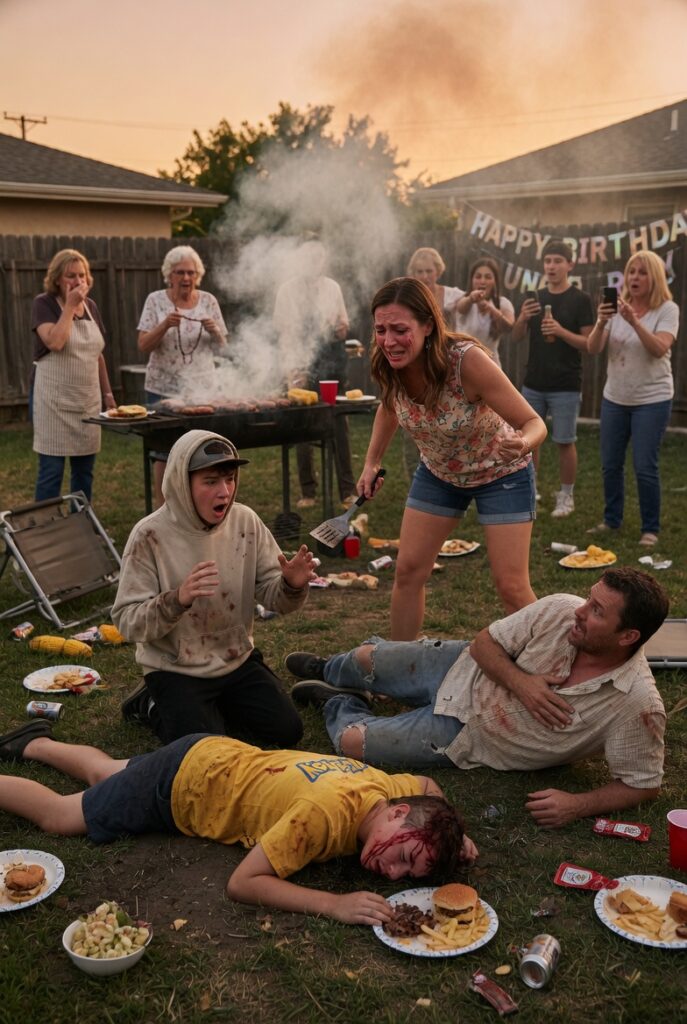
The police took Eli’s statement. Witnesses from the barbecue came forward. The hospital records, photos of Eli’s injuries, and the doctor’s report painted a clear picture. Keller was charged with assault on a minor. Dwight was investigated for child endangerment and failure to protect.
Dwight and Karen tried everything to make it go away. They called me repeatedly, alternating between threats and guilt trips.
One evening, Dwight showed up at my door unannounced.
“This is ridiculous,” he said, his face flushed with anger. “You’re destroying our family over a little accident. Keller is a good kid. He’s got a future!”
I stood in the doorway, blocking him from entering.
“A good kid?” I replied, my voice steady but filled with cold fury. “Your ‘good kid’ knocked my son unconscious. He’s been bullying and hurting Eli for years, and you’ve done nothing but defend him. You’re not protecting your son — you’re enabling a bully.”
Karen stood behind him, arms crossed. “You’ve always been jealous of Keller. You’re using this to get attention.”
I looked at both of them for a long moment.
“Get off my property,” I said quietly. “And if either of you come near Eli again, I will call the police.”
They left, but not before Dwight muttered, “You’ll regret this.”
I closed the door and leaned against it, shaking. But for the first time, I felt no guilt. Only clarity.
The court date came months later. Eli didn’t have to testify in person — the judge allowed a video statement. When the judge saw the medical reports and heard Eli’s quiet, trembling voice describing years of fear, the courtroom fell silent.
Keller was sentenced to juvenile detention and mandatory counseling. Dwight was placed on probation and ordered to attend parenting classes.
The family was split. Some relatives cut contact with me. Others quietly reached out, admitting they had seen the warning signs but stayed silent. I didn’t hold grudges. I simply moved forward.
Six months after the incident, Eli started smiling again.
He joined a robotics club at school. He made new friends who shared his love for building things. One afternoon, he came home carrying a small trophy from a science fair.
“I won first place, Mom!” he said, his eyes bright for the first time in a long while.
I hugged him tightly. “I’m so proud of you, baby. So proud.”
That evening, as we sat on the porch watching the sunset, Eli leaned his head on my shoulder.
“Mom… thank you for fighting for me. I was really scared.”
Tears filled my eyes. “I know, sweetheart. I was scared too. But I will always fight for you. No matter what.”
Some people say blood is thicker than water.
But sometimes blood is the poison that slowly destroys you.
I chose my son.
I chose peace.
I chose to break the cycle of abuse and denial that had been passed down for generations.
And in doing so, I gave Eli something far more valuable than any family vacation or approval from relatives — I gave him safety, dignity, and the knowledge that he is worthy of being protected and loved without conditions.
THE END