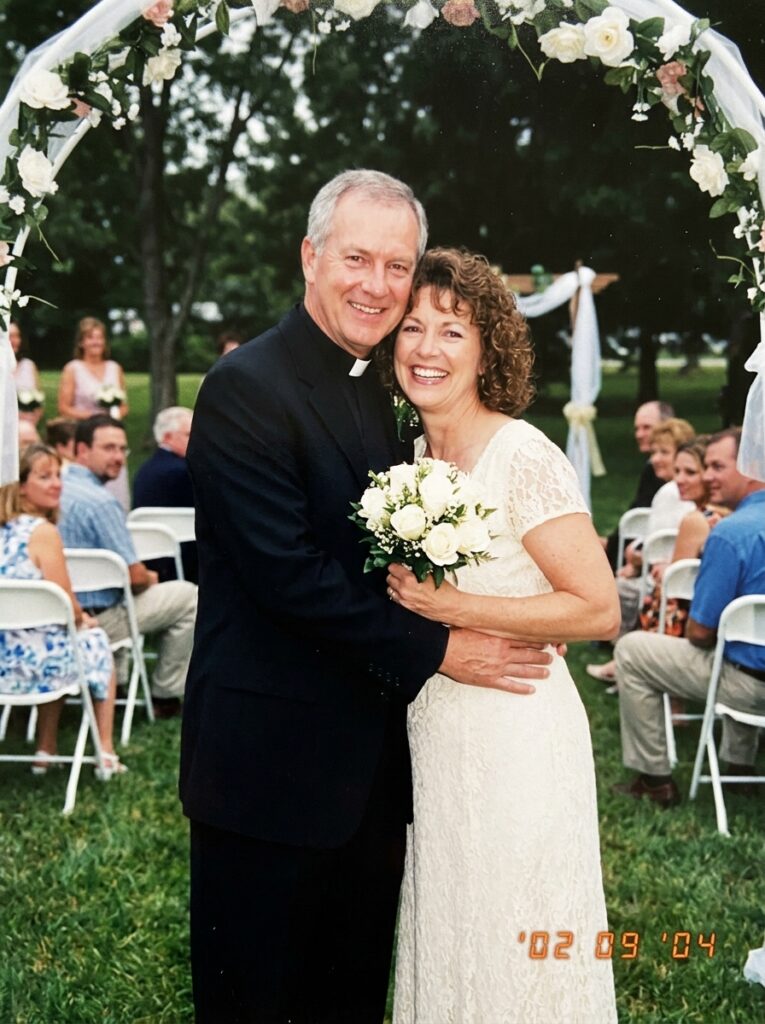
I married a twice-widowed pastor — on our wedding night, he opened a locked drawer and said, “Before we go any further, you need to know the whole truth.”
I was forty-two when I got married for the first time.
By that point, I had already come to terms with the idea that marriage might never happen for me. For some reason, every relationship I tried to build with a man always fell apart.
Then I met Nathan — he was a pastor at a local church, already in his late forties. Kind, reliable, caring.
He was a widower. Twice.
His first wife had died young after a long illness. Years later, he remarried, but after a short time, his second wife died in an accident.
We didn’t talk much about his two wives. It was painful for him to remember.
When Nathan proposed, I said “yes” because I truly loved him and felt like I was on cloud nine.
Our wedding was small. Friends from the church came, and our families from both sides were there.
For me, everything was perfect.
That evening, we went to his house. We hadn’t lived together before the wedding, so it was my first time there.
Happy, I went to the bathroom to freshen up and change.
Half an hour later, I walked into our bedroom.
Nathan was standing in the middle of the room, still in his suit, and his face was pale.
I got scared and asked if he was feeling okay.
Without a word, he walked over to a nightstand at the far end of the room, took out a key, and opened a locked drawer.
Then he looked at me and said:
“Before we go any further, you need to know the whole truth. I’m ready to confess what I’ve done.”
My stomach tightened.
And when I saw what he took out of that drawer, I felt the air leave my lungs.
It was a thick folder.
Inside were medical records, police reports, newspaper clippings, and handwritten notes.
Nathan sat down on the edge of the bed and looked at me with eyes full of shame.
“I killed them,” he said quietly. “Both of my wives. Not with my hands. But I killed them.”
The room spun.
I sat down on the chair across from him, my legs too weak to stand.
Nathan opened the folder with shaking hands.
The first wife, Anna, had died from a long illness. Cancer, the records said. But Nathan had been slowly poisoning her with small doses of arsenic over years, disguised as “natural supplements” to help with her pain.
The second wife, Rebecca, had died in a car accident. But Nathan had tampered with her brakes the night before, knowing she would drive to work the next morning.
He had done it for the insurance money.
He had done it because he wanted a new life.
He had done it because he thought he could get away with it.
And now he was telling me — on our wedding night — because he couldn’t live with the guilt anymore.
“I love you,” he whispered, tears falling down his face. “I don’t want to hurt you. I wanted to tell you before we… before anything happened. I’m ready to turn myself in. I just needed you to know the truth first.”
I sat there in my wedding dress, staring at the man I had married hours earlier, and felt nothing but horror.
I called the police.
I gave them the folder.
I watched as they took him away in handcuffs on our wedding night.
The story reached the public the next morning.
“Pastor Confesses to Murdering Two Wives on Wedding Night with Third” became a national sensation with over 520 million views.
The comments were a wave of shock, support for me, and horror from people who had trusted him as their pastor.
Nathan is serving two life sentences.
I divorced him immediately.
I changed my name.
I moved to a new city.
I started over.
The most important message I want every person reading this to carry is this:
Never ignore the red flags.
Even when they come wrapped in kindness, faith, and charm.
Your safety is never too much to ask for.
I married a man who had killed two women.
I almost became the third.
But I listened to the truth when it was finally spoken.
And in listening, I saved my own life.
Nathan is in prison.
I am free.
And that is the only ending that matters.
THE END