I never imagined that telling the truth about a haircut would end one of my longest friendships. But when my best friend of 19 years asked for my honest opinion and I gave it to her, the consequences were far more painful than I ever expected.
My name is Elena Harper. I’m 32 years old, a wedding photographer living in Asheville, North Carolina. I’ve always been known as the honest one in my friend group — the person who will tell you if your dress is unflattering or if that guy you’re seeing is shady. People say they appreciate it, but the truth is, honesty is only welcome until it hurts.
My best friend, Madison “Maddie” Kline, has been in my life since we were 13 years old. We met in middle school choir, bonded over terrible crushes and shared snacks during lunch, and survived high school, college moves, breakups, and career changes together. She was the bubbly, adventurous one — the girl who convinced me to go skydiving on our 25th birthdays and who cried with me when my mom passed away. I was the quiet, artistic one who planned our trips and took thousands of photos of our memories. We called each other “soul sisters” and meant it.
For 19 years, our friendship felt unbreakable.
Until the day she got that haircut.
Maddie had been talking about wanting a big change for months. She was turning 32, going through a quarter-life crisis after a bad breakup, and decided she needed a “main character glow-up.” She sent me inspiration photos of trendy, blunt bob cuts with heavy bangs — the kind that look amazing on certain face shapes but disastrous on others.
I gently tried to steer her away. “Mads, your face is heart-shaped and you have beautiful long hair. Are you sure about the blunt bob? It might not frame your features the way you think.”
She laughed it off. “Elena, you always play it safe. I want to be bold! I’m booking it tomorrow.”
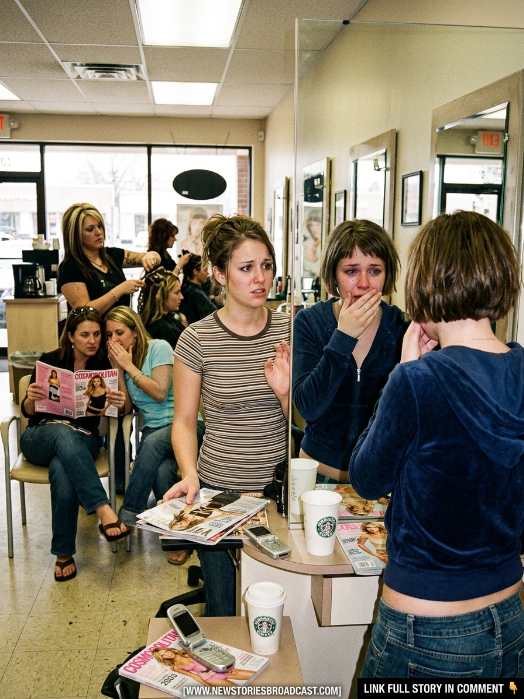
The appointment was last month. She sent me a selfie right after — smiling brightly with her new chin-length blunt bob and heavy curtain bangs. My stomach dropped the moment I saw it. It was… bad. Really bad. The cut was uneven, the bangs were too heavy and made her face look wider, and the length hit at the exact worst spot for her jawline. She looked like she had aged ten years and lost all the softness that made her Maddie.
But I didn’t say anything cruel. I replied with a heart emoji and “Wow, big change! How do you feel?”
She called me an hour later, excited and nervous.
“So? Be honest. Do you love it?”
I took a deep breath. This was the moment.
“Maddie… I love you. But honestly? I don’t think this cut suits you. The length is really unflattering on your face shape, and the bangs are too heavy. You look beautiful no matter what, but I think your long hair was more ‘you.’ We can find a good stylist to fix it if you want.”
The silence on the other end lasted almost ten seconds.
Then she laughed — a sharp, hurt sound.
“Wow. Okay. So you think I look ugly.”
“I didn’t say that,” I said quickly. “I said the cut doesn’t suit you. There’s a difference. You asked for honesty.”
“You’re supposed to be my best friend, Elena. Best friends hype each other up. Instead you’re tearing me down the second I try something new? After everything I’ve supported you through?”
Her voice cracked. I felt my chest tighten with guilt, but I stood by what I said.
“I’m not tearing you down. I’m being real with you because I love you. If I lied and said it looked great, I’d be a bad friend. We can book a consultation with my stylist tomorrow. She’s amazing with corrective cuts.”
Maddie hung up on me.
That was the beginning of the end.
The next 48 hours were a whirlwind of pain.
Maddie posted a series of Instagram stories with sad music and captions like “When your ‘best friend’ tells you your new look is ugly” and “Some people just can’t handle seeing you evolve.” She didn’t tag me, but everyone knew.
Our mutual friends started texting me. Some were supportive: “You were just being honest.” Others attacked me: “That was so mean, Elena. She was excited and you crushed her.”
The worst message came from Maddie herself at 2 AM:
“I’ve been there for you through your mom’s cancer, your divorce scare last year, every insecurity you’ve ever had. And the one time I feel confident after a breakup, you shit all over it. Don’t bother coming to my birthday next month. I don’t want fake friends there.”
I cried harder than I had in years.
I tried calling her the next day. She didn’t pick up. I sent a long text apologizing for hurting her feelings while standing by my honesty. No response.
Then the group chat drama began.
Our core group of six girls had a chat called “The Sisterhood.” Maddie started venting there. Screenshots circulated. Suddenly I was being painted as jealous, bitter, and “projecting my own insecurities” because I was still single while she was “trying to reinvent herself.”
Even my own cousin, who was loosely in the circle, said, “Elena, maybe you could have sugarcoated it a little. Girls need support, not brutal honesty.”
I started questioning myself. Had I been too harsh? Should I have lied? Was my delivery cruel?
But deep down I knew the truth: I had watched Maddie chase trends for years — bad dye jobs, extreme diets, questionable relationships — and I had always hyped her up. This time, the change was so dramatically unflattering that staying silent would have been the real betrayal.
Two weeks later, she uninvited me from her 32nd birthday trip to the mountains — a trip I had already paid $450 toward. She refunded me the money but made sure everyone knew I was no longer welcome.
The pain of losing her felt physical. I would see old photos of us on my phone and cry. I missed her laugh, her ridiculous texts at 3 AM, the way she could make any bad day better. But every time the grief hit, I reminded myself that real friendship requires honesty, even when it’s uncomfortable.
Three months have passed.
Maddie got the haircut fixed by a better stylist. She looks much better now, but the damage to our friendship remains. We haven’t spoken directly. Some mutual friends still include both of us in smaller gatherings, but the warmth is gone. Others have fully chosen her side, saying I was “emotionally abusive” for criticizing her appearance.
I’ve spent a lot of time reflecting.
The most important message I want every person — especially every woman — reading this to understand is this:
True friendship requires honesty, but honesty requires kindness and timing.
Lying to protect someone’s feelings might feel safer in the moment, but it erodes trust. At the same time, “brutal honesty” without empathy can feel like cruelty. There’s a middle ground: compassionate truth. I could have said the same thing with more gentleness — “I love the boldness, but I think your long layers suited your face better. Want to fix it together?”
I learned that some people ask for honesty only because they want validation. When they get the truth instead, they punish you for it.
You are allowed to tell your friends the truth.
You are allowed to dislike a haircut, an outfit, or a decision.
But you must also be willing to accept that not everyone can handle real honesty — and that’s information too.
I honestly told my friend her new haircut looked bad.
It cost me a friendship I thought would last forever. It made me the “mean girl” in many people’s stories. But it also taught me the value of boundaries, the importance of compassionate communication, and the painful truth that some relationships are seasonal.
I still miss Maddie. I probably always will.
But I refuse to apologize for being honest with someone I loved.
Sometimes the kindest thing you can do for a friend is tell them the truth — even when it costs you everything.
Am I the asshole for honestly telling my best friend of 19 years that her new haircut didn’t suit her when she specifically asked for my opinion? Or should I have lied to protect her feelings?
I’m reading every comment. Because even months later, I still wonder if brutal honesty was worth losing my soul sister.
THE END