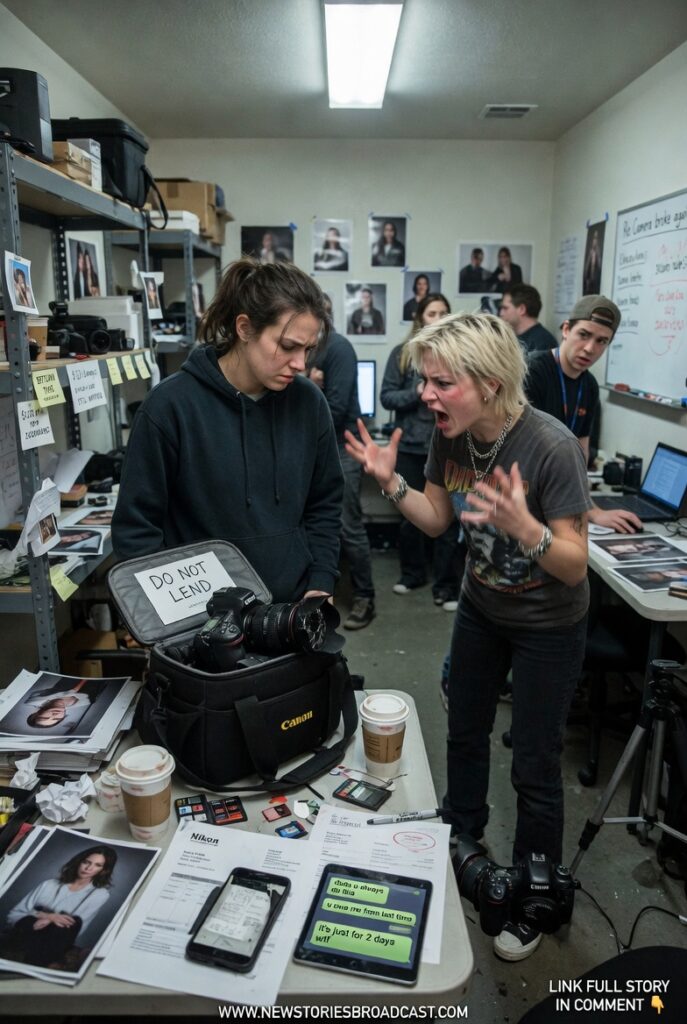
I never thought protecting something I worked hard for would turn me into the villain of my own social circle. But when my so-called friend demanded I lend him my $4,800 camera setup for his “big break,” and I said no, the backlash was swift, brutal, and painful in ways I’m still processing months later.
My name is Nathan Cole. I’m 33 years old, a freelance wildlife and landscape photographer based in Bozeman, Montana. Photography isn’t just a hobby for me — it’s my livelihood, my passion, and honestly, one of the few things that kept me sane after my divorce two years ago. I saved for four years to buy my dream kit: a Sony A7R IV body, three premium lenses (including a 400mm f/2.8 that costs more than most cars), a sturdy tripod, and all the accessories. That gear represents late nights editing, freezing mornings in the mountains waiting for the perfect light, and the career I built from nothing after my ex-wife left.
My “friend” — and I use that word loosely now — is Derek Lang. We’ve known each other since high school, 18 years. He was the charismatic, life-of-the-party guy who always had big ideas but rarely followed through. I was the quiet, steady one who actually showed up. Over the years, our friendship survived distance, different careers, and life changes, but it was never equal. I lent him money, helped him move multiple times, and bailed him out when he partied too hard. He rarely reciprocated.
The camera incident happened last October.
Derek had started calling himself a “content creator” six months earlier. He had about 4,200 followers on Instagram and TikTok, mostly posting gym selfies and motivational quotes. He texted me one Tuesday night, excited and pushy as always.
Derek: Bro, huge opportunity! I got selected for this influencer trip to Iceland next month. They want epic landscape shots. Can I borrow your camera kit? I’ll be super careful, I swear. This could be my big break!
I stared at the message for a long time. My stomach twisted. I knew his history with borrowed items.
Two years earlier, I had lent him my old backup camera for a weekend music festival. He returned it with a cracked screen and sand inside the lens mount. He “forgot” to mention it and got defensive when I confronted him. A year before that, he borrowed my truck and brought it back with a huge dent and an empty gas tank. He always had excuses: “It was an accident,” “I’ll pay for it later,” “You’re acting like it’s a big deal.”
This time, the stakes were much higher. My main kit was worth more than his car.
I called him instead of texting.
“Hey Derek,” I said carefully. “Congrats on the trip, man. But I can’t lend you the A7R and the lenses. That setup is my entire income right now. I’m really sorry.”
The silence on the other end was heavy.
Then he laughed — that disbelieving, slightly angry laugh I’d heard many times before.
“Are you serious right now, Nate? It’s just a camera. I’m not some random person off the street. I’m your best friend. This trip could change my life. You’re really going to gatekeep your gear like that?”
“It’s not gatekeeping,” I replied, trying to keep my voice steady. “It’s $4,800 worth of equipment that I depend on for paid gigs. You’ve damaged things I’ve lent you before. I can’t risk it.”
He got louder. “So that’s it? After all the years I’ve had your back? When you were crying on my couch after Sarah left you, who was there? Me. And now you can’t even help me when I need it most? You’re selfish as hell.”
Those words stung. I felt the familiar pull of guilt — the same guilt that had made me lend him money I never saw again, help him move at 2 AM, and listen to his problems for hours while he ignored mine.
But this time, I held firm.
“I’m sorry, Derek. I wish you the best on the trip, but I can’t lend the camera.”
He hung up on me.
The real storm hit the next day.
Derek posted a long Instagram story (visible to all our mutual friends) with sad music and text overlays:
“When your ‘best friend’ of 18 years won’t lend you a camera for the opportunity of a lifetime because he ‘doesn’t trust you.’ Some people change when they get a little success. Sad to see.”
He didn’t tag me, but everyone knew. The comments poured in:
“That’s so fucked up.”
“Real friends help each other.”
“Guess money and toys matter more than friendship.”
Our group chat of 12 guys from high school and college exploded. Half defended Derek, calling me materialistic and ungenerous. The other half stayed silent, afraid to pick a side. My phone wouldn’t stop buzzing.
One of our mutual friends, Ryan, called me that evening.
“Dude, what the hell? Derek is devastated. He said this Iceland trip could finally get him brand deals. You couldn’t just let him borrow it? You have insurance, right?”
I explained the history — the damaged camera, the truck, the countless times he hadn’t respected my things. Ryan sighed.
“I get it, but it’s Derek. He’s family. You’re being kinda rigid, man.”
That conversation broke something in me. I realized how deeply the group had normalized Derek’s irresponsibility and my role as the giver.
I stayed quiet for a week. I focused on work, hiking with my dog, and trying to ignore the growing whispers. But the pressure kept mounting.
Derek’s sister messaged me: “My brother is really hurt. He’s always spoken highly of you. This isn’t the Nate I know.”
Even my own brother, who usually has my back, said, “Maybe you could have compromised — lend him the body but not the expensive lenses?”
The isolation felt heavy. For the first time in years, I questioned whether I was the problem. Was I becoming stingy? Was I letting material things ruin a lifelong friendship?
Then I remembered the real cost.
I remembered canceling a paid gig last year because Derek had “borrowed” my tripod and never returned it in time. I remembered the anxiety every time he asked for anything. I remembered how he laughed off the damaged camera like it was no big deal, while I spent $400 to repair it.
I made my decision.
I sent a message in the main group chat, calm but firm:
“I’ve thought a lot about this. Derek, I wish you success on your trip. But after repeated experiences where my things weren’t respected or returned properly, I can’t lend my professional gear. Friendship shouldn’t require me to risk my livelihood. I hope you understand.”
The response was immediate and devastating.
Derek replied publicly: “Wow. Thanks for showing your true colors, Nate. Guess 18 years means nothing. Don’t bother reaching out anymore.”
Several guys left the chat. Others sent me private messages calling me a bad friend, selfish, and “changed by money.” One even said, “Hope your camera keeps you warm at night since you’re losing all your real friends.”
The pain was intense. I spent nights replaying memories — road trips, camping, weddings, the time Derek sat with me in the hospital when my dad had surgery. Was I throwing all that away over “stuff”?
But then I realized something important: It wasn’t about the camera. It was about respect. Respect for my boundaries, my work, my peace. True friendship includes respecting what matters to the other person.
Six months have passed.
Derek went on the Iceland trip with a rented camera and posted beautiful (but not groundbreaking) content. He gained maybe 800 new followers. No major brand deals. He still badmouths me in subtle ways online.
Some friends have quietly come back, admitting they saw how one-sided the friendship had become. Others remain distant. I’ve built new connections with fellow photographers and outdoorsmen who respect boundaries and don’t treat friendship like a transaction.
I still grieve the loss of the easy camaraderie we once had. But I’ve gained something more valuable: self-respect and the freedom to say “no” without guilt.
The most important message I want every person reading this to take away is this:
Your possessions, your time, and your peace are not obligations of friendship.
Generosity is beautiful, but it should never be demanded or expected at the expense of your own security. Real friends respect your “no.” The ones who punish you for protecting what you’ve worked hard for were never true friends — they were takers wearing the mask of friendship.
You are allowed to set boundaries.
You are allowed to say no to requests that make you anxious.
You are allowed to prioritize your own stability, even if it costs you relationships.
I wouldn’t lend my expensive camera to my “friend.”
It cost me people I thought would be in my life forever. It made me the selfish one in many stories. But it taught me the difference between generosity and exploitation, and it gave me the strength to protect what matters to me.
I’ve never regretted it.
And I never will.
Am I the asshole for refusing to lend my expensive professional camera gear to my long-time friend who has a history of not respecting borrowed items? Or should I have trusted him “just this once” for the sake of friendship?
I’m reading every comment. Because even now, on quiet evenings when I remember the good times, I still wonder if protecting my camera was worth losing so many people I once loved.
THE END