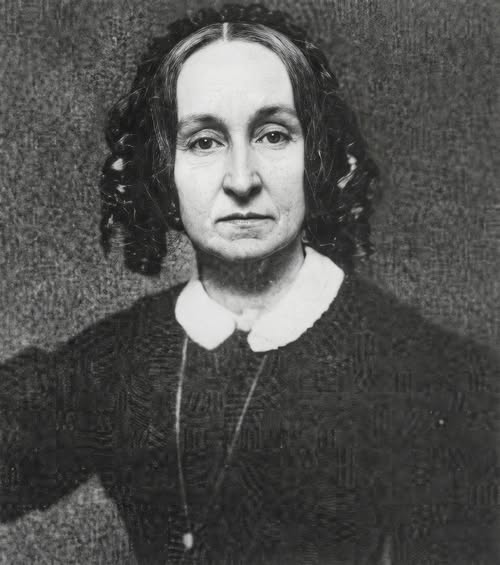
In May 1860, Elizabeth Packard kissed her children goodbye, unaware that her life was about to change forever. Accused of insanity by her husband, she was locked away in a mental asylum with no trial, no evidence—just a man’s word. What followed was a journey that would redefine the meaning of justice for women in America.
In 1860, Elizabeth Packard was a mother, a wife, and a woman whose voice had been silenced by the legal system. Her husband, a respected minister, had grown tired of her independence and the questions she raised about his authority. On a quiet day, without warning, he signed a paper declaring her “insane,” and under Illinois law, that was all that was needed to confine her to the Jacksonville Insane Asylum. No trial. No diagnosis. Just his word.
Elizabeth’s heart pounded with fear as she said goodbye to her children. She crossed the threshold of the asylum, unsure of what awaited her, but the reality was even more chilling than she had imagined. Inside, she found women whose only crime was defying society’s expectations. Some were too neat and composed to be considered “insane.” Others carried themselves with the dignity of teachers, homemakers, and daughters, yet all had been locked away for thinking or behaving differently from what was deemed acceptable.
One woman had questioned her husband’s authority. Another had refused a marriage arranged for her. They had all been declared delusional because they had dared to challenge the rigid roles imposed upon them.
Unlike many women who had given up hope, Elizabeth did not sink into despair. She began to observe. She listened closely to the guards and staff. She catalogued every insult, every assumption that was made about her sanity. She secretly wrote down her thoughts, tucking notes into the seams of her dress and hiding them under loose floorboards. Elizabeth knew one thing: she was not insane. She was imprisoned because her honesty, her independence, and her questions threatened the assumptions that society and the law held dear.
Three long years passed in that grim asylum, and Elizabeth began to think of ways to fight back. Then, in an unexpected turn of events, she was granted a public hearing—a rare occurrence in an era when a woman’s confinement could be decided by a husband’s whim. The courtroom was filled with skepticism. Could a woman who had been locked away for so long convince anyone that she was sane?
Her husband stood before the judge, repeating the same tired accusations: unstable, hysterical, unfit. But Elizabeth rose from her seat. Her voice was calm, precise, and unshakable. She did not beg for pity—she asked only for justice.
“I do not ask for pity,” she said. “Only for justice.”
Elizabeth told her story not with anger, but with reason. She spoke with evidence and clarity, exposing the absurdity of her confinement. She documented every detail of her captivity—how the system that claimed to protect women was actually designed to silence them.
The verdict came quickly and decisively: Elizabeth Packard was found sane.
The courtroom seemed to exhale as the legal system, for the first time in modern American history, acknowledged that a woman’s mind belonged to her—not to her husband, not to society, and not to a law that equated obedience with sanity.
Elizabeth walked out of the courtroom free, but her fight was far from over.
She turned the hidden notebooks she had kept into powerful testimony. In her book The Prisoners’ Hidden Life, she exposed the reality of how laws designed to “protect” women were used to control and silence them. Elizabeth traveled across the country, speaking before legislatures, testifying in front of judges, and demanding change. She didn’t just seek justice for herself—she fought so that no other woman would ever be silenced in the same way.
Her efforts led to real change. States revised their laws. Women gained the right to jury trials before being confined. This was a radical shift in a time when women still lacked many basic legal rights and were often seen as the property of their husbands.
The cost of Elizabeth’s crusade was high. She lost her home, her reputation, and many years with her children. But she gained something much more significant: the dismantling of a legal system that equated obedience with sanity.
Elizabeth Packard’s story became a blueprint for resistance. She didn’t scream in fury. She spoke the truth calmly. She documented every injustice. She persisted, even when the odds were against her.
In a world built to silence her, Elizabeth turned silence into testimony, rewriting the law and proving that courage isn’t always a shout. Sometimes, it’s a woman standing in a courtroom, speaking the truth softly, and reshaping the future for all women.