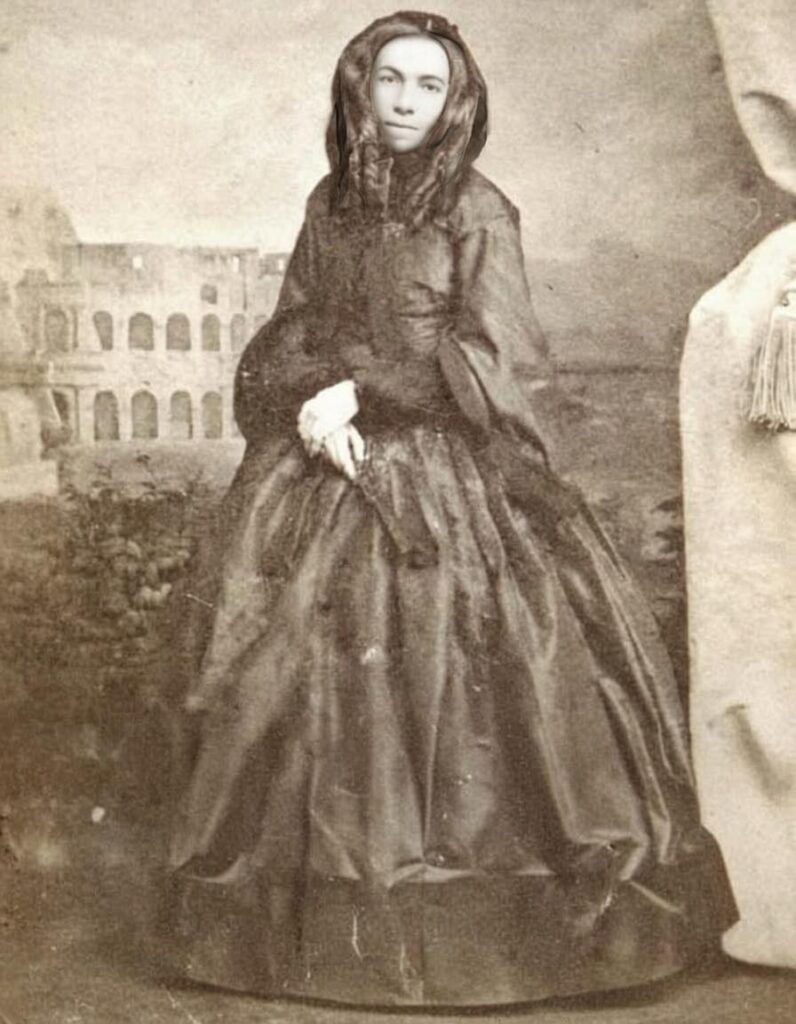
She was fading away in her father’s London house, shut off from the world, forbidden to leave. Most people thought her story was already over. Then one letter arrived. And she chose a life that would shock her family, anger society, and change literature forever.
Elizabeth Barrett was born in 1806 into comfort and privilege, money tied to sugar plantations in Jamaica. From childhood, her mind was fierce. She read Greek at an age when most children were memorizing prayers. She wrote long poems before she was a teenager. Her father was proud of her talent, at least when it stayed safely under his roof.
Then her health collapsed.
A serious spinal injury. Chronic lung disease. Pain that left her barely able to stand. Doctors turned to laudanum, an opium mixture, because there was little else. She depended on it just to get through the day. Years passed with Elizabeth confined to dark rooms, curtains drawn, listening to the city live without her.
Her body weakened, but her mind did not surrender.
She wrote constantly. Line after line, poem after poem. By her late thirties, she was one of the most respected poets in England. Her book Poems, published in 1844, made critics stop and stare. Some whispered her name alongside Shakespeare. When Wordsworth died, people even mentioned her as a possible Poet Laureate.
And then, in January 1845, a letter reached her sickroom.
A poet named Robert Browning wrote to say her words had pierced him. He told her he loved her poetry with all his heart. Elizabeth answered. He wrote back. Soon, their letters carried everything they could not say out loud. Fear. Longing. Faith. Doubt. Hope.
For months, they were only voices on paper.
When they finally met face to face, Robert did not see a helpless invalid. He saw a woman of fire and intelligence, someone alive in ways others had missed. He fell in love with her. Not with the idea of rescuing her, but with who she was.
He asked her to marry him.
That was when reality turned cruel.
Elizabeth’s father, Edward Barrett, ruled his household with iron control. He had forbidden all his children from marrying. No exceptions. Any child who disobeyed would be cut off forever. Elizabeth was forty years old, ill, financially dependent, and living under his roof. Obedience promised comfort. Defiance promised exile.
Many would have stayed.
Elizabeth did not.
On September 12, 1846, she slipped out of her father’s house, married Robert Browning in secret, and left England for Italy. Her father never forgave her. He never spoke to her again.
But something remarkable happened once she was free.
In Florence, sunlight replaced sickrooms. Love replaced fear. Her health improved in ways doctors could not explain. She grew stronger. She gave birth to a son at forty three, after being told she never could. She wrote with new power and confidence.
And she wrote the most famous love poems in the English language.
Sonnets from the Portuguese was her private record of being seen and cherished after a lifetime of confinement. When she wrote “How do I love thee? Let me count the ways,” she was not dreaming. She was telling the truth.
Yet she did not stop at love.
Elizabeth Barrett Browning was angry at injustice, and she used her voice without restraint. She wrote about slavery with unflinching honesty in The Runaway Slave at Pilgrim’s Point. She exposed child labor so vividly in The Cry of the Children that it helped stir public outrage. In Aurora Leigh, she argued that women deserved education, independence, and meaningful work.
Victorian society was unsettled. Women were supposed to be gentle, quiet, and grateful. Elizabeth had already defied her father. She had no patience left for polite silence.
For fifteen years, she lived fully. She loved her husband, raised her son, and fought with words sharp enough to cut through comfort and hypocrisy.
She died in 1861 in Robert’s arms. She was fifty five. Her last word was “Beautiful.”
Robert never married again. He preserved her work and guarded her legacy for the rest of his life.
What makes her story endure is not just romance or poetry.
She was told she was too sick, too old, too fragile. She was locked away by family and written off by society. Safety demanded obedience. Life demanded courage.
She chose life.
She proved that it is never too late to begin again. That love can arrive when the world says your chances are gone. That a voice, once freed, can still shake centuries.
Elizabeth Barrett Browning did not just write about love. She lived it with bravery, defiance, and a refusal to accept a smaller life.
That is not just history. That is a lesson still breathing.
Sometimes the thing that looks like safety is slowly killing you. Sometimes the risk is the only path to freedom.
Elizabeth knew that. And she walked into the light.