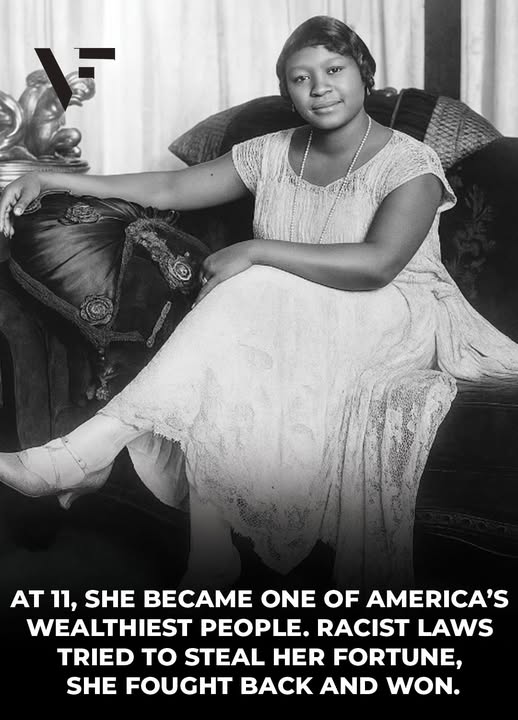
In 1902, Sarah Rector was born in Indian Territory, a Black child of Creek freedmen living in a small cabin with dirt floors. Her father was a sharecropper, her family had almost nothing, and the world offered few opportunities to Black children in the segregated, post-Reconstruction era. Everything changed in 1907 when Oklahoma became a state. Under the Dawes Allotment Act and treaties with the Creek Nation, Sarah and other descendants of freedmen were granted land allotments. These plots were often selected by white officials and intentionally poor—rocky, hilly, unsuitable for farming. Minor restrictions meant Sarah couldn’t sell her land. Legally, she was deemed “incompetent” as a Black child, and a white guardian controlled her assets.
For years, the land seemed worthless. Then, in 1913, everything changed. The Midwestern Oil and Gas Company leased Sarah’s 160 acres and unexpectedly struck one of Oklahoma’s richest oil reserves. The royalties flowed immediately—reportedly 2,500 barrels per day, translating to hundreds of dollars a day at the time, equivalent to tens of millions annually in modern dollars. Sarah Rector, just 11 years old, became one of the wealthiest people in America. Newspapers nationwide called her “The Richest Colored Girl in the World.” Oklahoma’s white establishment reacted predictably: laws required wealthy Black minors to have white guardians. T.J. Porter was appointed over Sarah’s assets, controlling her money, her family’s spending, and even her education. Mismanagement, excessive fees, and questionable decisions were rampant. It looked like legalized theft. The story caught national attention. Leaders like Booker T. Washington, W.E.B. Du Bois, and the NAACP intervened. Black newspapers exposed the injustice. Pressure led to new guardians and better oversight, though Sarah still lacked full control of her fortune. Her family moved to Kansas City, Missouri, and she began enjoying a more stable life.
As Sarah grew, she learned to manage her wealth responsibly. She bought a home, luxury automobiles, and pursued education while maintaining her privacy. She invested in real estate and supported Black educational causes. She married Kenneth Campbell, had three sons, and lived a comfortable life away from the public eye. Sarah Rector’s story is extraordinary because it exposes the systemic racism of early 20th-century America. Wealthy Black children weren’t celebrated—they were controlled. Her fortune came not from charity but from chance: land white officials deemed worthless. Yet the system immediately sought to strip her of it. Her story also highlights the tangled legacy of land, displacement, and exploitation: the Creek Nation land she inherited had itself been stolen from Native peoples, including those who enslaved her ancestors. Despite these hurdles, Sarah survived and thrived. She outlived the legal battles, avoided financial ruin, and used her wealth to secure her family’s future. She lived until 1967, witnessing profound changes brought by the Civil Rights Movement. Today, her name is largely unknown, yet her legacy is profound. Sarah Rector represents Black excellence in the face of systemic oppression, the potential of Black wealth that was often obstructed by racist laws, and the courage to claim what is rightfully yours. At 11 years old, she became one of America’s wealthiest people—and despite laws designed to control and exploit her, she fought back and won. Her story reminds us that opportunity, justice, and persistence can rewrite history, even when the odds are stacked against you.