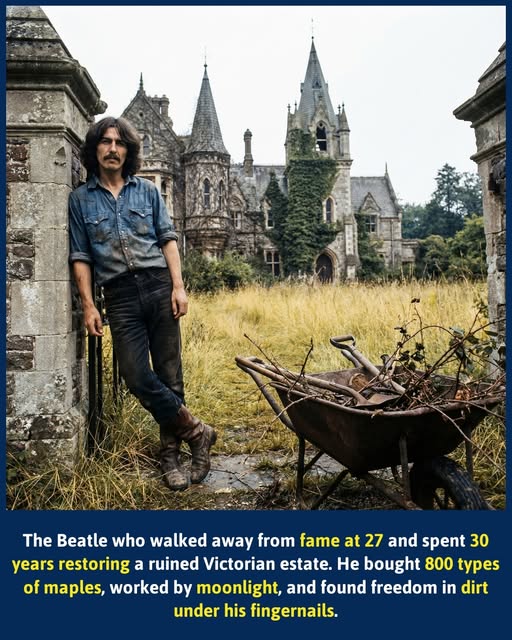
1970. George Harrison stands at the gates of Friar Park, staring at what everyone else calls a catastrophe. The Victorian mansion is rotting. Grass pushes through floorboards inside. The estate’s gardens, once the pride of England, have gone feral. Collapsed greenhouses. Buried grottoes. Pathways strangled by decades of neglect. He’s 27 years old. The Beatles just ended. He could go anywhere, do anything. The world is waiting for his next move. He buys the wreck and decides to dig in the dirt. Not as a weekend hobby. As a life. He hires ten gardeners and works alongside them, dawn to midnight, covered in soil. His sister-in-law takes one look at the estate and asks what he’s thinking. George doesn’t try to explain. He just keeps digging.
His son Dhani grows up watching his father work by moonlight, squinting in the shadows because darkness hides the imperfections that would bother him during the day. The music industry keeps calling. They want albums. Tours. More of George Harrison the Beatle. He wants to plant trees. Friar Park isn’t just a garden. It’s an eccentric’s fever dream from the 1890s. Caves. Underground tunnels. A four-acre Alpine rock garden with a scale Matterhorn on top. Garden gnomes everywhere. He photographs himself among them for All Things Must Pass, then goes back to pruning. When a nurseryman mentions slow sales, George buys one of everything in the shop. When someone offers 800 varieties of maples, he takes them all. His wife Olivia remembers him saying, “It’s not my garden, Liv.” He sees himself as a custodian. The garden doesn’t belong to him. He belongs to it.
By 1980, he publishes his autobiography and dedicates it “to gardeners everywhere.” He writes that he’s simple. Doesn’t want the business full-time. He’s a gardener. He plants flowers and watches them grow. Journalists visit and call it un-rock-star-ish. George doesn’t flinch. He’d lived through Beatlemania, screamed into stadiums, changed culture. He found it hollow compared to restoring topiary. After John Lennon’s murder, the gates lock forever. George and Olivia keep working. Not for visitors. For the work itself. He dies in 2001. The gardens are now considered masterpieces of Victorian landscaping. Olivia still tends them at Friar Park. The estate stays private. George Harrison chose dirt under his fingernails over applause. And in that choice, he found something the stadiums never gave him. Freedom.