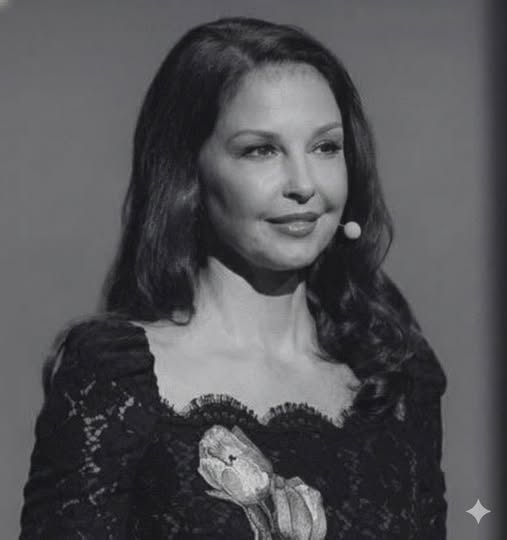
She said no to a powerful man in 1997. Twenty years later, she discovered how much it cost her. Ashley Judd arrived at the Peninsula Hotel in Beverly Hills thinking it was a business breakfast. She was 29, her career ascending rapidly, and Harvey Weinstein was one of the most powerful producers in Hollywood. When someone like Weinstein wanted to meet, you showed up ready to discuss your next project. It was never about a project. Weinstein made advances. Applied pressure. Ashley refused and walked out, shaken but relieved it was over. She had no idea it was just beginning. In the months and years that followed, something strange happened. Roles that seemed perfect for her disappeared without explanation. Directors who’d been enthusiastic suddenly went cold. Major opportunities evaporated. Her career, which had been building unstoppable momentum, hit invisible walls she couldn’t identify.
She worked harder. Auditioned more. Questioned her choices. But the pattern continued—doors closing for reasons that never quite made sense. Ashley couldn’t see what was happening behind those doors. Twenty years passed. Then in 2017, filmmaker Peter Jackson made a startling public admission. When casting The Lord of the Rings trilogy—one of the most significant film franchises in history—Ashley Judd had been on his list of candidates. So had actress Mira Sorvino. But Miramax, Weinstein’s company that had distribution rights, warned him these actresses were “nightmares to work with” and should be avoided at all costs. Jackson trusted the information. He removed both women from consideration. Years later, watching news reports about Weinstein’s pattern of abuse, Jackson realized what had actually happened. He went public with a statement that changed everything: “I now suspect we were fed false information about both of these talented women as part of a smear campaign.” The revelation was devastating. Weinstein hadn’t accepted rejection. He had engineered retaliation—systematically, invisibly, lethally effective. A phone call here. A quiet warning there. A reputation poisoned with lies. Opportunity after opportunity erased before Ashley even knew they existed.
It wasn’t just punishment. It was a message to every woman in the industry: defy me, and I will make you disappear. For two decades, Ashley lived with consequences she didn’t fully understand. The Lord of the Rings alone could have transformed her entire career trajectory. Instead, roles she’d been perfect for went to others, and she never knew why. All because she’d said no. Then came October 2017. Investigative reporters at The New York Times published an explosive investigation documenting decades of Weinstein’s sexual harassment and abuse. The story named multiple women. Some spoke anonymously, protecting themselves from retaliation they knew was real. Ashley Judd chose differently. She went on record. Used her full name. Described what happened in that hotel room twenty years earlier. She understood the risk. The backlash would be fierce. She’d already lost so much of her career to this man’s vindictiveness. Speaking publicly could cost her even more. She spoke anyway. Because she understood something crucial: her silence had protected the system that harmed her. Her honesty might protect the next generation. That single act of courage created permission for others. Within days, more women found their voices. Within weeks, the trickle became a flood. #MeToo exploded across social media as millions of women shared stories they’d carried in silence for years, decades, lifetimes.
The conversation expanded beyond one predator. It exposed an entire architecture of abuse—systems that allowed powerful men to destroy careers with whisper campaigns, silence victims through fear, and operate with impunity for decades. Weinstein’s empire collapsed almost overnight. His company dissolved. Criminal investigations opened in multiple jurisdictions. The man who’d wielded his power like a weapon found himself stripped of everything he’d used to intimidate and control. In March 2020, Weinstein was convicted of rape and criminal sexual assault. He was sentenced to 23 years in prison. But the conviction wasn’t the real victory. The real victory was the shift he couldn’t stop. Across every industry—entertainment, business, politics, journalism, academia, tech—women began telling truths they’d been told to bury. Power structures built on silence were forced into daylight. Cultures of complicity began to crack. Ashley Judd lost roles she’ll never get back. The Lord of the Rings could have been a defining chapter of her career. Instead, it became evidence of how power weaponizes reputation. But by refusing to stay silent, she helped dismantle something far bigger than any role: a system that had operated in shadows for generations.
That hotel room in 1997 was supposed to stay buried forever. Weinstein’s power had buried countless stories before. He had every reason to believe this one would disappear too. He underestimated one thing. The cost of staying silent eventually becomes higher than the cost of speaking. Twenty years after that meeting, Ashley Judd said Harvey Weinstein’s name out loud—and the empire he’d built on fear began to crumble. One woman. One truth. One refusal to be erased. Sometimes that’s all it takes to change everything.