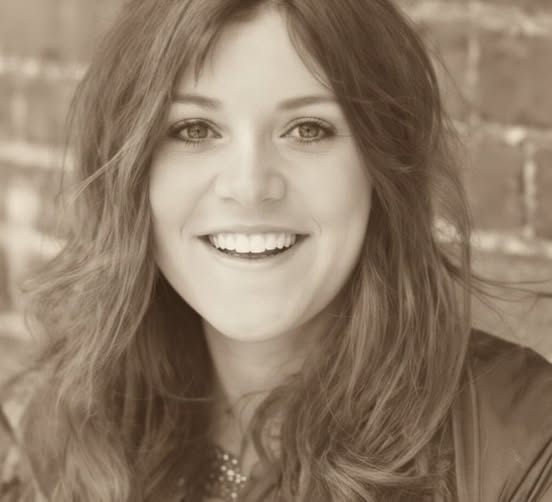
It wasn’t supposed to be dramatic. Her mother had driven her to a hotel near what they both assumed was a quiet summer festival — three days of peace, music, and maybe some arts and crafts. But when Melanie looked down from the helicopter window, she didn’t see a festival. She saw something that made no sense. The ground below looked like a strange crop, fields of tiny, colored dots stretching as far as she could see. She turned to the pilot. He said, simply, “That’s people.”
Half a million of them.
Melanie had no idea she was about to perform in front of all of them. She wasn’t on the schedule. She was there because Buddah Records, her label, had taken a long shot — their co-founder, Artie Ripp, knew one of the Woodstock organizers and decided to send her on the chance she might get a slot. There was no guarantee. No backup plan. And while Melanie had already scored a #1 hit in France with “Bobo’s Party” and charted in the Netherlands, she was almost completely unknown in America. In the U.S., her music barely played on a single New York radio station.
When she landed, she was led to a small tent with a dirt floor. There was no backstage pass waiting for her. There was no manager. There was no one from her label. Famous musicians moved freely through the main area while Melanie sat alone — nervous, overwhelmed, and increasingly terrified. Someone would open the tent flap every so often and say, “You’re next.” Then they would disappear. And she would wait. And wait.
The waiting turned her fear into something physical. A deep, bronchial cough seized her — loud, relentless, the kind that shakes your whole body. She was convinced it would destroy her voice before she ever got the chance to sing.
Then something small happened. And it changed everything.
Joan Baez — folk music royalty, Melanie’s personal hero — was in a tent nearby. She heard the coughing. She didn’t know Melanie. She didn’t owe her anything. But she sent an assistant over carrying a pot of tea with lemon and honey, along with a simple message: “Joan heard you coughing and thought you might like this.”
Melanie would spend the rest of her life talking about that moment. Not Woodstock itself. Not the applause. Not the fame. That pot of tea. That single, quiet act of kindness from a woman who had no reason to offer it. It was, she said, the moment that got her through the rest of the day.
Hours later, the sky broke open. Rain pounded the hillside and the stage. The Incredible String Band, scheduled to go on, refused to perform in the rain. The schedule collapsed. The organizers needed someone willing to walk out there alone, in the mud, in the dark, with nothing but a guitar.
They chose the unknown girl in the small tent.
Melanie walked onto that stage by herself. No band behind her. No backup singers. Just her voice and an acoustic guitar. She was one of only three solo performers in the entire festival — out of thirty-two acts.
She began to sing.
Before she had taken the stage, emcee Wavy Gravy had passed candles through the crowd and made an inspirational call to keep the light alive. Now, as Melanie sang into the rain and the dark, members of the Hog Farm commune continued handing out candles across the hillside. One by one, then dozens, then hundreds, then thousands — people began lifting those candles into the air. The dark, muddy slope transformed. It became a vast, glowing ocean of flickering light, stretching out before her as far as she could see.
No one had ever done that at a concert before. The ritual of holding up lights during a powerful moment — something now so common it feels ancient — was born right there, on that rainy night, because of one woman singing alone.
She walked off that stage a celebrity.
But fame, it turned out, came with strings. The music industry didn’t know what to do with someone who refused to be managed. Melanie was too independent, too unconventional, too unwilling to bend. Labels wanted to reshape her image, control her output, dictate her sound. She said no.
In 1971, she and her husband Peter Schekeryk founded Neighborhood Records — making her the first woman in rock history to own and operate her own independent label. Her first release on that label, “Brand New Key,” shot straight to #1, selling over three million copies worldwide. She had just proven that you didn’t need a major label’s permission to succeed. You needed conviction.
The year after, she became an official UNICEF ambassador — and chose to cancel a world tour to raise money for the organization instead. Five major music publications named her Female Vocalist of the Year. Europe never stopped loving her.
Over the decades, Melanie released more than thirty albums. She won an Emmy. She performed at Carnegie Hall. She sang for the United Nations General Assembly. And through all of it, she kept writing, kept recording, kept refusing to disappear.
On January 23, 2024, Melanie Safka passed away at the age of seventy-six.
Her children, in announcing her death, asked the world to do one thing: light a candle.
“Raise them high,” they wrote. “Illuminate the darkness, and let us all be connected.”
It was the perfect goodbye for the woman who started it all — on one rainy night in 1969, when a nervous girl with a guitar taught half a million people that light, once shared, never truly goes out.