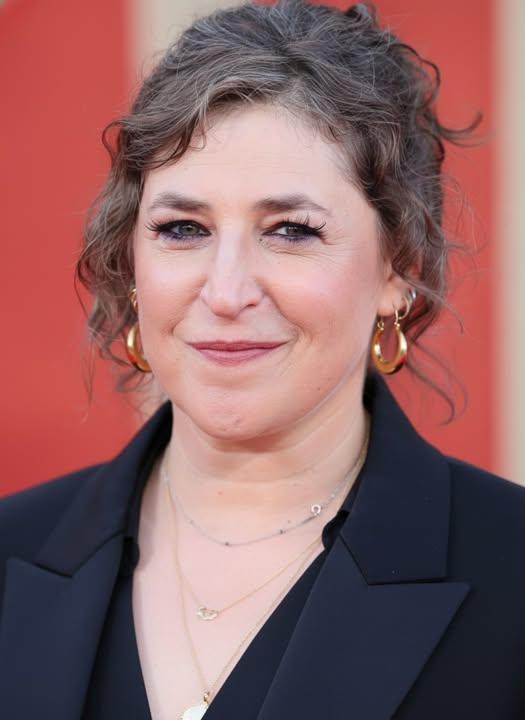
She wasn’t chasing fame.
She wasn’t planning a comeback.
She was doing math no parent should have to do.
In 2010, Mayim Bialik had everything that supposedly defines success. A doctorate in neuroscience from University of California, Los Angeles. Two young children. A husband still in graduate school. A life built deliberately far away from Hollywood.
What she didn’t have was health insurance.
And in the United States, that absence can undo everything.
“I was running out of health insurance,” she later said. “I had a toddler and a newborn, and my insurance was expiring.”
That sentence explains the entire story.
The Star Who Walked Away on Purpose
Most people remembered her as the girl from Blossom. A hit NBC sitcom. National fame. A future lined with auditions.
When the show ended in 1995, Mayim did something almost unheard of in Hollywood.
She left.
Not to rebrand.
Not to capitalize on fame.
Not to stay relevant.
She went to college.
For twelve years, she disappeared from television and immersed herself in science. Bachelor’s degree. Graduate school. A PhD focused on the neuroscience of obsessive-compulsive behaviors. She taught. She researched. She lived a life where no one in her classroom knew she once had her own sitcom.
It was intentional.
It was fulfilling.
It was real.
Until it wasn’t sustainable anymore.
The Calculation Every Parent Knows
Academic jobs don’t come with studio-level health plans. Graduate student insurance ends. And when you have two children under five, healthcare is not optional. It is survival.
Mayim wasn’t planning a return to acting.
She was planning to protect her kids.
The Screen Actors Guild offered health insurance. To qualify, she needed work. Not stardom. Not a contract. Just enough acting jobs to restore coverage.
A few guest appearances would do.
That was the plan.
The Audition She Almost Skipped
Her agent mentioned a guest role on a CBS sitcom called The Big Bang Theory.
Mayim had never watched it.
She’d heard her name mentioned once on the show and assumed it might have been a joke or a trivia reference. She didn’t even know who the lead actor was.
The night before the audition, she Googled Jim Parsons.
She watched thirty seconds of video.
That was her preparation.
What Happened in the Room
Six actresses auditioned.
The role was tiny.
Five or six lines.
No name yet.
The producers said they wanted a female version of Sheldon.
Mayim didn’t blink.
“I got it,” she told them.
Not arrogantly. Honestly.
She didn’t need to pretend to be a scientist.
She’d lived in labs for over a decade.
She knew those people.
She was those people.
The Phone Call That Changed Everything
A few days later, CBS called.
They wanted her.
The character became Dr. Amy Farrah Fowler, a neurobiologist whose field mirrored Mayim’s real-life expertise. What was supposed to be a single appearance became recurring. Then permanent. Then historic.
Nine seasons.
In that first moment, the spotlight didn’t matter.
The insurance did.
“I did not expect to be a regular,” she later said. “I was not expecting to be a full-time actor.”
She expected coverage for her children.
The Partnership That Defined a Generation
Jim Parsons later revealed that when Amy’s future on the show was uncertain, he fought for her character to stay.
“I will not let this character go without a fight,” he told producers.
Their on-screen relationship became one of television’s most beloved arcs. Their real-life friendship lasted beyond the show, with Parsons later producing Mayim’s sitcom Call Me Kat.
None of it was planned.
All of it came from necessity.
What She Achieved — Almost by Accident
From 2010 to 2019, Mayim Bialik appeared in 203 episodes of The Big Bang Theory.
She earned four Emmy nominations.
She won two Critics’ Choice Awards.
Her character became a symbol of intelligent, complex women on television.
And yes.
Her children had health insurance.
The Truth Behind the “Comeback”
People love to frame this as a Hollywood redemption arc.
The child star who returned to claim her throne.
Mayim tells it differently.
“I was literally running out of health insurance,” she said. “This is a true story.”
She didn’t come back for fame.
She didn’t come back for applause.
She came back because a mother with a PhD still couldn’t afford to get sick.
Why This Story Actually Matters
This is not a Hollywood story.
It’s an American one.
It’s about a system where healthcare is tied to employment.
Where even advanced degrees don’t guarantee security.
Where parents calculate risk with their children’s lives in mind.
Mayim Bialik didn’t plan to become a television icon again.
She planned to keep her kids protected.
The rest happened when necessity met opportunity.
Because sometimes the greatest performances of our lives don’t come from ambition.
They come from love.
From duty.
From refusing to let our children go unprotected.
She walked into that audition because she had no other choice.
She walked out with a role that defined a generation.
And she proved what every struggling parent already knows:
When it comes to our children, we find a way.
We always find a way.