The voice on the other end of the phone belonged to a bank investigator.
“Miss Donnelly, we’ve been trying to reach your parents. They used your name and credit history as collateral on multiple high-risk loans. The total debt is now over $1.2 million. If we don’t resolve this, we will have no choice but to pursue legal action against you as co-signer.”
I stood in my kitchen — the same kitchen my father had stormed through three months earlier — and felt nothing but calm.
“I know,” I said quietly. “I’ve been expecting your call.”
There was a pause on the line. “You… knew?”
“Yes. I knew the day they slapped me and told me I owed them my house. I knew when they forged documents using my information. I knew when they bragged to the entire family that I would eventually ‘do the right thing.’”
I had spent the last three months preparing.
The day after my father slapped me, I didn’t cry. I didn’t call the police. I sat down at my laptop and started pulling every financial record I could access. I discovered they had been using my name for years — opening credit cards, taking out personal loans, even listing me as a co-owner on properties I had never seen. They had been slowly bleeding my credit dry while pretending I was the selfish one for wanting my own home.
I hired a forensic accountant. I hired a lawyer. I quietly froze every account they had touched with my information. I filed reports with the credit bureaus and the FTC. And I waited.
Now the waiting was over.
My mother called me that same evening, voice shaking.
“Claire, the bank is threatening to take everything. Your father is in the hospital — stress, they say. You have to help us. We’re family.”
I let the silence stretch.
“Family?” I finally said. “You gave my sister a house worth $860,000. You sold your own home to do it. Then you came to me demanding I give up the only thing I built with my own hands. When I said no, Dad slapped me in my own living room. And now you want my help?”
My mother started crying. “We didn’t mean for it to go this far. Melanie needed stability. You’ve always been the strong one.”
“Strong enough to be sacrificed,” I replied. “I’m not fixing this. I’m not signing anything. I’m not paying a single dollar. You made your choices. Now live with them.”
My father called the next day from his hospital bed, voice weak but still trying to command.
“Claire, this is ridiculous. Transfer the house back into the family trust. We’ll forgive the slap. We’ll even give you a small cut. Just do what’s right.”
I laughed. It was the first real laugh I’d had in months.
“What’s right?” I asked. “You forged my name on loans. You committed identity theft. You physically assaulted me. I have photos of the bruise. I have bank records. I have everything. The authorities already have the file. You’re not getting another cent from me.”
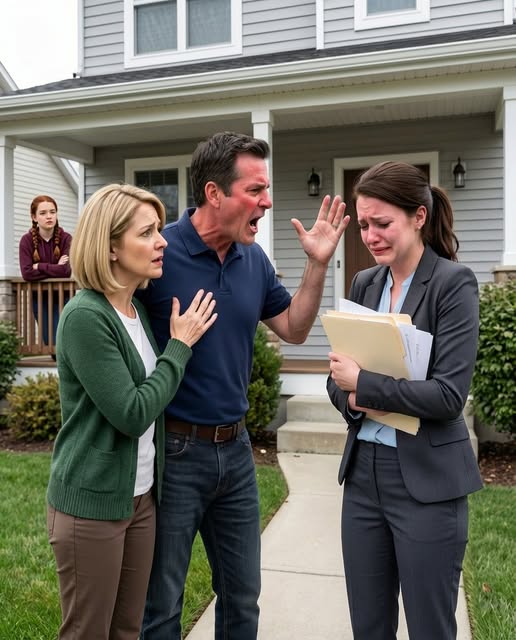
Three weeks later, my parents’ house — the luxury rental they had moved into after selling their original home — was foreclosed. My sister Melanie had to move out of her $860,000 house because the payments were in my parents’ names and the bank came calling. The family that had once looked down on me for “being selfish” now had nothing.
I kept my house.
I kept my peace.
And I finally understood what my late grandmother used to say: “Some people only love you when you’re useful. The moment you stop being useful, they show you exactly who they are.”
I stopped being useful.
And I finally started being free.
THE END