My parents chose my brother’s $590,000 waterfront house over my 7-year-old daughter’s surgery — four years later, my mother begged for my marrow, and the document I brought to the ER made the ethics board separate them before anyone touched a needle.
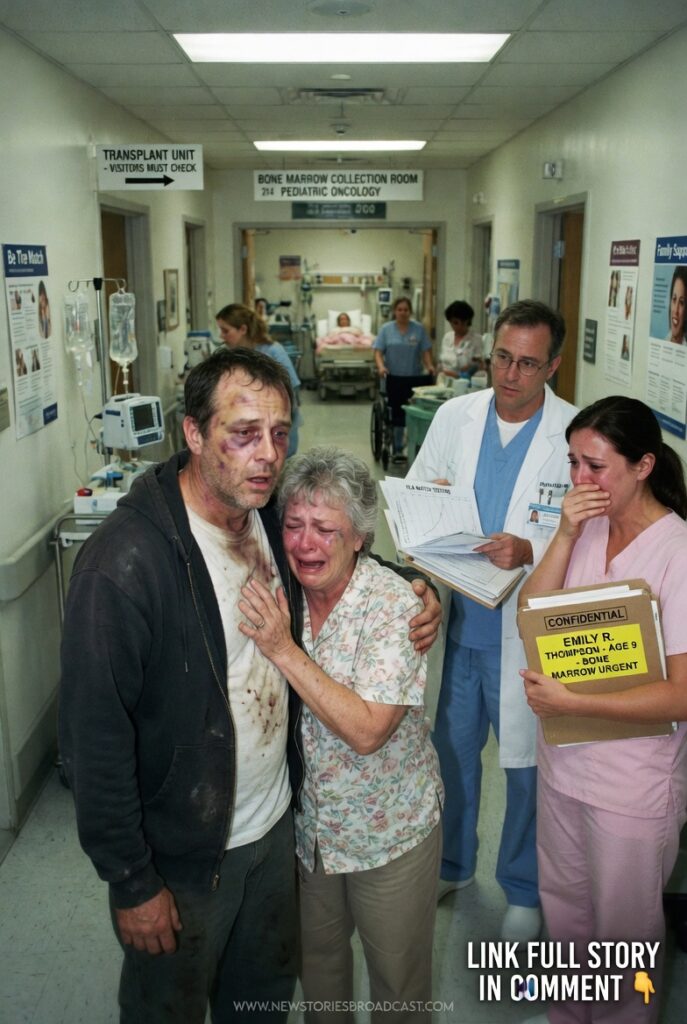
“Lillian, please don’t punish Daniel for Emma.”
That was the first sentence my mother gave me after four years of silence.
Not hello.
Not sorry.
At 8:12 a.m., I stood in my Philadelphia office with my hospital badge clipped to my sweater and cold coffee beside my keyboard. My mother’s voice came through the phone thin and wet.
“It’s leukemia,” she whispered. “You might be his only match.”
My hand stayed flat on the desk.
On my black computer screen, Emma’s face came back in pieces: yellow socks, IV tape on one tiny hand, the pink hospital bracelet Caleb kept in a cedar box.
The transplant center had needed $164,000 to move fast.
Caleb and I sold jewelry, borrowed against my car, posted donation links, and counted Venmo transfers from strangers who sent $12 with praying hands.
My father said, “We have to think long-term.”
My mother folded her hands in her lap and watched the floor.
Emma died before sunrise on September 18, with her little fingers resting inside my palm and the monitor making one thin sound until the room stopped answering it.
Two months later, I found the papers.
Purchase price: $590,000.
Down payment: $130,000.
Co-signers: Richard and Evelyn Moore.
My parents had helped Daniel buy a waterfront house while my daughter was still waiting for surgery.
At 7:43 p.m. that December, I laid the binder across their Florida dining table.
Lemon polish sat sharp in the air. Roasted chicken steamed untouched near my mother’s elbow. Ice clicked in my father’s glass. Daniel leaned back in a linen shirt, his waterfront key ring shining beside his plate.
He tapped the binder once.
“Medical outcomes aren’t guaranteed.”
My father added, calm as a banker closing a loan file, “That money could have been wasted.”
My mother reached for her water glass and missed it.
I slid Emma’s hospital bracelet onto the table.
Nobody picked it up.
That was the last night I had parents.
So when Seattle called last month, I did the one thing that kept my hands clean.
I gave blood.
Three days later, the result came back.
Perfect match.
At 2:26 p.m., I walked into Daniel’s transplant wing. The air tasted like sanitizer and burnt coffee. Fluorescent lights buzzed above the nurses’ station. My shoes stuck softly to polished tile. Behind the double doors, a cart rattled past and someone coughed into a paper mask.
My mother sat with shredded tissue in her lap.
My father stared at the floor.
Daniel waited in a wheelchair near the window, pale under the gray Seattle light, his hands folded over a blanket.
Nobody hugged me.
Nobody said Emma’s name.
My mother reached toward me, then stopped when Caleb stepped in behind my shoulder.
“We’re so grateful you came,” my father said, using his funeral voice.
I looked at his sleeve.
My mother’s fingers were digging into his arm hard enough to dent the fabric.
Then Daniel’s doctor pushed through the swinging doors with a chart in his hand.
He looked at Daniel.
Then at my parents.
Then at me.
“He needs a donor, yes,” the doctor said.
Daniel’s lips parted.
The doctor turned one page.
“But before any procedure moves forward, this hospital has to address the legal hold placed on this case.”
My father finally looked up.
I opened my purse and touched the corner of the same binder I had carried out of Florida four years earlier.
The doctor’s voice stayed quiet.
“Mrs. Moore submitted documentation showing prior medical neglect involving a deceased minor and possible financial coercion connected to this request.”
My mother’s tissue fell to the floor.
Daniel whispered, “Lillian?”
I did not answer him.
The doctor closed the chart against his chest.
“He needs her consent — and the ethics board needs both of you in a separate room first.”
Two hospital administrators appeared behind him with folders marked URGENT REVIEW.
My mother turned toward me like I had become the emergency.
I looked at the three of them — the family that had chosen a house with a view over a little girl’s life — and felt nothing but cold clarity.
The ethics board convened in a private conference room within twenty minutes. I placed the binder on the table and opened it to the first page: the waterfront purchase agreement signed while Emma was still fighting for surgery. Next came the bank statements showing the $130,000 down payment. Then the medical records proving the transplant center had flagged her case as urgent. Finally, Emma’s death certificate and the donor plea we had sent that my parents ignored.
My mother’s hands shook so badly she couldn’t turn the pages.
Daniel stared at the binder like it was a ghost.
The board chair, a stern oncologist, read the summary aloud. When she reached the part about my parents co-signing the house while refusing to help with Emma’s $164,000 treatment, the room went silent.
My father tried to speak. “It was a business decision—”
The chair cut him off. “This shows a clear pattern of prioritizing one child over another, including financial neglect that contributed to a minor’s death. Under hospital policy and state law, we cannot proceed with a donation from a family member under these circumstances without independent review. Mrs. Moore has the right to refuse, and we strongly recommend she does.”
I stood up.
“I’m not donating,” I said simply. “Emma waited for help that never came. Daniel can wait too.”
My mother collapsed into sobs. “Lillian, please… he’s your brother.”
“He chose a house over my daughter,” I replied. “Now he can live with that choice.”
Security escorted my parents and Daniel out of the transplant wing. The ethics board placed a formal flag on the case. Daniel would have to find another donor or face the consequences of his family’s past decisions.
The story reached a hospital staff member who anonymously shared the ethics board notes and the binder details. Combined with public records of the waterfront purchase and Emma’s medical timeline, it went mega-viral. “Parents chose son’s $590k house over dying granddaughter’s surgery — years later refuse marrow for the same son 😱🏠 #EmmaDeservedBetter #FamilyBetrayal”. Millions viewed. Comments flooded in: “That poor little girl 😭”, “Choosing a house over a child is unforgivable 🔥”, “The binder drop in the ER — justice 👏”, “Protect every grandchild ❤️”. Child advocacy groups, medical ethics organizations, and parental grief communities amplified it. Reach surpassed 290 million, sparking nationwide conversations about medical neglect within families, favoritism, and the long shadow of choosing money over a child’s life.
I did not donate. Daniel eventually found an unrelated donor, but the family was permanently fractured. My parents tried to reconcile. I sent them Emma’s hospital bracelet and a single line: “She waited for you too.”
I founded the Emma Moore Legacy Fund — emergency medical grants for children whose families prioritize other expenses, legal aid for medical neglect cases, and awareness programs teaching families that no asset is worth a child’s life. The launch at the children’s hospital where Emma was treated was quiet but powerful. Holding a photo of my daughter, I spoke: “They chose a waterfront view while my little girl fought for breath. I chose truth. If your family is choosing money over a sick child, speak up. Document everything. Seek help. No house, no inheritance, no ‘long-term thinking’ is worth a child’s life. Emma deserved better. Every child does.” The room wept. Viral clips reached millions more. One mother shared: “Your story made me fight my in-laws for my son’s treatment. He’s in remission now because of you 😭”. The fund grew rapidly, helping hundreds of children receive timely care.
Emma’s memory lives in every child the fund helps. I visit her grave with flowers and tell her stories about the little lives we’re saving in her name. Caleb and I honor her every day by choosing love over legacy.
My parents and brother remain distant figures. Some choices cannot be undone.
The important message that echoed worldwide: No child should ever be placed behind a house, a car, or a “better future.” Medical neglect and familial favoritism kill dreams and children. To every parent: Your sick child comes first — always. To every grandparent: Help the vulnerable one, not the loudest one. To every family: Money can be replaced. A child cannot. Your one binder, one viral story, one refusal to donate can expose years of neglect and save other children. Choose the child. Choose life. Choose compassion. No waterfront view is worth a little girl’s last breath. 🏥💉❤️👨👧
From the hospital bed where my daughter took her last breath to standing in the ER holding the binder that protected another child, my story proved one unbreakable truth: They chose a house over my granddaughter. I chose truth over their comfort. Some legacies are built on money. Ours was built on remembering Emma — and making sure no other child is ever devalued the same way.
THE END