In New York City, a homeless man named Greg spent two years gathering discarded materials from the streets to build his own tiny house. What started as a simple structure made of scrap metal, wood, and plastic became a cozy home with a bed, kitchen, and even plants. Greg’s determination and ingenuity turned what many would call trash into a functional living space.
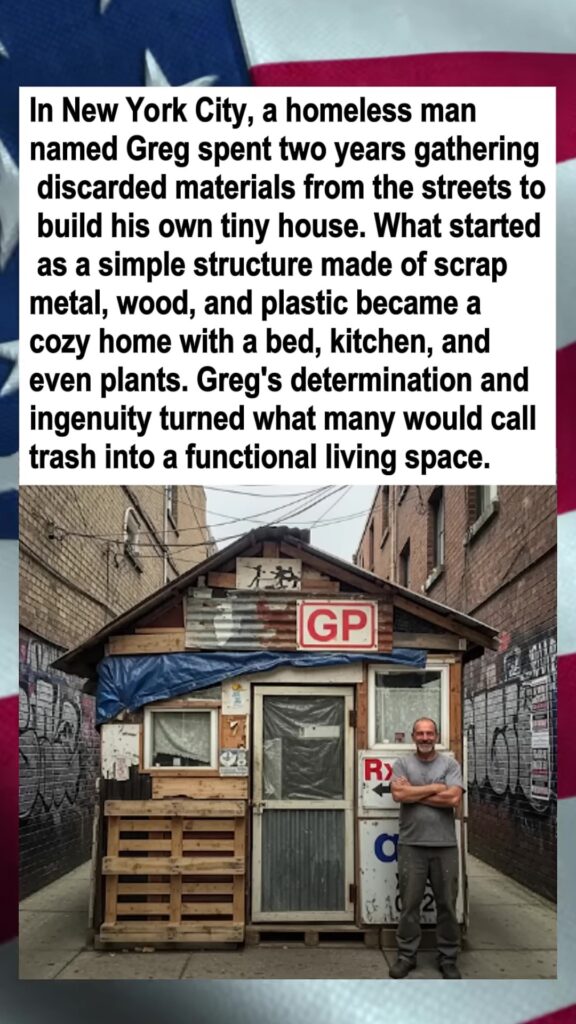
In the alleys of New York City, where concrete meets silence and forgotten corners collect dust, Greg saw possibility. Homeless and resourceful, he spent two years gathering discarded materials—scrap metal, broken wood, plastic sheets, and pallets. What others saw as waste, Greg saw as walls, windows, and warmth.
He didn’t have blueprints. He had vision.
Piece by piece, he built a tiny house tucked between two brick buildings. It wasn’t just shelter—it was home. Inside, he created a bed, a makeshift kitchen, and even planted greenery. The structure had personality: signs, curtains, a door, and a sense of pride.
Greg’s home wasn’t sanctioned. It wasn’t funded. It was earned—through sweat, creativity, and defiance of invisibility.
In a city of luxury high-rises and rising homelessness, Greg’s story is a quiet rebellion. He didn’t wait for housing programs. He didn’t beg for help. He built his own solution.
His house became a symbol—not just of survival, but of ingenuity and dignity. It challenged assumptions about homelessness. It asked: What if we saw potential instead of problems? What if we gave space instead of shame?
Greg’s story echoes the broader crisis: over 60,000 people experience homelessness in NYC on any given night. Shelters are overcrowded. Affordable housing is scarce. But Greg reminds us that even in scarcity, human spirit finds a way.
His home may be small, but its message is massive: everyone deserves a place to belong.