Montana, 1941. Eight-year-old Tommy’s job: raise the flag at his one-room school. December 7th, Pearl Harbor. His teacher wept. “Keep raising it,” she said. His brothers enlisted. Only one returned. Tommy raised that flag through four years of war. Through gold star mothers. Through rationing. Through victory. Years later, his teacher told him: “You were eight, lifting our hope every dawn while we waited for death telegrams. The smallest hands holding up the biggest symbol.” Tommy, now 90, still has that flag. Says it weighs more now than it did then. Some duties grow heavier with understanding.
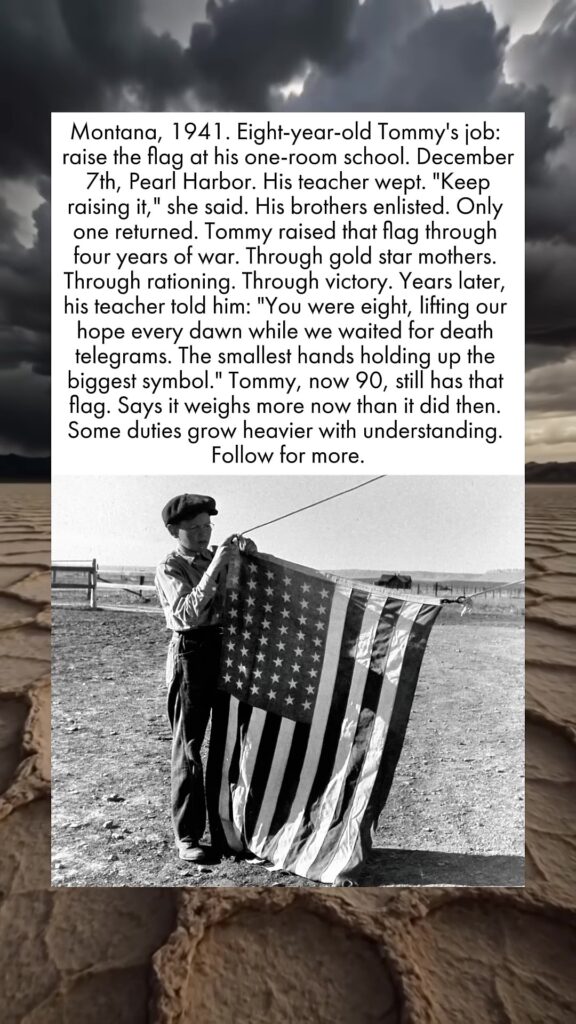
Montana, 1941—a remote one-room schoolhouse on the vast prairie, where routines were sacred and the American flag flew proudly each morning. Eight-year-old Tommy had the honored daily job: hoisting Old Glory up the pole before class began, his small hands gripping the rope with quiet determination.
Then came December 7th—Pearl Harbor. News crackled over the radio, shattering the innocence of that rural world. Tommy’s teacher, tears streaming down her face, gathered the children and whispered through her grief: “Keep raising it.”
His older brothers soon enlisted, marching off to war like so many young men across the nation. Tommy continued his duty, day after day, through four long years of conflict. He raised the flag as families received gold stars in their windows, signifying sons lost forever. He raised it amid ration books, victory gardens, and anxious nights waiting for telegrams. He raised it through Allied triumphs and, finally, through Victory Day.
Only one of his brothers came home.
Decades later, when Tommy was an old man, his former teacher—now frail herself—took his hand and said: “You were only eight, lifting our hope every dawn while we waited in dread for those death telegrams. The smallest hands holding up the biggest symbol of all we fought for.”
Tommy, now 90, still keeps that very flag, carefully folded and preserved. He says it weighs far more now than it did back then—not from fabric, but from the memories and meaning layered upon it over a lifetime.
Some duties begin as simple chores for a child. With time and understanding, they grow heavier, becoming profound emblems of resilience, loss, and enduring hope in the face of a nation’s darkest hours.