1350 BC, Egypt. Prince Khaemwaset enters a pyramid already 1,200 years old. His torch flickers on hieroglyphs older than Rome would ever be.
His father, Ramesses II, rules now—but this tomb belonged to their ancestors’ ancestors. Dust of millennia on his fingers.
He copies the faded name: “King Unas.” Orders restoration. Carves below: “Prince Khaemwaset made this monument live again.”
His team finds pottery shards from dynasties they only knew in songs.
The prince—history’s first archaeologist—studying his own civilization’s ancient past.
Egypt was so old, it had archaeologists before other nations had writing. Time studying time itself.
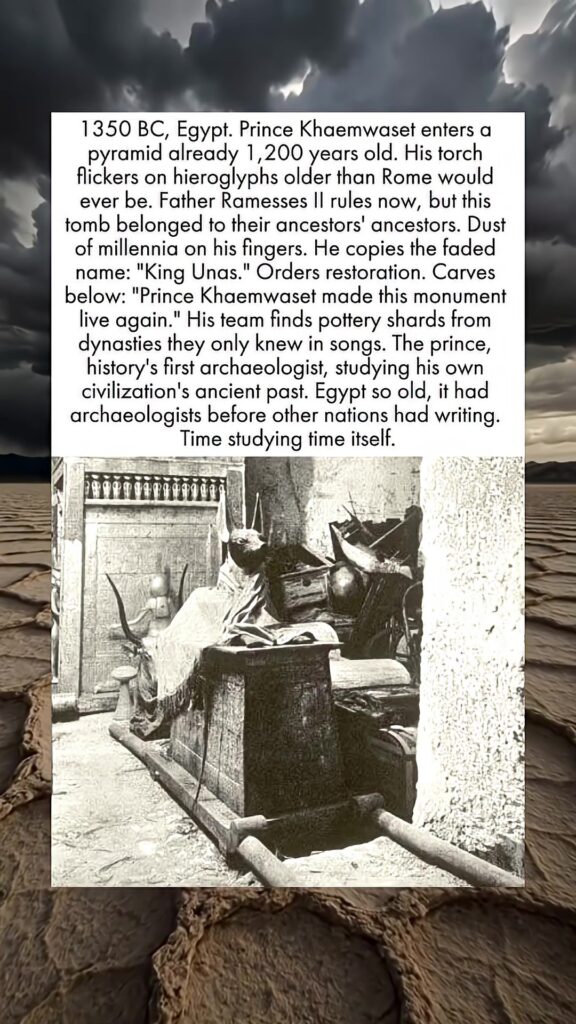
Egypt, 1350 BC. Prince Khaemwaset steps into a pyramid already 1,200 years old.
His torch flickers across walls carved before Rome existed.
His father, Ramesses II, rules the empire. But this tomb belonged to ancestors so ancient, their names were fading.
Khaemwaset copies one: “King Unas.” Then he orders restoration.
Beneath the old name, he carves a new one: “Prince Khaemwaset made this monument live again.”
His team uncovers pottery from dynasties they only knew in songs.
He wasn’t just a prince. He was history’s first archaeologist—studying the ruins of his own civilization.
Egypt was so old, it had archaeologists before most nations had alphabets.
Time, studying time itself.