Hello Readers, throwaway for privacy. I’ve been carrying this random childhood memory for over 20 years, thinking it was just one of those weird kid things that didn’t mean anything. Then, three months ago in October 2025, a single conversation with my mom made the whole scene click into place—and it changed how I see my entire upbringing. This is long, but I need to tell it all.
I’m 31F now, the middle child of three. My older brother Ben is 34, younger sister Cara is 28. We grew up in a quiet suburban neighborhood in the Midwest—big backyard, cul-de-sac full of kids, parents who were married and seemed stable. Dad was a high school history teacher and coach, Mom stayed home until we were all in school, then worked part-time as a librarian. Classic 90s/early 2000s middle-class life. Family vacations every summer, church on Sundays, Friday pizza nights. Nothing obviously traumatic.
The memory that always stuck with me happened when I was about 8 years old—summer 2002 or 2003.
It was a weekday evening, warm, still light out. I was playing in the living room with my Barbie dream house while my parents thought I was fully absorbed. Ben and Cara were outside with neighborhood kids. I remember hearing adult voices in the kitchen—low, serious, not yelling but intense. Mom’s voice sounded shaky, Dad’s was clipped.
I crept closer to the doorway so I could hear better (classic nosy kid move). I caught fragments:
Mom: “…can’t keep doing this. We’re drowning.” Dad: “I’m handling it. One more season and the overtime will cover it.” Mom: “It’s not just the money. You’re gone all the time. The kids barely see you.” Dad: “What do you want me to do? Quit coaching? We’d lose the house.” Mom (crying now): “I didn’t sign up for this alone. I’m scared, Tom.”
Then silence, a chair scraping, and Mom saying very quietly: “Sometimes I don’t know if we’re going to make it.”
I didn’t understand most of it. I knew money was sometimes tight—Mom clipped coupons, we didn’t get the fancy cereals—but I didn’t grasp the depth. I just remember feeling this cold knot in my stomach, like something big and bad was happening to my safe world. I tiptoed back to my Barbies and pretended I hadn’t heard anything.
A few minutes later, Dad came into the living room, ruffled my hair like normal, and asked if I wanted ice cream. Mom appeared with a smile that didn’t reach her eyes, and everything seemed fine again. That night, I heard them talking late in their bedroom—muffled voices through the wall—but no yelling.
After that, nothing seemed different on the surface. Dad kept coaching football and track. We kept the house. Mom kept smiling. Life went on. The memory faded to the background, just one of those vague “huh, that was weird” moments I’d occasionally recall and then shrug off.
Fast-forward to October 2025.
My parents were celebrating their 40th wedding anniversary. Ben, Cara, and I threw them a surprise party at their house—rented tables, catered food, slideshow of old photos, about 50 friends and family. It was beautiful. They danced to their wedding song, everyone toasted to their “rock-solid marriage.”
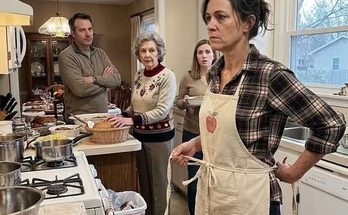
Later in the evening, after most guests left, the six of us were sitting around the kitchen table with leftover cake and wine. Someone (I think Ben) joked about how Mom and Dad never fought, that they were the model of a perfect marriage. Everyone laughed, and Dad said something like, “Oh, we’ve had our moments. Marriage isn’t always easy.”
Mom got quiet for a second, then looked at Dad and smiled softly. “Remember that summer when the kids were little and we almost lost everything?”
I froze mid-bite of cake.
Dad nodded slowly. “How could I forget?”
Mom turned to us and said, “You kids were too young to know, but the summer your dad took on that extra coaching contract… we were in real trouble. The mortgage was two months behind. Credit cards were maxed. I was terrified we’d have to sell the house and move in with my parents.”
My heart started pounding. I said, “Wait… was this the summer I was around 8? When you guys were talking in the kitchen about money and being scared?”
Mom’s eyes widened. “You heard that?”
I nodded. “I didn’t understand it at the time, but I remember you saying you didn’t know if we were going to make it.”
She reached across the table and squeezed my hand, tears in her eyes. “Oh, honey. I’m so sorry you carried that.”
Then they told us the full story.
In 2001–2002, the school district had budget cuts. Dad’s teaching salary was frozen, then some supplemental pay got slashed. At the same time, the housing market was hot, and they’d refinanced the house to pay for some repairs and Ben’s braces—thinking they could handle the higher payment. Then 9/11 hit, the economy wobbled, and overtime opportunities dried up.
By summer 2002, they were $18,000 in debt (huge money then), facing possible foreclosure. Dad took on every extra coaching gig he could find—summer camps, private lessons, even driving a school bus route. He was gone 16 hours a day. Mom picked up secret night shifts at a grocery store after we went to bed. They were both exhausted, terrified, and barely speaking because every conversation turned into fear or blame.
They almost separated. Mom had packed a bag once, ready to take us to her parents’ house for a “visit” that might have become permanent. But Dad begged her to give him one more season to turn it around. The overtime finally paid enough to catch up on the mortgage, and a smalled inheritance from Dad’s uncle covered the credit cards.
They never told us kids. They didn’t want us to worry. They put on happy faces, kept the routines, and slowly dug out over the next few years.
Sitting there listening, everything clicked.
The childhood anxiety I always had about money—counting quarters obsessively, panicking if Mom forgot her wallet at the store—made sense. The way I’d randomly ask Mom if we were “going to be okay” and she’d hug me extra tight. The tension I sometimes felt in the house that I could never name. Even my adult habit of keeping a huge emergency fund and side hustling constantly—it all traced back to that overheard conversation I didn’t fully understand.
I started crying at the table. Not dramatic sobs, just quiet tears. Mom cried too. Dad looked like he was reliving the worst year of his life.
Ben and Cara were stunned—they’d been old enough to sense something was wrong but never knew the extent.
Mom said, “We thought we were protecting you. Maybe we were wrong.”
I told her, “You did what you thought was best. But I’m glad I know now.”
That night changed how I see my parents. They weren’t the flawless, always-happy couple I grew up believing in. They were two scared 30-somethings on the edge of losing everything, choosing every day to stay and fight for us. Their marriage isn’t perfect because it was easy—it’s strong because they survived almost breaking.
My childhood memory suddenly made sense as an adult: it wasn’t a random moment of parental weirdness. It was the echo of my parents’ darkest chapter, the one they shielded us from so we could just be kids.
I’m still processing it. Therapy is helping. But mostly, I feel this deep gratitude—and a little awe—that the family I thought was “normal” was actually built on quiet, fierce resilience I never knew about.
To every parent who’s hidden their struggles to protect their kids: thank you. And to every adult still carrying unexplained childhood fears—sometimes the puzzle pieces do come together, even decades later.
Thanks for reading. I needed to share this.