Hello Readers, throwaway for reasons that will be obvious in about two paragraphs. I’ve been dreading writing this because saying it out loud makes it feel real again, but I need to get it off my chest. In September 2025, a new coworker joined my team, took one look at me during introductions, and quietly said, “You’re the girl from the viral video.” She recognized me from the worst moment of my life—a public meltdown that happened eight years ago and still lives online. I thought I’d buried it deep enough that no one in my professional life would ever connect the dots. I was wrong. And what followed changed everything about how safe I feel at work.
I’m 32F now, lead content strategist at a growing tech company in Seattle. Good salary, hybrid schedule, respectful team, the kind of job I’m proud to tell people about. I’ve worked hard to build this version of myself: calm, competent, private. No personal social media, minimal details about my past, therapy every other week to keep the anxiety managed.
The moment she recognized me from happened when I was 24.
It was 2017. I was in my first “real” job out of college—junior marketing coordinator at a startup in Portland. Long hours, low pay, toxic boss. I was also in a bad relationship—living with a guy who’d started controlling my money, my friends, my phone. Classic slow-boil emotional abuse. I didn’t see it then; I just knew I was exhausted, crying every day, barely sleeping.
The breaking point came on a Tuesday in July.
We had an all-hands meeting—big investor pitch prep. I’d stayed until 2 a.m. the night before finishing the deck. Boss called me out in front of 50 people: “This slide looks like a high-schooler made it. Do better or don’t bother showing up.”
I tried to explain I’d followed his feedback. He mocked me: “Excuses. Maybe marketing isn’t for you.”
Something snapped.
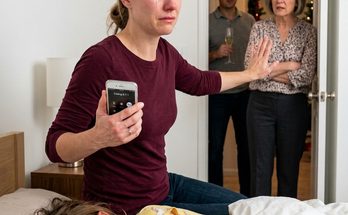
I started crying—ugly, uncontrollable sobs. Tried to leave the room, but he kept talking: “Oh great, now the tears. Classic.”
I lost it. Stood up, said, “I quit,” grabbed my laptop, and walked out—still crying.
Someone filmed it on their phone. Posted it to Twitter (old days) with the caption: “When you finally break at a toxic startup #QuitInTears.”
It went viral. 2 million views in a week. Memes, remixes, think-pieces about millennial burnout. My face—red, tear-streaked, mascara everywhere—was everywhere. Reddit threads picking apart my outfit, my voice, my “entitlement.” News sites blurred my face but quoted the video. My name got doxxed in a few hours.
I moved back to my parents’ house for three months. Couldn’t leave the couch. Therapy, meds, deleted all social media.
Eventually rebuilt: new city, new name on some accounts, new job where no one knew. The video got age-restricted or buried over time, but it’s still out there if you search the right phrases.
I thought my professional life was safe.
Then September 2025.
New hire orientation—10 of us in a conference room. “Sara,” 28F, marketing coordinator, fresh-faced, excited. We go around introducing ourselves.
When it gets to me: “Hi, I’m Mia Chen, lead content strategist. Been here five years, happy to help with anything.”
Sara looks at me—really looks—and her eyes widen.
After the meeting, she pulls me aside in the hallway.
“Hey… this is going to sound weird, but are you the girl from that viral quitting video? The one where the boss was a total jerk and you walked out crying?”
My stomach dropped.
I tried to play it cool. “Uh, no, I think you have me confused with someone else.”
But she kept going, quietly: “No, it’s definitely you. I watched that video a hundred times in college—it inspired me to leave a toxic internship. You were so brave.”
I felt the blood drain from my face.
“Please don’t tell anyone,” I whispered. “That was a long time ago. I don’t want it brought up here.”
She promised. “Of course. Your secret’s safe.”
I thought that was the end.
It wasn’t.
Two weeks later, subtle shifts.
A junior designer asked, “Hey, random—did you used to live in Portland?”
Someone in Slack posted a meme about “dramatic quits” in the water-cooler channel.
My boss scheduled a 1:1: “Everything okay? You seem quieter lately.”
I knew.
By October, it was obvious word had spread. Not the full video—just whispers of “that viral quitting girl.”
People were kind—mostly. “I saw the video years ago—you were right to leave!” But it didn’t matter.
I felt exposed. Judged. Reduced to that 30-second clip of my worst day.
Sara apologized profusely—she’d told “just one friend” in confidence, who told another.
I didn’t blame her entirely. But the damage was done.
I started job hunting.
Landed a new role—same level, better company, fully remote—in December 2025.
Gave notice right before Christmas.
Boss was shocked: “You’re one of our best. Is it money? Title?”
I was honest: “I need a fresh start where no one knows that video.”
She understood. Hugged me. “I’m sorry it got out.”
Last day was quiet. Sara cried, gave me a card: “You inspired me twice—once to quit a bad job, once to be braver with boundaries.”
I moved offices in January 2026.
New team knows nothing about my past. I’m just Mia—competent, calm, private.
I still flinch when someone mentions “viral videos” or “toxic bosses.”
Therapy is helping.
A new coworker recognized me from a moment I tried to forget.
And in trying to be kind about it, she brought it back to life.
I don’t hate her. I hate that one bad day at 24 still follows me at 32.
But I’m done letting it define my career.
The video is still out there. But I’m not that crying girl anymore.
I’m the woman who walked away—again—and built something new.
Thanks for reading. I needed to tell this somewhere safe.