Hello Readers, throwaway because my family is still in the middle of this mess and some of them are on Reddit. I’ve been wanting to write this out for months because it’s eating me up inside. What was supposed to be a straightforward reading of my grandfather’s will in April 2025 turned into a slow-burning, silent war that has fractured our family in ways I never thought possible. No screaming matches, no dramatic walkouts—just quiet resentment, blocked numbers, and separate holiday plans. It’s been nine months, and the wounds are still fresh.
I’m 31F, the middle grandchild. My grandfather—“Pop”—was 93 when he passed in March 2025. He was the patriarch: WWII vet, owned a small construction company, built a comfortable life for his family. Widowed 15 years ago, he lived alone but stayed sharp until the end. He had three children: my dad (60M, oldest), Aunt Susan (57F), and Uncle Tim (54M). Six grandchildren total: me, my brother Josh (34M), my cousin Becca (33F, Susan’s oldest), her brother Nate (30M), and Uncle Tim’s twins Lily and Logan (28M/F).
Pop always said his estate would be split “fair and square”—house sold, money divided equally among the three kids, personal items chosen in order of age. He even joked about it at Christmas: “No fighting over my ugly lamp collection. Equal shares, or I’ll haunt you.”
We believed him. There was never any hint of favoritism.
Pop’s death was peaceful—heart failure in his sleep. The funeral was packed; everyone told stories about his fairness, his work ethic, his love for all of us.
The will reading was set for April 12 at the lawyer’s office. All three siblings, their spouses, and us six grandkids were invited. Mom said it was Pop’s wish—“transparency, no secrets.”
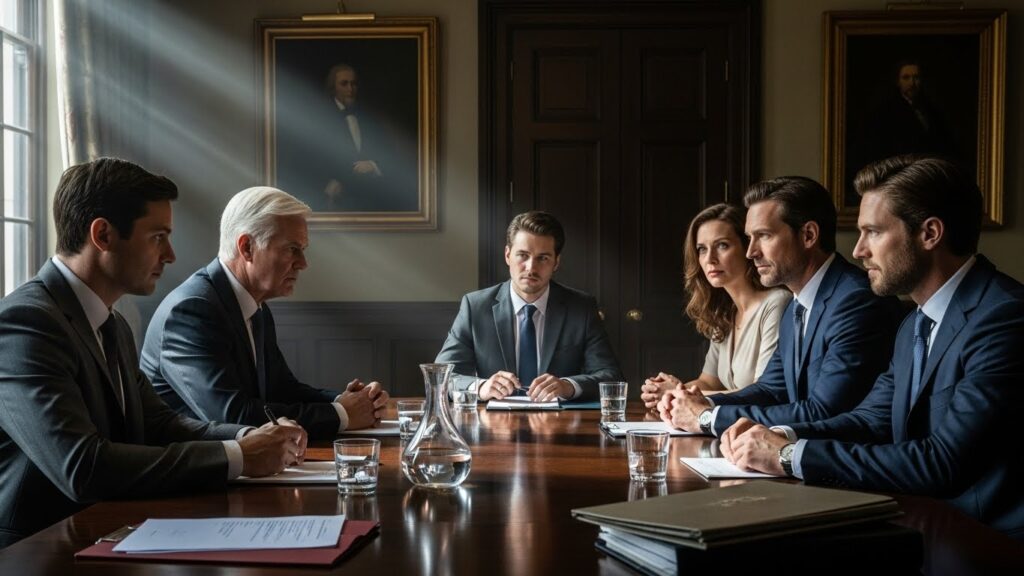
We gathered in a conference room—nervous laughter, tissues ready. The lawyer started with the basics: house to be sold, proceeds split three ways. Investments and savings (~$1.8 million total) also three ways. Personal items: each child picks in order of age, then grandkids.
Then the codicil—added six months before Pop died.
“To my son [Dad], for his years of managing my business affairs, handling my health decisions, and being my constant companion in my final chapter, I leave an additional $200,000 from my savings, plus my classic 1965 Mustang and the lake cabin property.”
The room went completely still.
Dad looked stunned. Mom reached for his hand.
Aunt Susan’s face hardened. Uncle Tim stared at the table.
The lawyer continued: “The remainder of the estate is still divided equally among the three children.”
So Dad got the extra $200k, the car (worth ~$80k), and the cabin (worth ~$350k). The other two got their one-third shares minus those assets.
Becca broke the silence: “He added that last year? When Pop was on oxygen and pain meds?”
The lawyer: “Signed in my office, with a doctor’s note confirming capacity. Two witnesses.”
Uncle Tim: “Dad told me two years ago everything was equal. No extras.”
Dad: “I had no idea. I swear.”
Aunt Susan: “You were there every week. Managing his money. Of course you had no idea.”
The accusation hung in the air.
Mom tried: “Let’s not do this here. Pop had his reasons.”
But Susan snapped: “Reasons like rewarding the favorite?”
The meeting ended awkwardly. No hugs in the parking lot.
I thought we’d cool off and talk rationally.
We didn’t.
Texts started that night.
Susan to the sibling group (no grandkids): “This doesn’t feel right. Dad was vulnerable. We should contest.”
Tim: “Agreed. Equal was what he always said.”
Dad: “I didn’t ask for this. I was just helping him.”
Susan: “You helped yourself to an extra half-million.”
The grandkids were added to a separate chat.
Becca: “My mom is devastated. She thinks your dad influenced Pop.”
Me: “My dad is devastated too. He didn’t know.”
Nate: “It’s not fair. We all loved Pop the same.”
Lily (Tim’s daughter): “Dad says the cabin should be shared or sold and split.”
I tried to stay neutral: “Maybe we can talk as a family?”
No one wanted to.
By May, Susan and Tim hired a lawyer. Contested on undue influence and lack of capacity.
Dad got served in June.
He was crushed. “I sat with him when he was scared. Held his hand when he cried about Grandma. And now I’m the villain?”
Mom: “They’re hurt. They’ll calm down.”
They didn’t.
Mediation in August: Susan cried, “You were always the golden boy. You got the business mentorship, the extra help starting your company. Now this?”
Dad: “I was the only one who lived close enough to help daily. You two moved away.”
Tim: “We offered to come more. You said you had it handled.”
The mediator suggested compromise—Dad keeps the car, cabin sold and proceeds split, $200k redistributed.
Dad refused: “It’s what Pop wanted. I won’t dishonor him.”
Susan: “You’re dishonoring us.”
Court date set for November.
The war went quiet but deadly.
No family birthday parties. Susan’s husband unfriended us on Facebook. Tim’s twins stopped replying to my texts.
Thanksgiving: three separate dinners. Dad hosted us; Susan hosted her side; Tim went to his in-laws.
Christmas plans: same.
I tried one last time—called Becca.
“We’re cousins. This is destroying us over money.”
She cried: “It’s not money. It’s that Pop loved your dad more. And now we’re supposed to smile about it?”
I hung up feeling hollow.
Court was November 18.
Judge upheld the will. Evidence clear: Pop was lucid, doctor testified, witnesses solid.
Dad got the extra.
But the victory felt like ashes.
Susan and Tim haven’t spoken to Dad since. Limited contact with Mom (“for the kids’ sake”).
The grandkids are split: me and Josh with Dad, the others with their parents.
No Christmas cards this year.
Dad keeps the cabin key on his keychain but hasn’t gone. Says it feels tainted.
He told me last week: “I’d give it all back if it brought the family together.”
A family inheritance meeting turned into a quiet war.
No yelling. No spectacle.
Just resentment that festered until it poisoned everything.
Money didn’t split us.
The lie that we were all equal in Pop’s eyes did.
Or maybe the truth that we weren’t.
I miss the family we pretended to be.
But I can’t go back to pretending.
Thanks for reading. I needed to tell someone who isn’t choosing sides.