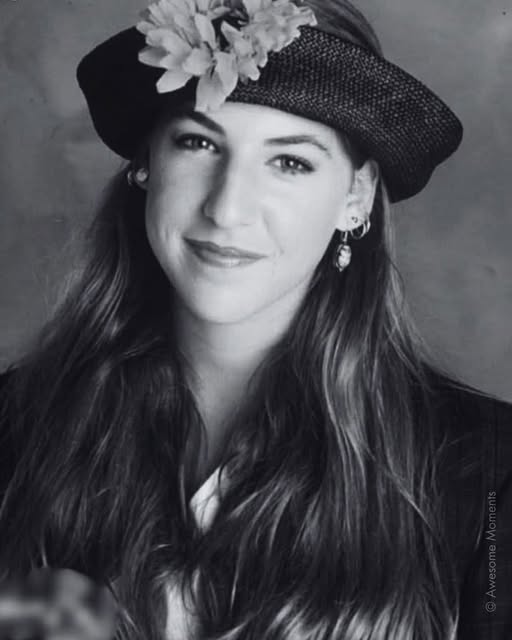
In 2007, Mayim Bialik defended a doctoral dissertation in neuroscience at UCLA. At the time, much of Hollywood still saw her as a washed-up child star from a canceled sitcom. They were wrong. When Blossom ended in 1995, the industry quietly closed her file. Child actors who disappear are expected to spiral — or beg for a comeback. Bialik chose a third option no one in television knew how to market. She left. While former peers chased auditions and tabloid relevance, Bialik enrolled at UCLA. Not for publicity. For purpose. She completed a Bachelor’s degree in neuroscience. Then she stayed. Years of lab work, grant applications, peer review, and academic isolation replaced the applause she once knew. The paychecks disappeared. Credibility arrived slowly. Hollywood didn’t notice. And she didn’t care. Then came the irony.
In 2010, she returned to television as Amy Farrah Fowler on The Big Bang Theory — a sitcom that turned scientists into punchlines, written largely by people who had never set foot in a lab. Bialik brought something the writers didn’t expect: actual expertise. She corrected scripts. She adjusted dialogue. She insisted on intellectual precision while playing awkwardness for laughs. The show became the most-watched sitcom in America. Over 18 million viewers tuned in every week. And there she was — a woman who had actually earned scientific authority, now performing it as fiction for mass consumption. The pressure didn’t stop. In 2021, she was named co-host of Jeopardy!, inheriting a role weighed down by decades of nostalgia and impossible expectation. The reaction was volatile. Critics questioned her qualifications. Online discourse dissected her tone, her cadence, her presence.
She didn’t soften. Bialik openly discussed mental health, parenting, religion, and feminism in ways that fractured consensus. Advertisers watched. Fans divided. In 2023, amid ongoing debate and restructuring at the show, she stepped back from hosting — choosing alignment over applause, stability over spectacle. The pattern is unmistakable. Mayim Bialik repeatedly exits systems that reward compliance and punish complexity. She does not chase validation from rooms that misunderstand her. She builds credibility on her own terms — even when it delays recognition. Her story unsettles celebrity culture because it breaks a rule. Reinvention is supposed to be cosmetic. Hers was structural. She did not rebrand. She requalified. Mayim Bialik’s life teaches a difficult truth: intelligence without deference threatens industries built on simplification. When a woman refuses to choose between intellect and visibility, the system never knows where to place her. So she places herself. What do you think — is society still uncomfortable with women who won’t shrink their intelligence to fit the spotlight?