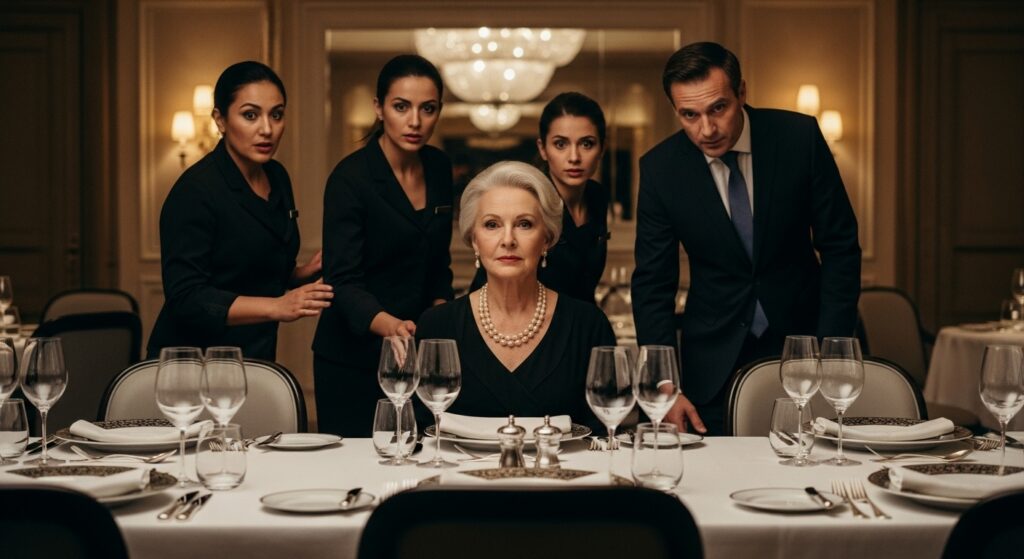
My in-laws were wealthy, but generosity was never part of their reputation.
Every family dinner followed the same script. They would order freely—appetizers, wine, the most expensive entrées—then suddenly remember they’d “forgotten” their wallets. Somehow, someone else always ended up paying.
When my husband and I had to travel abroad for work, they decided to celebrate my mother-in-law’s birthday without us. They invited my mom instead.
I warned her.
She just smiled and said, “Don’t worry. I’ve got this.”
On the night of the dinner, everything unfolded exactly as I feared. My in-laws ordered lobster, steak, premium wine—no hesitation, no concern for cost. My mom ordered modestly and enjoyed the conversation.
When the bill arrived, the excuses began.
“Oh no, my wallet!”
“Mine’s in the car!”
“I have to take this emergency call!”
Within minutes, they were gone—leaving my mom alone at the table with a massive bill.
Instead of panicking or calling me, she smiled.
She waved over the waiter and ordered dessert. Then she asked for the most expensive bottle of wine on the menu.
Only after that did she ask to speak with the manager.
Calmly, she explained that the rest of the party had left and that she would be paying—for herself only. She also asked the manager to note exactly who had ordered what.
The manager understood immediately.
The bill was split accordingly. My mom paid her share, thanked the staff, and left with grace.
The next day, my in-laws were furious.
The restaurant had called them. Each of them was required to return and settle their portion. No excuses. No disappearing acts.
My mom never raised her voice. She never embarrassed them publicly.
She simply refused to be taken advantage of.
That night, my wealthy in-laws learned something they never expected:
Money may buy expensive meals—but it doesn’t buy entitlement.