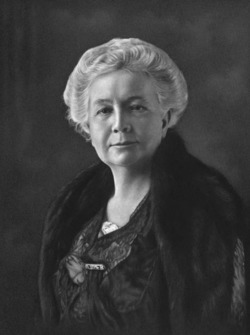
When her husband died suddenly in 1889, Anna Bissell was expected to disappear into mourning. People around her urged her to sell the business, return home, and accept that leadership was not a place for a woman. Anna looked at what her husband had left behind and chose a different path. She decided she would lead the company herself, even though no woman of her time had ever done such a thing.
She was born Anna Sutherland in 1846 in Nova Scotia, and from an early age she showed an independence that set her apart. By sixteen, she was already teaching, managing classrooms at a time when most women were encouraged to think only of marriage. She married Melville Bissell at nineteen, and together they moved to Grand Rapids, Michigan, where they ran a small crockery shop. Their lives changed when sawdust from shipping crates kept ruining customers’ carpets. Melville invented a simple solution, a carpet sweeper. Anna immediately understood what it could become. Where others saw a tool, she saw possibility.
She later said that while Melville invented the sweeper, she knew how to make the world want it. Anna traveled alone, carrying sweepers from town to town, knocking on doors and facing skepticism head-on. She sold through confidence and belief, showing shopkeepers and homemakers that this small invention could make daily life easier. When John Wanamaker, one of the most powerful department store owners in the country, agreed to sell Bissell sweepers, it was Anna who had secured the deal.
Then everything nearly collapsed. In 1884, a fire destroyed the factory. Melville was ready to give up, but Anna refused. She went to banks, secured loans based solely on her reputation, and rebuilt the factory in just three weeks. She told her children that failure only becomes final when you stop trying.
When Melville died five years later, Anna faced overwhelming pressure. She had five children to raise, had already lost one to illness, and now carried full responsibility for a struggling company. No woman had ever led a major American manufacturing business, but Anna stepped forward anyway. She made it clear she had no intention of being a figurehead. She was there to lead.
Under her direction, the company flourished. She fiercely defended patents, shaped the brand with elegance and credibility, and expanded internationally. By the end of the century, Bissell sweepers were used throughout Europe. Even Queen Victoria requested that Buckingham Palace be cleaned with them each week.
Yet Anna’s leadership extended beyond profit. At a time when factory workers were easily discarded, she introduced pensions, injury compensation, and paid vacations. During the economic depression of 1893, she refused to lay off a single employee, telling them they were a family and that families stayed together. Her workers were deeply loyal, and the company never experienced a strike.
Outside the factory, Anna devoted herself to helping others. She funded homes for orphans, founded a residence for immigrant women, and became the first female trustee of the Methodist Episcopal Church. Her son later said that her greatest happiness came from helping people find a place where they belonged.
When Anna Bissell died in 1934, she left behind far more than a successful company. She had transformed personal loss into purpose, built an empire, raised a family, and reshaped what leadership could look like. She didn’t simply preserve her husband’s legacy. She expanded it, strengthened it, and ensured it would endure.
She was once told to grieve quietly. Instead, she cleared a path forward and changed history along the way.