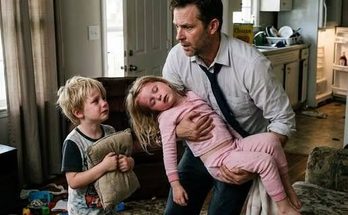
My Family Dragged Me to Court, Accusing Me of Being a Fake Veteran. My Mother Swore Under Oath That I “Made It All Up.” I Didn’t Argue. I Simply Lifted My Shirt… and the Courtroom Fell Silent.
My family dragged me to court like people drag trash to the curb — without looking back, convinced that my feelings didn’t matter.
The petition was filed by my mother, Linda Caldwell, and my older brother, Travis. They claimed I was a “fraudulent veteran” who had lied about military service to steal sympathy and “the good name of the Caldwell family.” In our small Ohio town, reputation was currency, and my mother guarded hers like a vault.
I am Harper Caldwell. I’m thirty-four years old. I served eight years in the U.S. Army as a combat medic. I have a DD214, discharge papers, medals in a shoebox, and scars I don’t show at barbecues.
But my family never wanted proof. They wanted a story that made them look like victims.
After my father died, I cut off contact for a while. My mother told people I had “run away” and come back with made-up stories. When I didn’t show up to parties, she said it was because I was “too embarrassed.” When I did show up, she’d touch the spot where my old unit patch used to be and laugh, “What branch are you pretending to be today?”
I didn’t confront her publicly. I got my paramedic license, worked night shifts in a trauma ER, and kept my service private.
Then my grandfather’s estate became the battleground. He had left me his old house and a modest investment account — money he had kept out of my mother’s reach. Two weeks after the will was read, the lawsuit arrived: fraud, defamation, “stolen value.” They wanted the court to label me a liar so the estate could be attacked.
On the morning of the hearing, my mother walked into the courtroom as if it were her own. Travis followed, grinning, wearing a cheap camouflage jacket as a joke at my expense.
When the clerk called the case, my mother took the stand and swore to tell the truth. She looked straight at me and snarled under oath:
“She never served in the military. She stole our family’s reputation. She made it all up. We have neighbors who can prove she was here the whole time.”
I didn’t flinch. I didn’t cry. I didn’t plead.
I just stared at the judge, the Honorable Marissa Keane, and waited.
When my mother finished, the judge leaned forward.
“Miss Caldwell,” she said to me, “this is a serious charge. Do you have proof of service?”
“Yes, Your Honor,” I replied. “And I have something else.”
The courtroom stirred. My mother’s mouth curved as if she had already won.
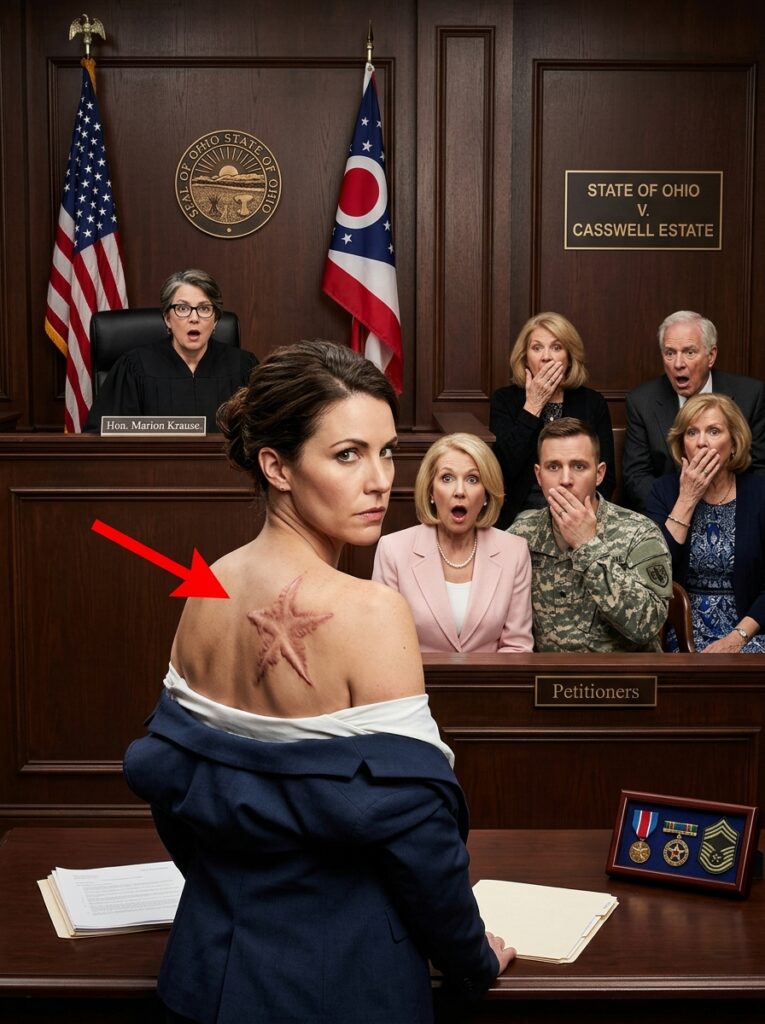
I stood up, took off my blazer, and reached for the hem of my shirt, right where the fabric met my left shoulder.
“Permission to show the court,” I said quietly.
Judge Keane nodded once. “Proceed.”
I lifted the fabric just enough to reveal the raised, pale scar etched across my shoulder — a jagged wound from shrapnel during a firefight in Afghanistan eight years ago.
The courtroom fell completely silent.
Gasps. Murmurs. A few people covered their mouths.
My mother’s face went white. Travis’s smirk vanished.
Judge Keane’s eyes softened for a moment, then hardened as she looked at my family.
“Mrs. Caldwell,” she said, her voice sharp, “you have wasted this court’s time with a malicious and false accusation. This case is dismissed with prejudice. Furthermore, I am referring this matter to the prosecutor for potential perjury charges.”
My mother started to protest, but the judge cut her off.
“Enough. The court has seen more than enough.”
I lowered my shirt, put my blazer back on, and walked out of the courtroom without looking back.
Two months later, my mother and brother were hit with perjury charges. The town finally saw who they really were. I kept my grandfather’s house and finally felt peace.
Sometimes the strongest proof isn’t a piece of paper.
It’s the scar you carry from serving the country they claimed you never protected.
THE END