My Parents Disowned Me When I Became a Mother in Tenth Grade. Twenty Years Later They Showed Up Asking to Meet Their “Grandson”… But What They Discovered Left Them Speechless.
When I was pregnant and in the tenth grade, my parents disowned me; years later, they begged for my son. He wasn’t real.
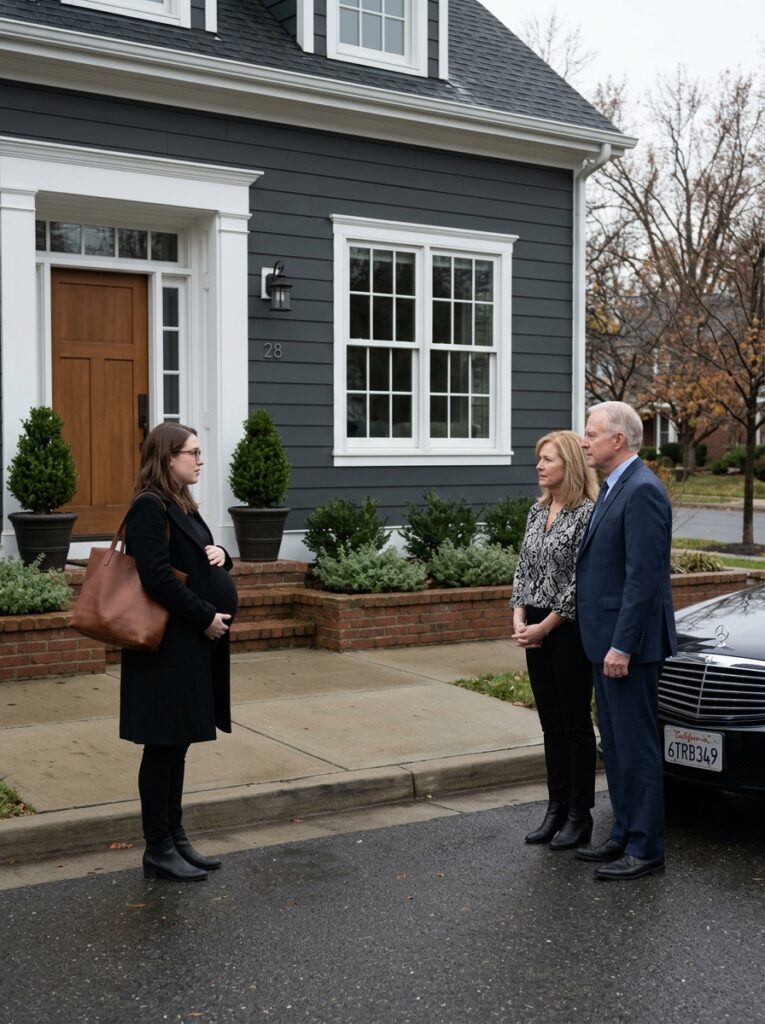
The first time my parents came back into my life after twenty years, they arrived in a black Mercedes just before dinner and asked to meet the grandson they had already described to half of Portland.
I stood on my front porch in Seattle with my work bag still on my shoulder, staring at the two people who had once closed a door on me in November rain and spent the next two decades telling everyone I had “gone away.” My father’s hair was silver now. My mother still held herself with that careful, upright composure she used whenever she wanted the world to believe everything around her was polished and proper.
My father spoke first.
“Grace,” he said, looking me over the way he used to inspect legal documents. “You look well.”
I did not answer that.
“What are you doing here?”
My mother stepped forward. “We know about your son.”
There are sentences that feel almost absurd when you hear them out loud. That was one of them.
“My what?”
“Your son,” my father repeated. “We’d like to meet him. We’d like to reconnect properly as a family.”
A laugh almost rose in my throat, but it never made it out. Their faces were too earnest for comedy and too practiced for sincerity.
My name is Grace Meyers. I’m thirty-six years old. I run a design firm in Seattle. I have a daughter in college, a mortgage I pay myself, a life I built without a dime, a phone call, or a birthday card from the people standing on my porch.
Twenty years ago, I was sixteen, a sophomore at St. Catherine’s in Portland, and my parents cared about one thing more than anything else: image. My father repeated it like a prayer.
“Reputation takes years to build and minutes to lose.”
He loved saying that in front of company, in front of church people, in front of my brother and sister. Back then I thought he was talking about discipline. Later I understood he was talking about control.
I met Marcus at the public library downtown, which tells you almost everything you need to know about who I was then. The library was the only place where nobody compared me to Nathan in dental school or Carolyn becoming the kind of daughter my mother found easy to admire. Marcus asked me one simple question the first day we really talked.
READ PART 2 (Final Epilogue) Click Here :My Parents Disowned Me When I Became a Mother in Tenth Grade. Twenty Years Later They Showed Up Asking to Meet Their “Grandson”… Part_2
“Are you okay?”
No one had asked me that in a very long time.
When I found out I was expecting, I was terrified, but I also knew I couldn’t hide it forever. I told my parents at Sunday dinner. Roast beef. Linen napkins. My father discussing property law. My mother planning the church Christmas gala.
“I need to tell you something,” I said.
The whole table turned toward me.
“I’m eight weeks along.”
My mother’s fork hit the plate. My father went still.
“Who is the father?”
“His name is Marcus Webb.”
“What does his family do?” my father asked.
“He works with his uncle.”
“At an auto shop?”
I remember the silence after that more than anything. Sharp. Exact. Final.
By 9:15 that night, I was standing on the porch with one suitcase while rain moved across the streetlights in silver lines. My mother pointed toward the steps. My brother and sister watched from the upstairs window. My father had paperwork drafted within days—formal documents stating I had no claim on the family, and neither did any child born to me.
I kept those papers.
I kept everything.
That same week, a woman named Margaret Torres, our retired neighbor three houses down, opened her guest room to me when she didn’t have to. Marcus helped me get to Seattle. We took a studio over a laundromat. We made a life out of very little. Later, life changed again, and I had to build even harder than I thought I could. I learned to work, to parent, to stretch a dollar, to make rooms feel warm when I couldn’t afford much else. Years later, that instinct became a business.
My daughter Lily is nineteen now. Smart, direct, impossible to overlook. She is at the University of Washington, usually with a hoodie on and a book open somewhere near a lamp.
My parents know none of that because they never asked.
So when my father stepped into my living room that night and began speaking about a grand anniversary party at the Heathman Hotel in Portland, I let him keep talking just long enough to hear how far the lie had gone.
“Two hundred guests,” he said. “The mayor will be there. Pastor Harrison. People have been asking about you. About your child.”
My mother folded her hands and added, “We’d like your son there. It would mean a great deal.”
“A great deal to whom?”
“To the family,” she said.
My father opened his briefcase and placed a check on my coffee table.
“We’re prepared to offer two hundred and fifty thousand dollars,” he said. “Come to the party. Bring your son. Stay for a few hours. Take photographs. After that, you can go back to your life.”
I looked at the check, then at him.
“Twenty years of silence,” I said, “and you led with a blank check.”
My mother leaned forward. “We can also discuss restoring you to the trust.”
That was the moment I stopped wondering whether they felt anything at all.
“You read an article,” I said slowly. “It mentioned I had a child. And from that, you invented a grandson.”
My father’s jaw tightened. “We made assumptions.”
“You built a whole social story out of assumptions.”
“We want to move forward,” my mother said, like this was some thoughtful, healthy conversation between people who had missed a few holidays instead of twenty years.
“And if I say no?”
My father’s voice cooled. “Then we may need to speak directly to your son ourselves. He deserves to understand where he comes from.”
That was the line that changed the air in the room.
I was about to answer when I heard footsteps on the stairs behind me.
“Mom?”
Lily came into view with a textbook tucked against her side and a University of Washington hoodie hanging loose over sweatpants. She slowed halfway down, eyes moving from me to the two strangers on my sofa.
My mother rose to her feet.
My father looked confused first, then rigid.
“This is Lily,” I said.
My mother blinked. “Who?”
I held her gaze.
“My daughter,” I said. “Your granddaughter.”
My father’s voice actually cracked.
“But… we were told…”
“You told yourselves the rest.”
Lily set the book down on the entry table and looked at me once, just once, the way she always did when she already knew the answer but wanted to hear me say it.
“These are them?” she asked quietly