The days after I had security escort my father and sister out of my office were some of the most peaceful — and most painful — I had experienced in years.
My phone stayed silent for the first time in months. No more guilt-tripping texts from my mother. No more demands from Victoria for “emergency funds” to cover her latest shopping spree. No more passive-aggressive calls from my father reminding me of “everything he had done for me.”
The silence was liberating.
But it also left a strange emptiness. For thirty-five years, I had defined myself by trying to earn their love. I had paid for family vacations, covered medical bills, funded Victoria’s failed business ventures, and quietly supported my parents’ lifestyle while they treated me like an afterthought. I had convinced myself that blood meant I had to keep giving, even when it hurt.
Now, for the first time, I chose to stop.
I sat in my quiet living room that first evening, a glass of red wine in my hand, staring at the framed photo on the mantel — the one of me and my grandfather when I was twelve. He had taught me how to read a balance sheet, how to negotiate contracts, and most importantly, how to value myself. I wished he could see me now.
The next morning, my father showed up at my office again, this time alone. He looked older, tired, the confident man from the gala replaced by someone who finally understood consequences.
“Rachel, please,” he said, standing in the doorway with his hands in his pockets. “We’re family. You can’t just cut us off like this.”
I sat behind my desk, calm and composed in a tailored black blazer. “You cut me off first, Dad. The moment you pointed at me in front of everyone and called me a beggar under the chandelier I paid for.”
He winced. “I was angry. Diane said things… I didn’t mean it.”
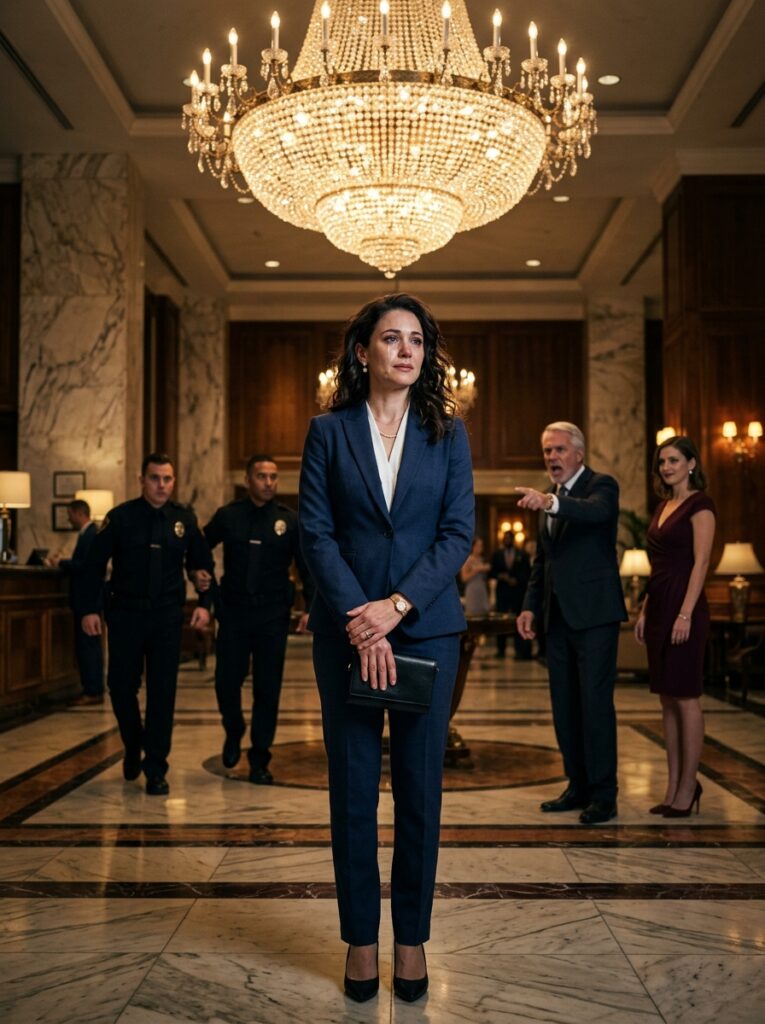
“You meant it enough to let security drag me out while you celebrated with my money,” I replied quietly. “You meant it enough to stand there and do nothing while your granddaughter watched her mother be humiliated.”
My father’s shoulders slumped. For the first time in my life, I saw real regret in his eyes.
“I’m sorry,” he whispered. “I let Diane influence me too much. She convinced me you were jealous of Victoria. I should have seen it.”
I looked at him for a long moment, feeling the weight of decades of disappointment.
“Sorry doesn’t erase the years of being treated like an ATM instead of a daughter. It doesn’t erase the night you chose your image over me. I’m done proving my worth to people who never saw it.”
He tried to argue, to plead, to remind me of “family bonds.” But I had heard it all before.
“Family doesn’t humiliate you in public,” I said. “Family doesn’t call you a burden. Family doesn’t take and take until there’s nothing left. I’m choosing me now. And I’m choosing peace.”
He left with tears in his eyes. I didn’t stop him.
Victoria tried one last time a week later, showing up at my house with flowers and a forced smile.
“Sis, this has gone too far,” she said, trying to hug me. “Dad’s devastated. The whole family is talking. You’re making us look bad.”
I stepped back, keeping the door half-closed.
“You made yourselves look bad when you stood there and smirked while security threw me out. I’m not responsible for your image anymore.”
She tried guilt. She tried tears. She even tried reminding me of childhood memories. But I had finally learned that nostalgia doesn’t excuse cruelty.
“I love you both,” I said softly. “But I love myself more. And I love the peace I finally have. Don’t come back unless you’re ready to treat me with respect.”
She left angry. I closed the door and felt lighter than I had in years.
The company continued to thrive under my quiet leadership. I promoted people based on merit, not family connections. I took the twins on their first real vacation — just the three of us — to a quiet beach where no one cared about status or money. We built sandcastles, collected seashells, and laughed until our stomachs hurt.
One evening, as the sun set over the ocean, Lily looked up at me with her big curious eyes.
“Mommy… are we going to see Grandpa and Aunt Victoria again?”
I knelt down and brushed the sand from her cheek.
“Maybe one day, if they learn how to love us properly. But right now, we’re focusing on us. On being happy. On being enough.”
She smiled and hugged me. “I like it when it’s just us.”
“Me too, baby. Me too.”
Some family ties are worth fighting for.
Others are worth walking away from.
I chose the latter.
And in doing so, I found the respect, peace, and love I had been desperately seeking from them — inside myself.
The chandelier may still sparkle in that hotel ballroom, but its owner no longer needs its light to feel worthy.
I shine on my own now.
THE END