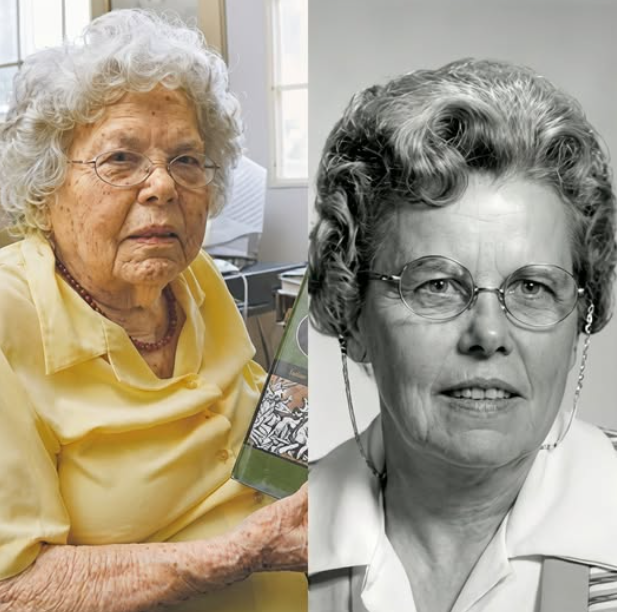
in rural Louisiana a white girl named Sue Eakin pulled an old book from her family’s plantation home. Its pages were worn. Its spine unremarkable. Its title did not announce itself with urgency. 12 Years a Slave. Its author Solomon Northup. Published in 1853 and then largely abandoned to the margins of American memory. Most children would have closed it. The language was old. The subject uncomfortable. The weight too heavy for young hands. But Sue read and something inside her shifted. She recognized the geography. The Red River. The parishes. The bends in the land. This was not a distant plantation or an abstract South. This was her home rendered in pain and precision. The ground beneath her feet had a voice and it was speaking plainly.
She lived in a segregated world where slavery was often described gently or not at all. Where the past was reshaped into something less disturbing and more convenient. Yet the book did not soften itself. It named names. It described cruelty with clarity. And a question formed in her mind that would never leave her. Was this true. That question was not academic. It was dangerous. To ask it meant doubting the stories a society told itself. To pursue it meant refusing the comfort of denial. And so while others looked away Sue leaned closer. She did not argue or announce her intent. She decided to verify. Line by line. Name by name. Her life unfolded outwardly in ordinary ways. She became a teacher. A mother. A newspaper editor. But beneath every role ran a current of investigation. She returned to Northup’s words again and again. She searched plantation ledgers and courthouse records. She walked the same fields he described. She traced steamboat routes. Compared weather reports. Interviewed descendants whose family stories still carried echoes of what the book recorded. She treated the narrative not as a relic but as a claim demanding evidence.
Decades passed and the work did not loosen its grip. In her forties she went back to school. In her sixties she earned a PhD from Louisiana State University. Her dissertation was the same book she had found as a child now surrounded by scholarship and proof. Not an argument but a confirmation. A scaffold of facts erected around a man’s testimony so it could no longer be dismissed. In 1968 when Northup’s narrative was nearly forgotten she published the first meticulously annotated edition. She did not rewrite it. She fortified it. Her footnotes were acts of witness. Dates verified. People identified. Places fixed in time and space. Where history had blurred she sharpened. Where denial lingered she documented. And still she continued. At eighty eight years old in 2007 she released an even more exhaustive edition. Seventy years of work devoted to restoring credibility to a voice that had been ignored not because it lacked truth but because it carried too much of it. She never sought the spotlight. Her satisfaction lived in accuracy. In the quiet knowledge that the record could now stand on its own. Sue Eakin died in 2009 at ninety years old. She never saw what followed.
In 2013 director Steve McQueen released the film 12 Years a Slave. It was unflinching. It was brutal. It was impossible to look away from. And it was grounded squarely in her scholarship. The facts she had spent a lifetime verifying gave the film its authority. Its undeniability. Its power. In 2014 it won the Academy Award for Best Picture. From the Oscars stage McQueen thanked an historian by name. He thanked Sue Eakin for giving her life’s work to preserving Solomon Northup’s book. She was not there to hear it. But because she had been there for the truth millions now were. History is not always saved by movements or monuments. Sometimes it is rescued by a single person who refuses to accept forgetting as an option. A child who opens a book and feels its urgency. A woman who spends a lifetime answering a question most people are too afraid to ask. Solomon Northup told the truth. Sue Eakin made sure we could not pretend otherwise. That is how a story survives. That is how history heals. Not through erasure or comfort but through faithful stubborn attention. One footnote at a time. One fact at a time. One lifetime devoted to believing what the past has been trying to tell us all along.