October 1979. Gary Burghoff stands on the MASH set, clutching a teddy bear that’s become nearly as famous as he is.
He tells the producers he’s done.
They’re stunned. MASH is pulling 30-40 million viewers every week—the most popular show in America. His character, Corporal “”Radar”” O’Reilly, is beloved. The innocent heart of the 4077th Mobile Army Surgical Hospital.
He has job security most actors would kill for. The show won’t end for another four years.
And he’s walking away.
The executives offer more money. Creative control. Fewer episodes. Whatever he needs.
Burghoff turns it all down.
When they ask why, he says something that silences the room: “”I need to remember who Gary is before Radar makes me disappear completely.””
To understand that statement, you have to go back to the beginning.
Bristol, Connecticut, 1943. Gary Burghoff is born with brachydactyly—three fingers on his left hand noticeably smaller than normal.
In the 1950s, being different meant being a target. Kids are cruel in ways adults pretend to forget.
Gary learned to hide his hand. Learned to position it in photographs so cameras wouldn’t catch it. Learned to cultivate talents so remarkable that people looked at those instead.
He became an accomplished drummer. A skilled wildlife painter. He found refuge in art—places where his difference didn’t define him.
When he auditioned for the 1970 film MASH, directed by Robert Altman, he didn’t expect much. The character of Radar was small—a naïve clerk who seemed to predict his commanding officer’s needs.
But Burghoff brought something unexpected: genuine vulnerability.
He didn’t play Radar as comic relief. He played him as a frightened kid trying to survive war by making himself useful, by anticipating what people needed before they asked.
Altman cast him immediately.
The film won the Palme d’Or at Cannes. Became a cultural phenomenon. When CBS adapted it for television in 1972, most of the film’s cast moved on.
But Burghoff wanted more time with Radar. He saw layers the film couldn’t explore.
He became the only actor from the film to transition to the TV series—a rare distinction in Hollywood history.
For the first few seasons, MASH was pure comedy. Burghoff’s Radar was the Iowa farm boy who slept with a teddy bear, drank grape Nehi, and seemed to hear incoming helicopters before anyone else.
But as the series matured—as it began confronting war’s horror alongside its absurdity—Radar changed too.
Burghoff started playing deeper. The teddy bear wasn’t a cute prop anymore. It was a lifeline for someone who’d seen things no one should see. The innocence masked a young man slowly fracturing under the weight of death that surrounded him daily.
In 1977, Burghoff won an Emmy for Outstanding Supporting Actor.
The recognition validated his work. It also locked him deeper into the public’s perception.
People stopped seeing Gary Burghoff. They only saw Radar.
Here’s what fans never knew: Burghoff’s real temperament was almost the opposite of Radar’s. He wasn’t naïve or meek. He was introspective, serious, sometimes difficult to work with because he cared fiercely about emotional truth.
Playing someone so different from himself—eight months a year for seven years—began to feel like psychological erasure.
He later described it as “”living in someone else’s skin until you forget what your own skin feels like.””
His personal life was collapsing. His first marriage crumbled under fame’s weight and relentless work hours. He rarely saw his daughter. When he got time away, fans recognized him everywhere, calling him “”Radar”” and expecting the sweet character instead of the complicated human being he was.
During Season 7, the breaking point arrived.
Producers wanted to develop a storyline where Radar would gradually harden, losing his innocence to war’s brutality.
Burghoff fought it. He believed Radar existed to show that some people could endure horror without becoming hard—that preserving gentleness in brutal environments was its own form of courage.
He won that fight. But it drained him.
He realized he wasn’t just defending a character. He was trying to save something inside himself that the role was consuming.
In 1979, Burghoff announced he’d leave at the end of Season 8.
They tried everything: more money, fewer episodes, creative control.
He refused it all.
His final regular episode, “”Good-Bye Radar,”” aired in two parts in October 1979. In it, Radar learns his uncle died and he’s needed to run the family farm in Iowa. The 4077th throws him a farewell party. He gives away his possessions to friends—small, meaningful objects he’s collected.
Burghoff played it with such raw emotion that several cast members were genuinely crying on camera.
The episode drew over 40 million viewers. Letters flooded CBS begging him to return.
He didn’t.
Leaving MASH at its peak devastated his career. He was so identified with Radar that casting directors couldn’t see him as anything else. The few roles he landed were variations of the same gentle type. His 1984 series WALTE*R didn’t get picked up.
Some MASH actors—Alan Alda, Mike Farrell—had successful post-series careers.
Burghoff largely vanished from Hollywood.
Many assumed he’d failed. That walking away had been a catastrophic mistake.
But that was never how Burghoff defined success.
He returned to Connecticut. Remarried. Focused on his first love: wildlife art. He became a respected painter of detailed animal portraits. He played drums with small orchestras. He spent time with his children.
He lived quietly, intentionally, far from cameras and applause.
In rare interviews years later, Burghoff was asked if he regretted leaving MASH.
His answer never changed: “”I regret that I couldn’t find a way to stay that wouldn’t have cost me myself. But I don’t regret choosing to survive.””
Think about that statement.
In an industry obsessed with visibility and ego, Burghoff did something almost unthinkable: he chose obscurity over fame. Peace over fortune. Self-preservation over career momentum.
When MASH ended in 1983 with the highest-rated series finale in television history, Burghoff made a brief appearance as a gift to fans. He returned once more in 1985 for the spinoff AfterMASH.
Then he stepped away from acting almost entirely.
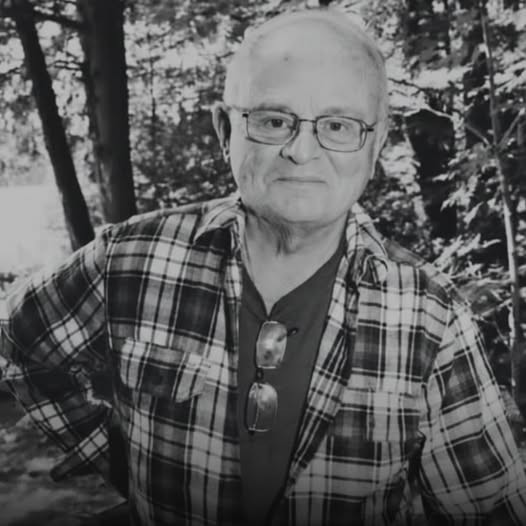
Today, at 82, Gary Burghoff lives a quiet life far from Hollywood. He rarely attends MASH reunions. He doesn’t cash in on nostalgia.
When he does appear at conventions occasionally, fans are struck by how different he is from Radar—more serious, more reserved, more layered.
And here’s the beautiful irony: by leaving Radar behind, Burghoff fulfilled the character’s deepest lesson.
Radar survived war by holding onto his essential self despite pressure to harden.
Burghoff survived fame by doing the same—refusing to sacrifice himself for applause.
The teddy-bear-clutching clerk taught viewers that gentleness in brutal environments is strength, not weakness.
The actor who portrayed him taught something else: that walking away from what’s destroying you—even when everyone insists you’re crazy—is sometimes the bravest act of all.
Radar O’Reilly remains one of television’s most beloved characters, a testament to Gary Burghoff’s extraordinary performance.
But perhaps his most remarkable performance was off-screen.
Choosing authenticity over applause.
Peace over fame.
His own life over a role that threatened to consume it.
We live in a world that worships visibility. That measures success by how many people know your name, how much money you make, how long you can stay relevant.
Gary Burghoff walked away from all of that at its absolute peak.
He chose to remember who he was before the world told him who to be.
He chose mental health over wealth.
He chose his family over fame.
He chose himself.
And in an industry where people destroy themselves trying to hold onto success, that choice was revolutionary.
Most actors spend their careers chasing what Burghoff had: a iconic role, massive popularity, job security.
He had it all. And he walked away because he understood something most people never learn: success that costs you yourself isn’t success—it’s slow erasure.
Happy 82nd birthday, Gary.
You showed a generation that knowing when to stay is wisdom.
But knowing when to leave is survival.
And sometimes the most courageous thing you can do is choose to disappear before the spotlight makes you forget who you were before anyone was watching.”