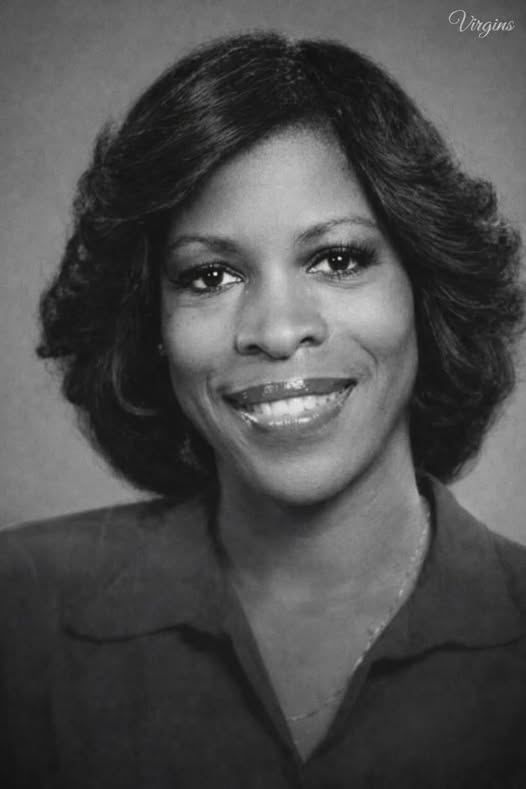
He told her he was developing a new sitcom called The Jeffersons. There would be an interracial married couple living next door to the main characters. A Black woman married to a white man. They would kiss. They would sleep in the same bed. They would be portrayed as completely ordinary.
Television had never shown this before.
Lear told her no one knew how audiences would react. He said the backlash could be intense. He made it clear he would understand if she didn’t want the role.
Roker reached into her purse and pulled out a photograph.
It was her wedding picture. Standing beside her was her husband, Sy Kravitz—a white Jewish television producer she had married thirteen years earlier, at a time when interracial marriage was still illegal in sixteen states.
“Does this answer your question?” she asked.
She was cast.
The timing mattered.
The Supreme Court had only overturned laws banning interracial marriage in 1967. By 1975, those marriages were legal—but acceptance lagged far behind. As late as 1958, 94 percent of Americans told Gallup they disapproved of interracial marriage. Laws changed faster than minds.
Television executives knew this. Networks handled race cautiously—often fearfully. A recurring interracial couple, shown in a loving marriage week after week, had never existed on American television.
When CBS executives previewed an early episode that included a kiss between Tom and Helen Willis, they panicked. They feared affiliates would drop the show. They demanded the scene be removed.
Producer Fred Silverman refused.
The kiss stayed.
The Jeffersons premiered on January 18, 1975.
Roxie Roker played Helen Willis not as a statement, but as a person. Educated. Calm. Dryly witty. Her strength came from restraint. While George Jefferson shouted and provoked, Helen responded with intelligence and composure. She didn’t plead for acceptance. She didn’t apologize for existing.
She was simply a married woman living her life.
That normalcy was the revolution.
Every week, millions of Americans watched an interracial couple argue over dinner, worry about their daughter, tease their neighbors. There was no tragedy attached to them. No sermon. No special lesson.
Just life.
The show exploded in popularity.
For eleven seasons—253 episodes—The Jeffersons ranked among the most-watched sitcoms in the country. It addressed subjects other shows avoided: racism, suicide, alcoholism, the Ku Klux Klan. It became one of the longest-running series with a predominantly Black cast in television history.
And throughout it all, Helen and Tom Willis remained married. Visible. Unchanged. Ordinary.
Roxie Roker knew exactly what she was doing.
She had lived this life long before she portrayed it. She knew the stares. The remarks. The quiet judgment. Playing Helen Willis meant representing a reality many viewers still resisted—and doing it without anger, without explanation.
The role demanded dignity.
She delivered it.
Roker continued acting through the 1970s, ’80s, and ’90s, appearing in Roots, Murder, She Wrote, A Different World, and dozens of other productions. She was also an advocate for children’s rights in Los Angeles, earning recognition for her community work.
On December 2, 1995, Roxie Roker died of breast cancer at the age of sixty-six.
Her granddaughter, Zoë Kravitz, had been born just one day earlier.
Her son, Lenny Kravitz, later wrote about losing her. He called her a “celestial soul.”
The legacy Roxie Roker left behind wasn’t loud.
She didn’t shout. She didn’t lecture. She didn’t lead marches.
She showed up.
Week after week, she played a woman who loved her husband. She let that image sit in American living rooms until it stopped feeling threatening. Until it became familiar. Until it became unremarkable.
That’s how culture often changes—not through confrontation, but through persistence. Through repetition. Through the simple insistence on being seen.
Norman Lear warned her no one knew how audiences would react.
She showed him who she already was.
Then she spent a decade proving that love looked the same in every home.
Some revolutions don’t scream.