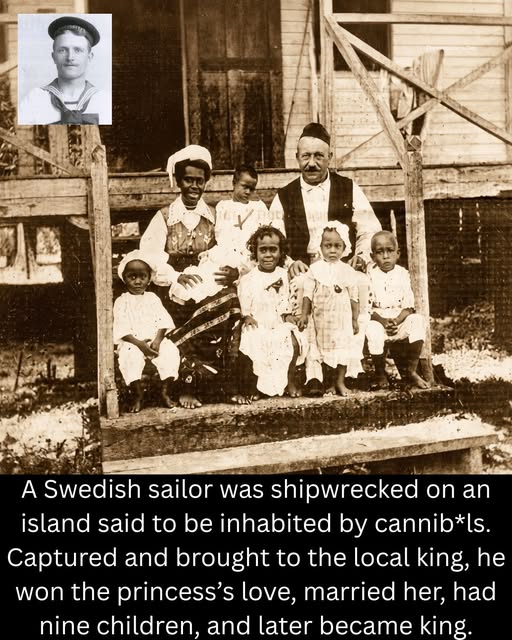
Carl Emil Pettersson’s story begins like a Nordic maritime epic that suddenly veers into legend. Born in Sweden in 1875, he spent his early adulthood at sea, eventually joining the German trading company Neuguinea‑Kompagnie. In 1904, while working aboard the schooner Samoa, disaster struck: the ship was wrecked off the coast of Tabar Island in the Bismarck Archipelago.
The island was rumored to be home to cannibal tribes, and Pettersson was captured by locals and brought before their ruler, King Lamy. Instead of meeting a grim fate, he found unexpected fortune. The king’s daughter, Princess Singdo, fell in love with the stranded sailor, and the two married, forging a union that blended Scandinavian wanderlust with Melanesian royalty.
Pettersson adapted fully to island life, raising nine children with Singdo and becoming a respected figure within the community. After King Lamy’s death, Pettersson succeeded him as ruler, overseeing the island’s affairs while also running successful coconut and copra plantations.
His unusual rise from shipwrecked outsider to island king eventually made its way back to Europe, inspiring newspaper features and even influencing elements of Astrid Lindgren’s fictional character Pippi Longstocking’s father.
Though his later years were marked by personal loss and financial hardship, Pettersson’s life remains one of the most remarkable cross‑cultural odysseys of the early 20th century, a tale where accident, love, and leadership converged in a remote corner of the Pacific.