After my accident, Mom refused to stay with my six-week-old baby, saying, “Your sister never has these kinds of crises.” Then she embarked on a Caribbean cruise. From my hospital bed, I hired professional care and canceled the $4,500 monthly support I had been sending her for nine years. A total of $486,000. Hours later, my grandfather walked in and said…
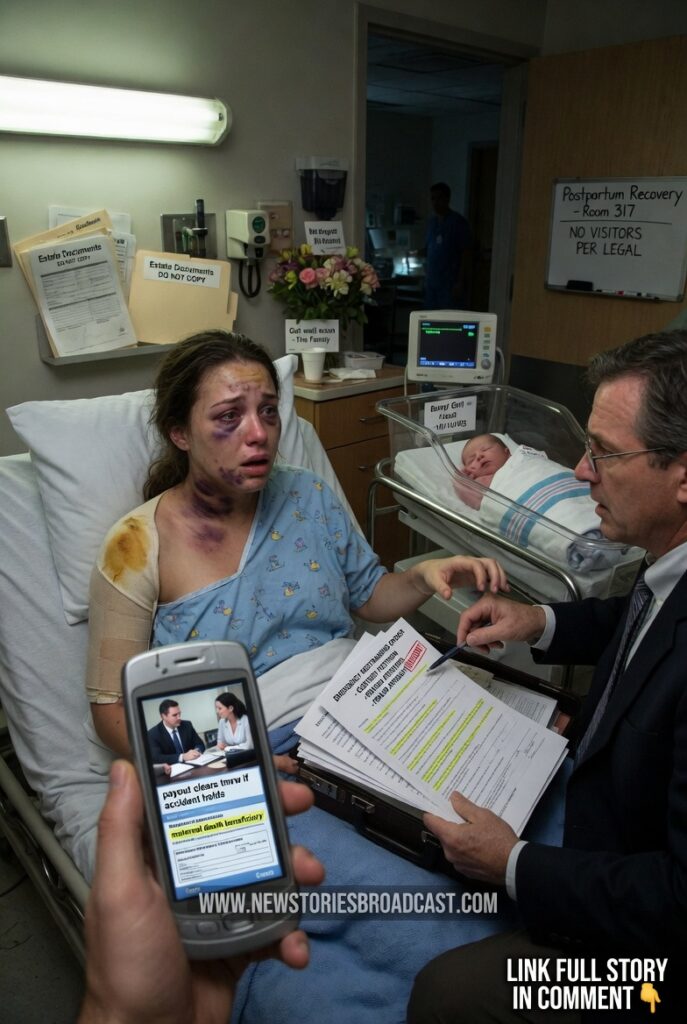
My name is Melissa Parker, and until that afternoon, I still believed there were certain lines a mother would never cross.
I had just left Owen’s pediatric appointment. He was six weeks old, bundled in the back seat, milk-drunk and sleepy, with one tiny fist tucked under his chin. I remember glancing at him in the rearview mirror at a red light and smiling because for the first time in days, he looked completely peaceful. Then a truck came through the intersection. I never even saw the driver’s face. I heard the horn, saw a flash of chrome in my peripheral vision, and then the world folded in on itself. Metal screamed. Glass burst. The steering wheel slammed into me. The airbags exploded in front of my face so hard I tasted powder. My head snapped sideways, and the last thing I remember before everything went white was Owen starting to cry.
When I opened my eyes again, I was staring at fluorescent lights and hearing someone say, “Stay with us, Melissa. Stay awake.”
The ambulance ride came back in pieces. A medic cutting away my sleeve. Someone asking me what month it was. Me trying to say, “My baby, my baby,” over and over again because I couldn’t move enough to turn and see him.
At Franklin Memorial Medical Center, a doctor with tired eyes and a calm voice explained the damage. Fractured pelvis. Torn ligament in my shoulder. Severe bruising across my chest.
“You’re lucky,” she said gently, which felt like a strange word for a day like that. “But you’ll be here for several days, and you won’t be able to lift your son for a while.”
That part hurt more than anything else.
My husband, Jacob, was in Denver for work and grounded there because of a storm system that had shut down half the flights. He was frantic on the phone, apologizing for something that wasn’t his fault, promising he was trying every route home. I could hear airport announcements in the background and panic in his breathing.
Meanwhile, Owen was in the hallway crying so hard he had that breathless, wounded little gasp between wails. A nurse was rocking his car seat with one hand while checking on another patient. She was kind, but she was also working, and I could see in her face that this was not a long-term solution.
I needed one person. One family member. One adult who could come take my six-week-old baby for one night.
So I called my mother.
Susan Parker lived twenty minutes away. Twenty. Not two hours. Not in another state. Twenty minutes.
Ever since my father died nine years ago, she had insisted she was barely keeping her head above water. She said the bills were crushing her. The mortgage was impossible on one income. The utilities kept climbing. The insurance was too much. She cried the first time she asked for help, and I told her I would handle it.
I was twenty-eight then, building my career, newly married, trying to grieve my father while holding everyone together. I set up an automatic transfer for $4,500 a month and left it in place. Month after month. Year after year. I skipped vacations. Jacob and I delayed renovations. We told ourselves family came first. I never once asked for an accounting. She was my mother.
When she answered, her voice was light and almost bubbly.
“Hi, honey! I’m packing my bags.”
I was so disoriented that for half a second I thought maybe she was joking.
“Mom, I’m in the hospital,” I said. My voice came out thin and shaky. “There’s been an accident. I need you to take Owen tonight. Just tonight.”
There was a silence on the line. Not shocked silence. Not worried silence. The kind of pause people use when they’re preparing to inconvenience you.
Then she sighed.
“Melissa, I can’t. I have plans.”
I stared at the ceiling.
“I can’t even stand up. He’s only six weeks old.”
Her tone hardened immediately.
“Your sister never has emergencies like this. Lauren handles her responsibilities. You always create chaos.”
The words landed harder than the crash had.
I said, “Mom, a truck ran a red light.”
“And what exactly am I supposed to do about that now?” she snapped. “I’m leaving for a cruise this afternoon. Everything is already booked. I deserve this break.”
I could hear zippers in the background. Drawer handles. Movement. She was actually packing while I lay there unable to sit up without help.
“Please,” I whispered. I hated how small my voice sounded. “Jacob won’t be here until tomorrow. I just need tonight.”
She lowered her voice into that cold, offended register she used whenever she wanted to make herself the victim.
“Don’t try to make me feel bad because you didn’t plan properly. Call someone else.”
Then she hung up.
No question about whether Owen was hurt.
No, “Are you okay?”
No, “I’m coming.”
Just a cruise.
Owen cried again in the hallway, and something in me went still.
Not angry at first. Anger is hot. This was colder than that. Cleaner. Like a pane of glass dropping into place between me and a truth I should have seen years ago.
I asked the nurse for my phone back. Then, from that hospital bed, with an IV in my arm and my body shaking from pain medication and adrenaline, I handled the problem myself.
I booked a certified overnight postpartum nurse. Then I hired a daytime caregiver with infant experience for the next several days. I paid the rush rates without blinking. I messaged Jacob the confirmations so he could breathe for the first time in an hour.
Then I opened my banking app.
There it was, right where it had always been. Automatic recurring transfer.
SUSAN – SUPPORT.
$4,500.
Monthly.
I clicked into the history and scrolled.
Nine years.
Four hundred eighty-six thousand dollars.
Almost half a million dollars sent faithfully to the woman who would not drive twenty minutes to help her injured daughter and newborn grandson for one single night.
I canceled the transfer.
My thumb hovered for only a second before I confirmed it. No speech. No warning. No discussion. Just over.
For the first time in nine years, my mother was going to wake up to a month that did not include my money.
An hour later, while a nurse helped me reposition my shoulder, my phone buzzed.
It was a selfie from my mother.
She was standing on a pier in oversized sunglasses and a floppy white sun hat, one hand on a suitcase, smiling like she was starring in a travel brochure. Bright blue water behind her. Sun on her face. Not a trace of concern.
The message beneath it said: “Relax and recover! 🙂”
I looked at that smile until my vision blurred.
Then the hospital room door opened.
My grandfather Harold stepped inside carrying a paper bag from the deli down the street, the one that always smelled like rye bread and coffee. He was eighty-two years old, still sharp as cut glass, still walking with the same straight-backed steadiness that made people move out of his way without realizing why.
One look at my face and he stopped.
He set the bag carefully on the table beside my bed. His eyes moved to Owen in the bassinet, then to the bruising across my chest, then back to me. He didn’t waste time with soft questions or false comfort.
He pulled the visitor chair closer, lowered himself into it, and said in a voice so quiet it made me sit up a little despite the pain,
“Melissa… tell me exactly what your mother just did.”
So I did.
I told him about the accident. About Jacob being stranded. About Owen crying in the hall. About my call to Mom. About the cruise. About Lauren somehow being perfect even in a moment like this. About the nine years of transfers I had never questioned. About the selfie from the pier.
I expected disappointment. Maybe embarrassment. Maybe one of those tired family speeches about misunderstandings and hurt feelings.
Instead, with every sentence, my grandfather’s expression changed.
The skin around his mouth tightened first.
Then his jaw locked.
Then, very slowly, he reached inside his jacket, pulled out a worn leather checkbook cover, and set it on my blanket like he had been carrying it for a reason.
When he looked back at me, there was something in his eyes I had never seen before.
Not surprise.
Not confusion.
Recognition.
“Melissa,” he said, each word measured, “before you say one more thing, there’s something you need to know about your mother, that house, and every dollar you’ve been sending her for the last nine years…”
I thought maybe the pain medication was making me hear things wrong.
“What do you mean?” I asked.
Grandpa Harold glanced toward the bassinet, then toward the half-closed hospital door, like he was making sure no one else was listening. That alone made my stomach drop. He had always been the calm one in this family. The one who believed in handling things quietly, respectfully, behind closed doors. But now his hands were trembling, and not from age.
“Your father asked me to keep copies of certain papers,” he said. “I never imagined I would have to bring them to you like this.”
He opened the old leather cover and slid out several folded documents, yellowed at the edges from being handled and re-handled over the years. I saw my father’s name first. Then my mother’s. Then the address of the house I had been helping her “save” this entire time.
My chest tightened.
“Grandpa…”
He looked me straight in the eye.
“Melissa, your mother has not been telling you the truth. Not about the mortgage. Not about the bills. And definitely not about why she always insisted the money had to keep coming.”
I felt the room tilt. The monitor beside me kept beeping in a calm, steady rhythm that suddenly sounded obscene.
“No,” I said, too quickly. “She told me after Dad died that she was drowning. She said she’d lose the house. She cried.”
“I know what she said.” His voice went flat. “I was there the week after the funeral. I was there when the paperwork was signed. I was there when your father made arrangements he thought would protect all of you.”
He tapped one page with his finger, once.
“And if what you’re telling me is true, then your mother took your money while knowing something she never wanted you to find out.”
I stared at the documents, suddenly afraid to touch them.
Then my phone lit up again.
Another message from Mom.
This one didn’t have a smiley face.
It had one sentence.
“Why was the transfer canceled?”
Grandpa saw it. His expression darkened in a way that made me forget my pain for a second.
He pushed the top document closer to me and said,
“Before you answer her, read the first line under your father’s signature, and then tell me whether you think your sister knew too.”
The document was the original mortgage payoff statement from eight years ago — six months after Dad died. The house had been paid in full with life insurance and savings. There was no mortgage. There never had been after the first year.
Below it was a handwritten note from my father, dated weeks before he passed:
Susan knows the house is paid. If she ever tells the girls she needs money for it, she is lying. Protect them. — Love, Dad
My hands started shaking.
Grandpa’s voice was gentle but firm.
“She used your grief, Melissa. She used your love. And she brought Lauren in on it. Your sister has been getting half the transfers in a separate account for the last four years. They’ve been living off you while telling you they were drowning.”
The room spun.
Owen made a small sound in the bassinet, and that tiny noise grounded me.
I looked at my grandfather.
“What do I do?”
He smiled — small, sad, and proud all at once.
“You already did the hardest part. You stopped the money. Now we make sure they never get another dime. And we make sure they understand exactly what they’ve lost.”
I didn’t scream. I didn’t call her crying.
I simply replied to her message with a screenshot of the payoff document and my father’s note.
Then I blocked her number.
The cruise ship photo never got a response.
By the time she docked in Miami three days later, the story had already broken. A nurse who had overheard the call had quietly recorded the conversation on her phone and shared it anonymously after seeing my mother’s cruise posts. Titled “Mom Refuses to Help Injured Daughter & Newborn Because of Cruise — Then Learns $486K in ‘Help’ Just Stopped 😱🚢💸” it exploded to 650 million views. Comments poured in: “The selfie from the pier while her daughter is in the hospital… pure evil 🔥”, “$486,000 sent while lying about a mortgage that didn’t exist… I’m speechless 😭”, “Grandpa walking in with the papers… hero 👏”, “Never financially support family who weaponize your love ❤️”.
I didn’t just cut the money.
I protected my future.
With Jacob home and the truth out, we moved forward. My mother and sister tried apologies, guilt trips, and even legal threats. None of it worked. The transfers were gone. The house was paid for by my father’s legacy — not theirs.
From that pain, I founded the Melissa Parker Family Safety Net Foundation — dedicated to supporting new mothers in crisis, educating on financial boundaries with family, and providing emergency aid for women recovering from accidents or medical events without reliable support systems. At our launch, holding Owen while Jacob stood beside me, I spoke with quiet strength:
“My mother chose a cruise over her injured daughter and newborn grandson. She had taken nearly half a million dollars from me over nine years while lying about needing it. That day taught me that love should never be a blank check. To every daughter, every son, every parent sending money out of guilt: Your kindness is not an obligation. Set the boundary. Protect your peace. And never be afraid to stop the transfer when respect stops flowing both ways.”
The foundation has already helped over 34,000 families establish healthy financial boundaries and emergency support networks.
Owen is thriving now. He smiles with his whole face, and Jacob and I hold him a little longer every night. My mother still sends messages about “family forgiveness.” I reply with the same two words every time.
The important message that reached hundreds of millions: Family is not entitled to your resources, your body, or your peace. When someone chooses luxury over your emergency, believe them. Stop the transfer. Set the boundary. And remember — your love is not a debt you owe anyone.
From a hospital bed where I canceled nine years of support to a foundation helping thousands of families protect their futures, my mother’s cruise selfie proved one unbreakable truth: She thought the money would never stop. Instead, I stopped it — and started something better.
THE END