FULL STORY — PAGE 1
The Seat They Thought I Deserved
Just before the ceremony, my husband leaned close and whispered:
“Please don’t embarrass me tonight.”
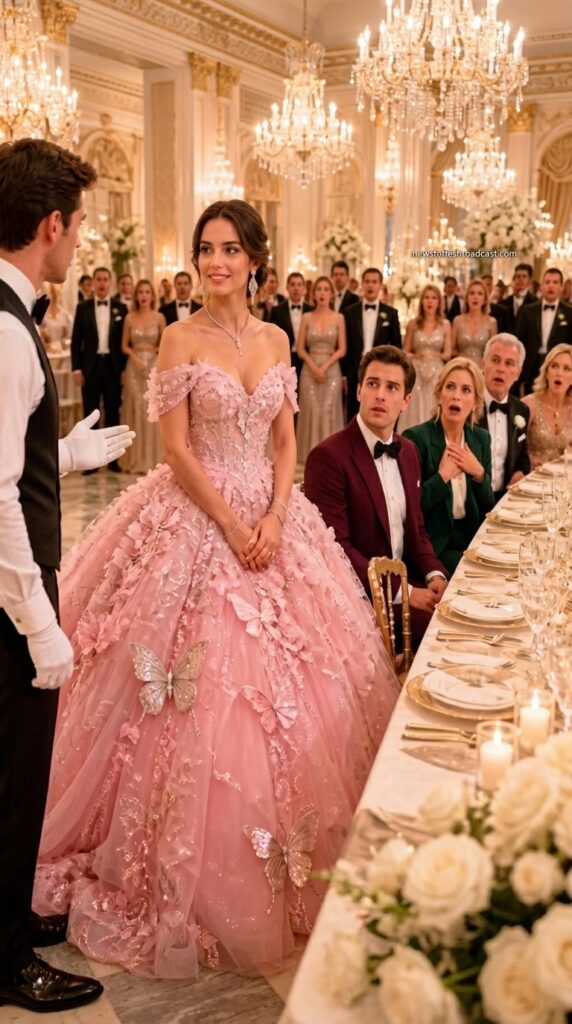
Then he glanced at the gold name cards arranged on the family table.
He picked up mine.
And quietly moved it to a lonely chair beside the kitchen doors.
That was the moment I finally understood.
Nathan Ashford had never been embarrassed by my career.
He had always been embarrassed by where I came from.
My name is Madison Brooks.
I grew up in a small two-bedroom rental outside Charleston, South Carolina, where the porch sagged, the roof leaked every summer, and my mother somehow stretched one bag of groceries into meals for an entire week.
Nathan grew up behind wrought-iron gates.
His family name opened doors at banks, country clubs, charity galas, and luxury wedding venues where the flower budget alone exceeded the price of my first car.
We met while I worked the front desk at a boutique hotel downtown.
Back then, Nathan seemed different.
Thoughtful.
Charming.
The kind of man who remembered exactly how I liked my coffee and smiled whenever he said:
“I love how genuine you are.”
I believed him.
I believed he admired the woman who knew how to build a life without depending on anyone.
But after we married, “genuine” slowly became “unsophisticated.”
My Southern accent sounded too country.
My dresses were too simple.
My family was too ordinary.
My mother, who spent decades cleaning office buildings until arthritis ruined her knees, was, according to Nathan’s mother, Vivian Ashford:
“A lovely woman… just not exactly someone you’d seat with distinguished guests.”
For two years, I swallowed every insult.
I smiled while Nathan’s sister, Sloane, asked whether my childhood home had central air conditioning.
I laughed politely when his father, Graham, joked:
“Madison married so far above herself she probably needs binoculars to see where she started.”
Nathan never defended me.
After every gathering, he would gently touch my back and say:
“They don’t mean anything by it.”
But people always mean something when they keep using the same knife.
That Saturday, we attended Nathan’s cousin Caleb’s wedding at Magnolia House, one of the most elegant venues in the Lowcountry.
Towering white columns.
Ancient oak trees draped with Spanish moss.
A ballroom glowing beneath crystal chandeliers and candlelight.
The entire drive there, Nathan reminded me how important the evening was.
“The Ashfords are practically hosting this wedding,” he said while adjusting his cuff links.
“And please… don’t mention your job unless someone specifically asks.”
“My job?”
“At the nonprofit. It confuses people.”
It never confused anyone.
It embarrassed him.
I served as executive director of a nonprofit helping women rebuild their lives after financial abuse, divorce, unemployment, and family abandonment.
I loved my work.
Nathan preferred telling people I volunteered.
Volunteering sounded elegant.
Working for a living sounded common.
And among the Ashfords, need was something to hide.