PART 3 — FULL STORY
FULL STORY — PAGE 1
The Smell From the Cast
I had treated infected casts before.
Moisture gets trapped.
Padding becomes contaminated.
Skin breaks down.
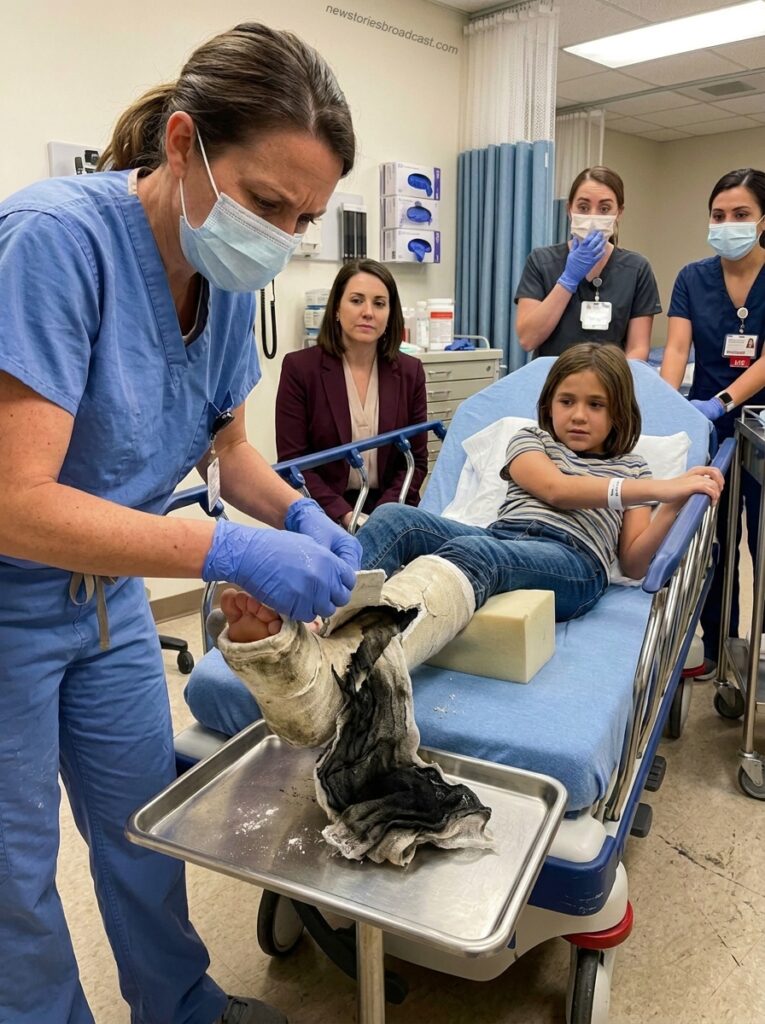
But the smell coming from this eight-year-old’s leg was different enough that everyone in Trauma Room 2 noticed immediately.
The child remained perfectly still on the bed.
Their fingers were wrapped tightly around a thin hospital blanket.
When we opened the plaster, blackened gauze slipped free.
Several nurses stepped back.
The child didn’t.
Then I saw the date beneath the damaged cast.
It was the original date from surgery.
Six months earlier.
The cast had not been properly replaced.
I ordered antibiotics, pain medication, imaging, and an urgent surgical consultation.
Then I turned toward the woman near the door.
“I’m their mother.”
“When was the last follow-up?”
“My husband handled those. He said the cast was replaced at a walk-in clinic.”
But the old date proved otherwise.
“This was never replaced.”
Before she could answer, the child whispered:
“We never went inside.”
Their father had driven them to a clinic twice.
They sat in the parking lot.
Then he returned and claimed the appointments had been canceled.
Moments later, the father entered the room.
His first concern was not his child.
It was the opened cast.
“You had no permission to cut that off.”
A nurse moved between him and the bed.
I asked:
“Who put the gauze inside the cast?”
“It got damp. I changed the padding.”
“You opened the cast yourself?”
“We couldn’t afford another bill.”
Then the mother admitted there had been a smell for ten days.
The father immediately reminded her:
“You agreed we could handle it.”
That was when the situation stopped looking like a single mistake caused by financial fear.
They had knowingly altered the cast at home.
And continued waiting while the child’s condition worsened.
“Ask Her Who Held the Flashlight”
I asked the mother directly:
“Did you watch him alter the cast?”
“Yes.”
“Did you try to stop him?”
She looked toward the child.
The child turned toward the wall.
Then the father laughed bitterly.
“Ask her who held the flashlight.”
The mother covered her mouth.
The child whispered:
“She told me not to cry.”
Eventually, the mother admitted what happened.
Her husband split the plaster.
Removed the damp padding.
She held up her phone so the flashlight illuminated the opening.
Then he pushed fresh gauze through the crack.
They had fallen behind on rent after he lost work.
He convinced her another hospital bill would make everything worse.
He told her the odor would disappear once the padding dried.
She wanted that explanation to be true.
So she helped.
Then she told us the fever had started three nights earlier.
She used wet towels.
She waited for morning.
Then another morning.
The child finally turned toward her.
“You said doctors ask too many questions.”
The mother began crying.
But she didn’t reach for them.
That mattered.
She was beginning to understand that being less aggressive than her husband did not automatically make her the trusted parent.
She had participated too.